Jeremy Bauer-Wolf
Investigations Manager
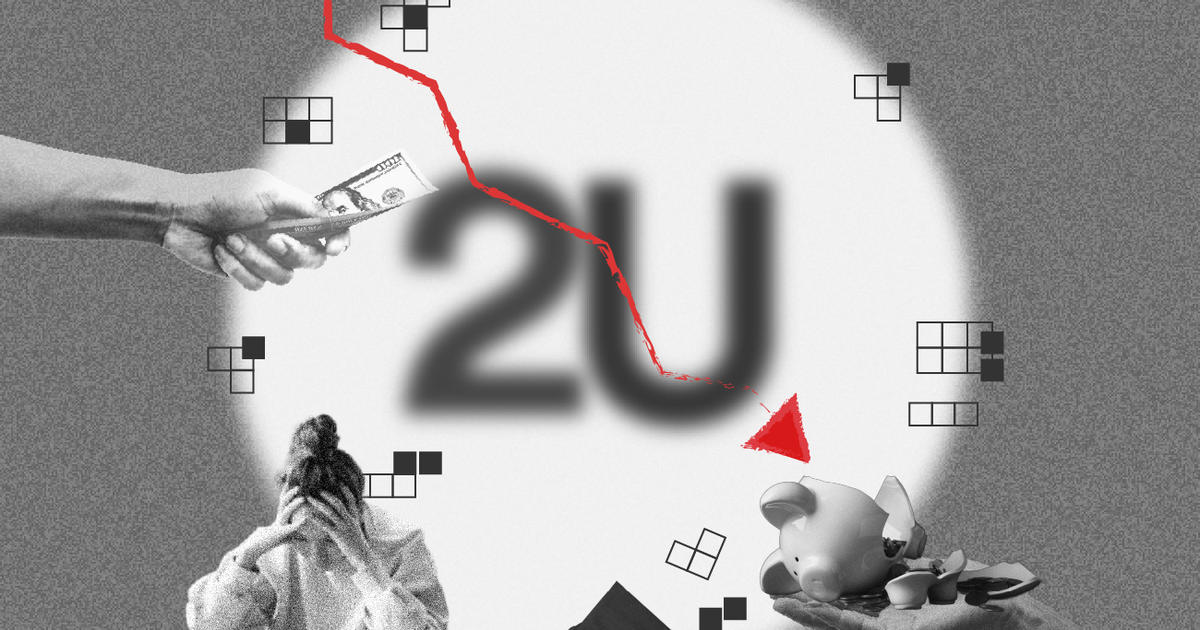
2U, once considered a behemoth company in the online education world, as it attempts to alleviate its multimillion dollar debt burden.
The company was a dominant force among online program managers, or OPMs, entities that generally help colleges set up virtual programs in exchange for a piece of tuition revenue.
But the number of students enrolling in its programs have plummeted in recent years, and it subsequently accumulated massive debt. The bankruptcy arrangement will see the company鈥檚 debt load cut roughly in half, to about $459 million. It will also be taken private.
Lenders and noteholders will also offer up $110 million in new capital.
However, because the Chapter 11 bankruptcy protection filing means 2U will remain operational, issues plaguing the company 鈥� and OPMs at large 鈥� persist.
For one, privatizing the company will cut off key sources of publicly available data on the OPM market, as publicly traded companies must, for example, report their financial position to the U.S. Securities and Exchange Commission.
It鈥檚 also not guaranteed 2U will survive at all, despite its public statements Thursday that it will emerge from bankruptcy as soon as September. It insisted the process, which requires court approval, would not disrupt any programs at colleges.
Should the company fail in the long term, tens of thousands of students enrolled in its programs may not have recourse. The U.S. Department of Education can forgive loans if a college closes suddenly, but no federal rule exists yet to help students whose online programs shut down.
And this year, the equivalent of 70,000 full-time students enrolled in 2U鈥檚 degree and bootcamps programs, according to SEC filings.
So far, the Education Department has said institutions are responsible for protecting students enrolled in OPM-led programs that shut down. Colleges then should question if they want to risk their students being left in the lurch and whether 2U is even financially viable.
However, the Education Department should also not wait around for the next OPM failure.
OPMs theoretically should not be able to share in college tuition under the federal Higher Eduction Act. That 1992 law banned 鈥渋ncentive compensation.鈥� But in 2011, the Obama administration issued guidance creating an exemption from that ban if other services were offered in a bundle, such as marketing.
The Education Department has allowed this loophole to stand, enabling the rise of OPMs鈥� revenue-sharing agreements, which include these bundled services.
That鈥檚 important, as OPMs often rely on predatory recruitment methods. They鈥檙e usually not paid unless students enroll in the programs they help establish, which has spurred OPM representatives to badger students in an attempt to funnel them into online programs of sometimes questionable quality.
A large part of OPMs鈥� business model focuses on , for instance, but critics have called into question whether the OPMs鈥� version of online instruction is worth the high price tag, as students are sometimes left with crushing debt they can鈥檛 repay.
2U has generated headlines for these practices, but their competitors employ the same tactics.
Another OPM, Risepoint, recently lobbied hard, for example, against a law in Minnesota that blocks public institutions from striking tuition-share deals with these companies.
The company even pulled in a college president it works with and former U.S. Education Secretary Arne Duncan to help try to shut down the legislation. This illustrates the lengths it went to preserve a system that benefits it, but ultimately harms students, and even institutions, who are forced to pony up a significant chunk of tuition revenue.
Right now, how or when the Education Department will address 2U 鈥� or OPMs at large 鈥� remains unclear.
In response to a question about 2U鈥檚 bankruptcy filing, an Education Department spokesperson told 国产视频 on Thursday that it 鈥渉as been closely watching the situation for the last several months, with our particular focus on ensuring that students do not see any disruption in their educational programs.鈥�
鈥淲e encourage 2U to ensure there will be no negative effects for students, and we hope this process results in greater investments to improve the quality of their services,鈥� the spokesperson said.
The Education Department has proposed some new rules that would provide relief to students if their online programs shut down, though that regulatory effort will likely not wrap up until 2025.
If a new administration took power, it could abandon them altogether 鈥� but the Education Department should act now. It should focus now on preventing harm rather than giving recourse after students have been exploited.
More about 2U and its Chapter 11 bankruptcy
Investigations Manager