Jeremy Bauer-Wolf
Investigations Manager
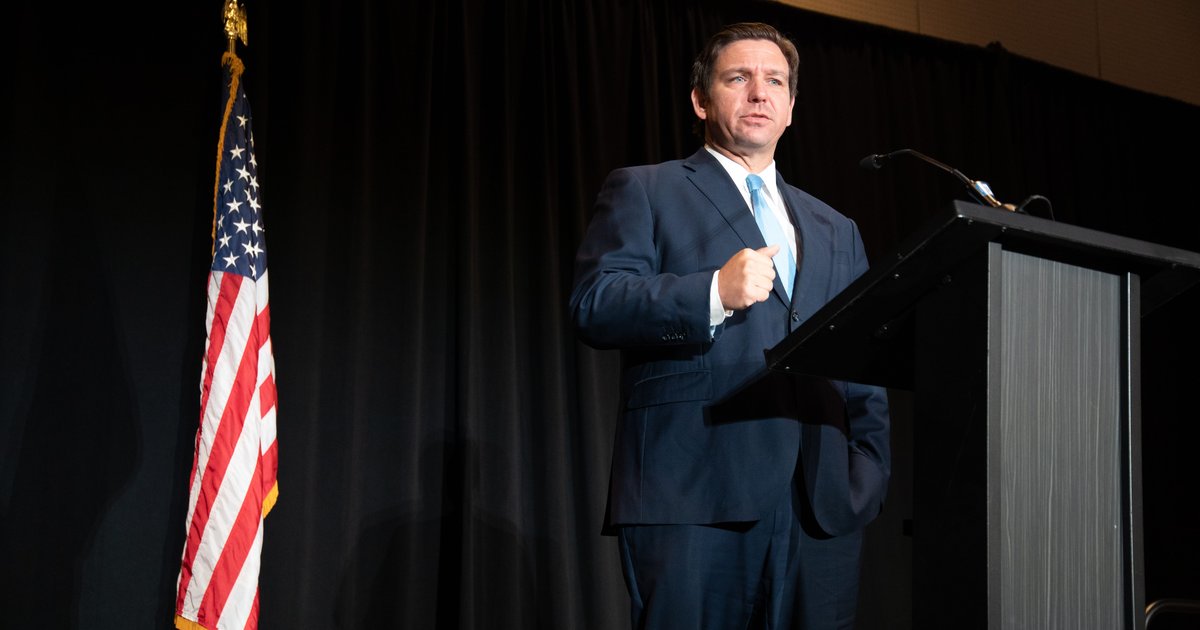
In the summer of 2025, Ron DeSantis, governor of Florida, stood before a small, clapping crowd on the Florida Atlantic University campus and proclaimed that a group of like-minded鈥攃onservative鈥攕tates had formed a nascent college accreditor.
The Commission for Public Higher Education, CPHE, as it is called, would 鈥渦pend the monopoly of 鈥榳oke鈥� accreditation cartels,鈥� DeSantis . It would be antithetical to 鈥渢he ideological fads that permeated those accrediting bodies over the years,鈥� he said.
DeSantis鈥� take entirely misrepresented the American accreditation system. The job of accreditors deputized by the U.S. Department of Education is to assess the quality of colleges. They evaluate whether colleges are sound enough to qualify for federal student aid, a roughly $120 billion most institutions depend on to keep their doors open.
But while the Education Department selects which accreditors become sentinels of student aid, the agency from directly controlling them. Policymakers in part evolved the accreditor model to insulate these entities, and by extension colleges they review, from political interference. Government actors wouldn鈥檛 be the ones judging the academic enterprise, which would have afforded them an easier route to control, dictating curricula, muzzling disfavored research topics.
It was when DeSantis ran up against this firewall in 2021 that he began feuding with the accreditation system. By this point, DeSantis had made a national name of state higher education, later infamously transforming the once-progressive New College of Florida from a well-regarded liberal arts institution into a right-wing epicenter that .
He had become enraged by the primary accreditor of Florida public colleges, which had raised concerns about in a presidential search, and about three professors in a lawsuit against the state. The accreditor over the incidents, but they had clearly revealed to DeSantis where he might face speedbumps in his quest to subordinate Florida higher education.
That鈥檚 where the idea for CPHE hatched, born from grievances against the system. And it鈥檚 why its inauguration should define it going forward. At that rollout, DeSantis established he viewed the venture not as an accreditor, an independent evaluator, but rather as a vehicle to enforce political orthodoxy in the state. Other Republican-dominated states have climbed on board.
It鈥檚 a tactic seemingly endorsed by Republicans all the way up to President Donald Trump, that accreditation would be his 鈥渟ecret weapon鈥� to liberating colleges from a leftist agenda. Since then, the administration鈥檚 top higher education official has a 鈥渞evolution鈥� in accreditation.
State policymakers who might gravitate toward CPHE should be cautious about engaging. When states endorse the project, it grows stronger, and its representatives have offered no evidence they can stop the partisan forces backing it, like DeSantis, from commandeering CPHE for political interference.
In the 1950s, when the federal government began distributing GI Bill aid, it turned to accreditors to ensure the money wouldn鈥檛 reach colleges that would provide veterans with an anemic or scam education.
Accreditation is a piece of the broader higher education accountability system that鈥檚 designed to be insulated from political meddling. in 2024, while the federal government has an interest in guaranteeing a quality higher education system, it cannot 鈥渆xercise control over educational curriculum,鈥� for instance.
CPHE, as it is structured, would demolish the barrier between government and accreditors. Technically, CPHE is a nonprofit under the Florida Board of Governors, which oversees one of the state鈥檚 public higher ed systems. The Florida board holds the authority over the nonprofit, but a separate panel, composed of officials from the six public college systems that founded CPHE, would 鈥渆stablish accreditation standards, policies, and procedures,鈥� including approving institutions for accreditation, according .
But also in that document, CPHE describes itself as 鈥渁ccountable to states鈥濃�攖he same states that have been deliberate in trying to put more of higher education under government control. Officials that fund and govern public colleges would now also be able to influence what鈥檚 meant to be an independent review of those institutions.
When lawmakers control the minutiae of higher education, they can decree what ideas are acceptable to discuss, a death knell for the academic freedom that makes the American higher education apparatus 鈥渢he envy of the world,鈥� as one . Censorship in academe inevitably spills out into broader society and soils democracies. The consequences can be profound and long-lasting, as those under authoritarian governments .
Florida has been visible in how it has taken over public higher education, but other states in the founding CPHE class鈥擳exas, Georgia, North Carolina, South Carolina, and Tennessee鈥攈ave pursued similar actions.
Texas, like Florida, has moved to with certain visas. One Texas public university also recently and revamped syllabuses for hundreds of courses after the lawmaker-appointed governing board last year restricted how race and gender can be discussed in classes.
In 2023, North Carolina had similar dustups to Florida with its legacy accreditor, the Southern Association of Colleges and Schools Commission on Colleges, or SACSCOC.
The the University of North Carolina at Chapel Hill governing board had ignored faculty and administrator input as the institution stood up a School for Civic Life and Leadership.
, and late that year, the legislature mandating public colleges change their accreditor from SACSCOC. Florida had passed a . At the time, the Florida and North Carolina laws drew heated statements.
Coalition for Carolina鈥攁 group of UNC-Chapel Hill faculty, alumni, and others, that fights to protect the state flagship school from partisan influence鈥� pushed 鈥渁n extremely costly, unnecessary, and burdensome change to the accreditation process鈥� on University System of North Carolina institutions.
Federal statute that colleges鈥� pick of accreditors to be 鈥渧oluntary.鈥� The forced switches seemed to chafe against this requirement.
Iowa isn鈥檛 an initial CPHE member, but is emulating the founding CPHE states. Lawmakers this a raft of bills cementing a takeover. State Republicans have already advanced bills that would stop public institution presidential search committees from revealing candidates鈥� names, and end the regent board student member鈥檚 voting power.
One particularly problematic that the state鈥檚 public colleges join CPHE, which certainly doesn鈥檛 seem like it would meet the definition of voluntary. (CPHE has not taken a public position on the proposal.)
CPHE claims it is apolitical鈥斺�漚nd nonideological in its goals, conduct, conversations, and work products,鈥� an official representing the accreditor, Dan Harrison, said in a statement to 国产视频.
Its 鈥渕ission and methods are based on observations about accreditation that span decades and that pre-date the current political moment," said Harrison, vice president for academic affairs at the UNC system. 鈥淭he more CPHE engages stakeholders, the more those stakeholders see that CPHE is reasonable and diligent."
However, based on the public evidence, CPHE simply cannot guarantee that partisans like Trump and DeSantis will not use it to do states鈥� bidding.
Again, these are states that regard higher education exclusively in political terms, that want to censor and erase certain subjects from the classroom, that want to install politicians in college presidencies, that want to destroy the separation of academia and government.
Under these conditions, CPHE almost certainly will become a part of the campaign to subjugate American higher education to political powers.
Investigations Manager