
Stephen Burd
Senior Writer & Editor, Higher Education

At Higher Ed Watch, we were saddened to learn of the , the Rhode Island Democrat whose work on Capitol Hill helped open the doors of college to tens of millions of low-income students. The Pell Grant program remains to help the most financially-needy students obtain a higher education.
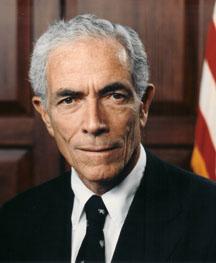 As Maura Casey, an editorial writer for The New York Times on Tuesday, “Pell Grants have been around so long that few remember how much opposition they had to overcome or how revolutionary they once seemed.”
In fact, Senator Pell — “a wealthy New England aristocrat,” as Casey described him — had to fight against his Democratic colleagues in the House of Representatives and the higher education establishment to create the grant program that he first dreamed up, legend has it, on a ski slope in Switzerland. [Whether or not he had ever skied at all .]
Pell’s vision was to create a new grant program to aid low-income students modeled on the GI Bill, which had helped pay for his graduate education. Under the Senator’s plan, federal grants would go directly to students who could use them at the college of their choice. The idea, however, was who wanted the money to go straight to their member institutions. They argued that college officials were in the best position to determine which students were in most need of financial aid funds. The college groups had who fought on their behalf.
A battle between the Democratic leaders in the two chambers waged for two long and grueling months in the spring of 1972. The dispute was ultimately resolved in the early morning hours of a mid-May day when , who chaired the House education committee, finally relented.
Since then, more than 55 million low- and moderate-income students have benefited from the program. That is quite an accomplishment.
Unfortunately, funding for the Pell Grant program has not kept up with skyrocketing increases in college prices over the past three decades. As a result, has, with some exceptions, been mostly in decline during that period of time.
College lobbyists, who have become champions for Pell Grants, place the blame squarely on the government for failing to adequately finance the program. But the truth is that Democrats and Republicans alike have legitimately grown tired of boosting spending on student aid, .
Colleges’ increasing reliance on to create award packages has also harmed the effectiveness of the Pell Grant program. All too often, schools use Pell Grants to replace institutional aid they would have provided financially-needy students otherwise, and then shift the money they save into merit aid to attract the kind of high-achieving students that improve their rankings. The upshot is that low- and moderate-income students are expected to supplement their Pell Grants by.
In addition, as lawmakers have increased eligibility for the awards, the program has become extremely expensive. The Department of Education estimates that each $100 increase in the maximum award costs about $400 million. And that’s not counting the — and in fiscal year 2013 when mandatory money that is currently propping up the maximum grant runs out.
While the Pell Grant program will always be a centerpiece of the government’s efforts, federal officials need to find new ways to to ensure that the doors of college remain open to low-income and working-class students. If we have any hope of at least maintaining and hopefully building on the gains in college accessibility over the last 40 years, we desperately need colleges and states to stop with the stated goals of the Pell Grant.
It’s just too bad that we don’t have to lead the charge. In this battle and others, the patrician Senator from Rhode Island .
Senior Writer & Editor, Higher Education


