ABA Off the Hook on Accreditation, Again

After walking a tightrope for more than a decade, the only entity in the nation that accredits law schools, an arm of the American Bar Association (ABA), has avoided a fall once againthanks in part to the fortuitous timing of an unrelated accreditation issue between Congress and the Education Department.
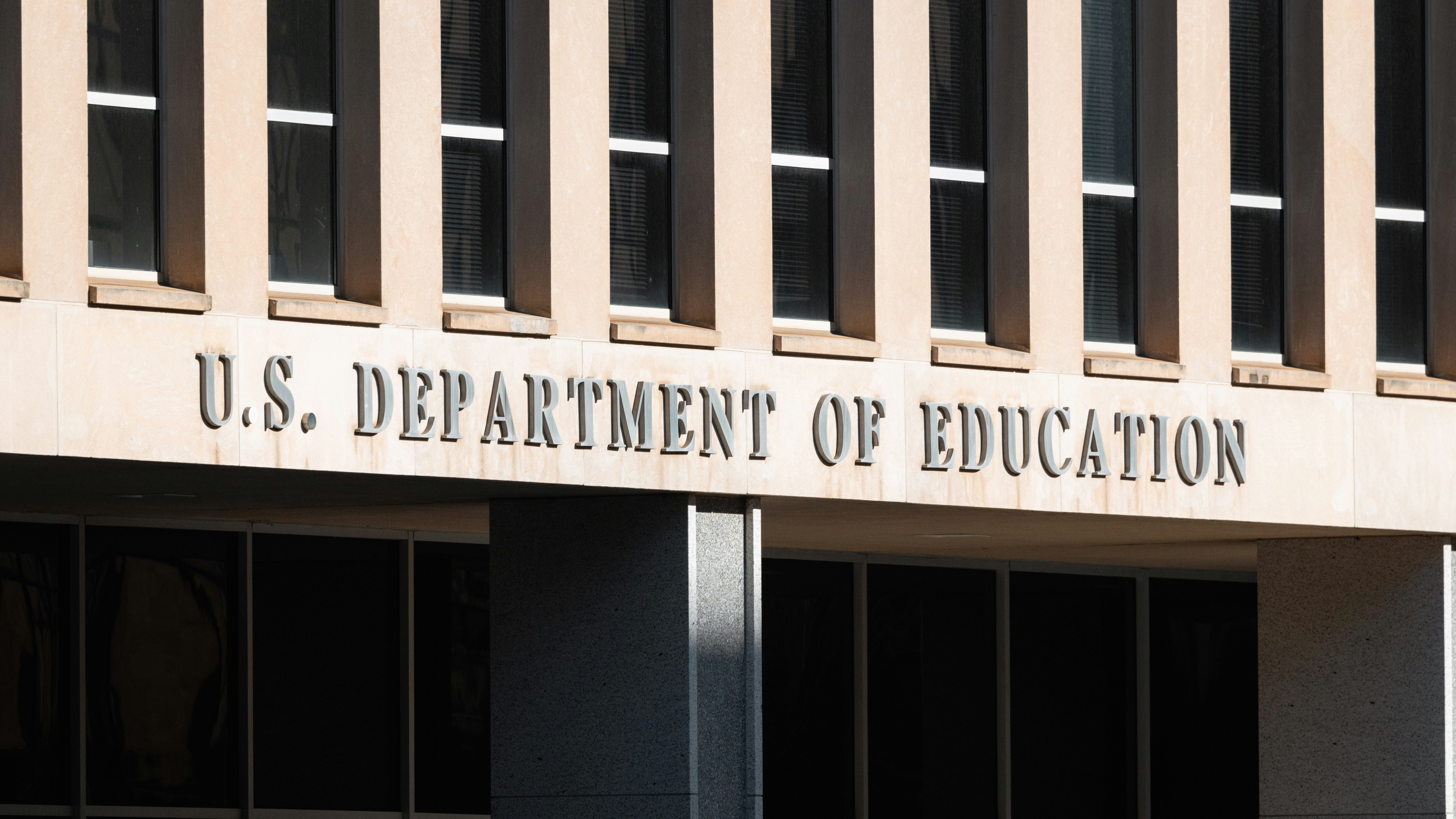
 On June 20th, Education Secretary Margaret Spellings on whether to renew the ABA’s authority to accredit law schools. And as usual, she agreed to extend that authority, with the Departments “Criteria for Recognition.” Ultimately, Spellings followed the recommendations of both Education Department staff and the (NACIQI) in allowing the ABA to continue as the sole Education Department-approved law school accreditor for 18 months, instead of the normal five years.
The fact is that the Education Department rarely revokes an accreditation agency’s authority, no matter how poorly that agency carries out its duty of ensuring that colleges are providing a quality education. Instead, the Department continuously drags its feet by providing limited extensions of the agency’s authority and by adding on to the entity’s reporting requirements. The ABA, for example, has been submitting interim progress reports to the Education Department since the mid-1990s, because it has continually failed to prove the validity of its accreditation process. In 1998, the ABA was , but instead (surprise!) was required only to submit more progress reports.
Youd think that at some point, enough would be enough. This time around, it appeared Spellings might actually do something because of from to . And some of the members of NACIQI were extremely critical of ABAs accreditation process at, saying that they were “astound[ed],” “frustrat[ed],” and “appalled” that the ABA had not yet taken “responsibility for the issues that they were facing.”
Accreditation and the ABA’s monopoly-like power to restrict entry into the legal profession (and keep compensation high) aren’t exactly sexy media topics. But affirmative action is and recent the ABAs new “diversity standard” for law schools. The agency recently began to require that accredited law schools “demonstrate by concrete action” a commitment to “a student body that is diverse with respect to gender, race, and ethnicity” or potentially lose its accreditation. Foes of affirmative action raised their swords. And the attention that followed allowed the ABA to portray itself as being subject to an anti-affirmative action witch hunt by the Bush Administration.
The truth is, though, that the ABA’s diversity standard is unrelated to its numerous other, more pressing (and more boring) problems as an accrediting entity. , according a NACIQI member, has complained about the ABA’s diversity standard. But they have complained aboutand Education Department staff and NACIQI have identified with which the ABA is not in compliance.
, she highlights these fifteen areas. While she just couldnt hold off on addressing the diversity standardshe decided to require the ABA to report on that standard’s implementationshe didnt narrow her criticism of the ABA to the affirmative action issue (as the ABA was no doubt hoping):
the record reveals concerns about the Council that are far broader than any controversy about Standard 212 [the diversity standard]Pointing to a consistent lack of attention to the Departments compliance requirements for accreditation recognition, [one] member [of NACIQI] questioned whether the Council should receive full recognition and opined that providing for an eighteen month recognition period for the Council was “kind.” None of the other members challenged these findings.
We applaud Spellings for specifically acknowledging the wide range of the ABAs shortcomings as an accrediting body. But there is something odd about the Bush Administration’s Education Department letting the ABA off the accountability hook while insisting that No Child Left Behind Act accountability provisions be implemented faithfully in the case of elementary and secondary schools.
If the ABA regularly fails to follow government rules and regulationsremember this is a body accrediting law schoolswhy wouldn’t Margaret Spellings take tougher action? We’ll gander a guess in a future post. But here’s a hint: if innocence is the first casualty of war, principle is the first casualty of politics.
More 国产视频 the Authors
Issues
Programs/Projects/Initiatives
Related

A Key Piece of the Trump Accreditation Plan Threatens Accountability


Enrolled But Not Protected: Young Parenting Students Face Eviction at Alarming Rates