Jos茅 Luis Vilson
Education Research Fellow, Education Policy
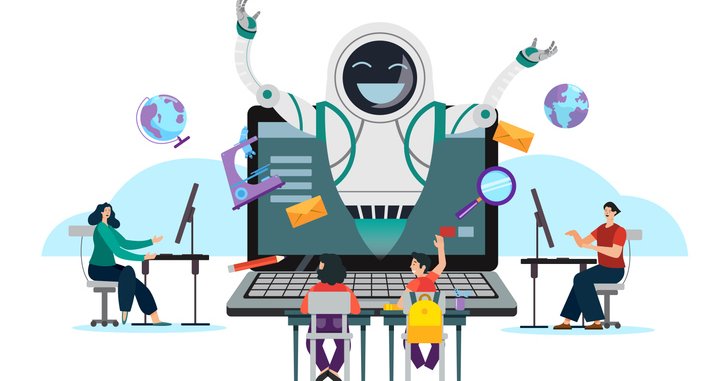
Over the last few years, the world has seen an acceleration of what we call 鈥渁rtificial intelligence (AI),鈥� a catch-all term referring to technologies that seem to have some pseudo-sentient element to it. This new wave of innovations includes generating long-form essays with just a few prompts to re-interpolating portraits into works of art from familiar artists. As a vocal set of , , and struggle with what these technologies mean for the future of their work, developers have sought to integrate AI into multiple facets of our on- and offline lives. These tools offer a premise: why spend hours on developing an artifact that AI can do in minutes? Much attention has been paid to the economic, environmental, and moral costs of such a proposition, though not enough to change the consumption of the general populace.
In , the amplification of AI has both terrified and emboldened educators 鈥� and by educator, I mean child-facing adults, inclusive of paraprofessionals, social workers, etc. 鈥� across the board. On social media, a plethora of educators are voicing either their displeasure or their support for using AI. On the one end, educators have strong arguments against and , arguing that using these tools ultimately dulls students鈥� critical thinking and ability to generate meaning from their assignments. To their credit, both the and the have sought to influence the ways AI affects teaching and learning. Last year, the NEA convened a nationwide panel of educators to create a report on the present and future role of AI in classrooms, including opportunities and harms. More recently, the AFT developed a partnership with Microsoft, OpenAI, Anthropic, and the United Federation of Teachers to create a 鈥�,鈥� a multimillion dollar effort to provide AI training and curriculum to K-12 educators.
On the other hand, , if , on that write lesson plans, grade homework, and generate reports about students, teachers, and school performance. In other words, not only will AI tools have an effect on how we view learning, it necessarily reaches how we understand teaching. Recently, Microsoft announced a $4 billion donation to K-12 schools, colleges, and nonprofits as part of its 鈥淢icrosoft Elevate鈥� initiative. This follows a multi-tiered effort from big corporations to invest in AI in the classroom following President 国产视频 executive order to foster more innovation in AI. The tech industry seems to push beyond school-level discussions about uses and misuses of AI towards large scale investments, but whether they implement input from community-level practitioners remains to be seen.
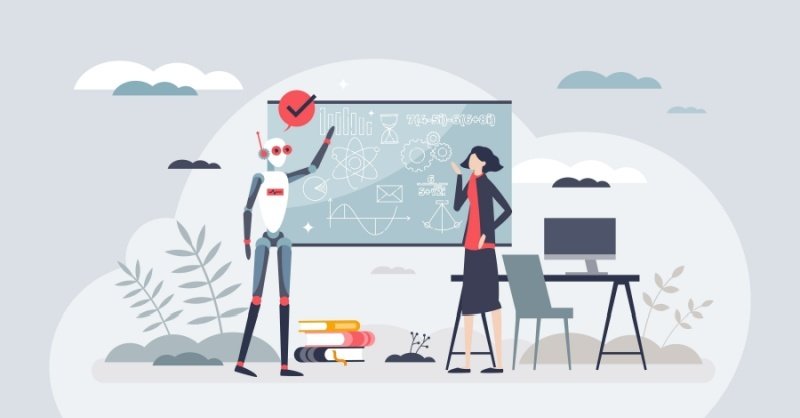
Teaching and learning as labor has not been examined enough from this lens. Teacher work has come under scrutiny through generative AI (GenAI) tools. A plethora of companies have done a great job of to simplify the ardor of teaching. Some prognosticate that teachers would no longer be necessary in the near future. Given the already daunting teacher shortages across the country, negative attitudes about labor on the part of some district and federal leadership, and the acceleration of these tools, one might agree. (Education International, a global teachers鈥� union, is .) If, in the eyes of AI evangelists, we believe that teaching is just delivery of knowledge, what is the difference between an algorithm and a teacher? In the past, the pushback has prompted salespeople to treat teachers as 鈥渇acilitators on the side.鈥� In this rendition of teaching, educators 鈥済et out of the way鈥� of students and their individual journey through the tool.
Holding for this framework, teaching as an occupation has already been deprofessionalized. Ironically, efforts to professionalize teachers in the way of standards and assessments necessary for this authentic work. Simple notions of teaching as delivery belie the human-centered work of teaching i.e. the extent to which humans think about how younger humans learn through the meaning they make about the world. While researchers over decades have studied notions of professionalism among multiple professions, few, if any, ever ask the professionals themselves about their work and why it matters.
As such, it behooves us to rethink the question of AI and education. Instead of asking 鈥淗ow can we get more teachers to use our tools?鈥�, we may ask 鈥淲hat parts of a teacher鈥檚 workload is made simpler using our tools?鈥� While the former assumes teachers as simple recipients of advanced technologies, the latter affirms teachers鈥� responsibility to the trajectory of student learning in their classrooms. After all, even with , teachers report that . In surveying the research, a few things come to light:
Taken all together, this may seem like a perfect opportunity for education technologists to create more GenAI tools if they haven鈥檛 done so already. However, not only do the majority of students still want humans as teachers to teach them, schools don鈥檛 think teachers should be replaced with GenAI. In future essays, it鈥檒l be important to go deeper into understanding the actual work of teaching and learning and where AI seems helpful or not.
Jos茅 Luis Vilson, PhD is an education research fellow with the Teaching, Learning, and Tech program at 国产视频. He is a veteran educator, sociologist, and author in New York City, NY. He earned his PhD in sociology and education from Teachers College, Columbia University. He is also the executive director of EduColor, an organization dedicated to building, supporting, and amplifying communities of educators of color.
Education Research Fellow, Education Policy