
Amber Guyger Trial Highlighted Why Dallas Communities of Color Often Distrust Law Enforcement
This article in the Texas Tribune.
DALLAS鈥擳he murder conviction of a white woman who was a police officer when she killed an unarmed black man in his own home鈥攁nd the a jury gave her Wednesday鈥攅ach drew different reactions in a city whose history is rife with tensions between law enforcement and communities of color.
Amber Guyger鈥檚 murder conviction brought many people relief. But her sentence for killing 26-year-old Botham Jean was derided by some as being too short, even though Jean鈥檚 brother offered Guyger forgiveness and a hug at the end of the trial.
And trial evidence about police officers' conduct following the shooting鈥攚hich prosecutors said showed Guyger got special treatment鈥攕purred Dallas residents and Jean鈥檚 mother to call for reforms within the department.
鈥淭he city of Dallas needs to clean up inside. The Dallas Police Department has a lot of laundry to do,鈥� Allison Jean said in the Frank Crowley Courts Building shortly after Guyger was sentenced Wednesday. 鈥淓very single one of you citizens of Dallas and residents of Dallas need to know what to do to get your city right.鈥�
Jean was eating ice cream on his couch when Guyger, who had just finished a long shift, entered his apartment. She said she confused it for her own apartment one floor below. Thinking Jean was an intruder, Guyger shot and killed him.
Seemingly aware of the ever-present tension in her community that began to again boil over during Guyger's trial, Dallas Police Department Chief U. Rene茅 Hall held a press conference shortly after the sentencing to address the community's distrust of police.
She mentioned allegations against police that arose at trial, like Guyger and her partner deleting their text messages around the time of the shooting and the head of the police union having cameras turned off so he could speak to Guyger off the record immediately after Jean was shot.
Guyger鈥檚 defense attorneys argued there was no evidence that suggests the shooting was racially motivated. But during the sentencing phase of Guyger鈥檚 trial this week, prosecutors showed the jury texts in which the former officer death and made discriminatory comments about her black colleagues.
"I can only imagine the community's perception of who we are as a Dallas police department and, if we're truly honest with one another, what law enforcement is or who law enforcement is across this country," Hall said.
But, she said, the allegations heard at trial are not "reflective of the men and women of the Dallas Police Department." Hall explained that the troublesome testimony was now being handed over for investigation from the department's internal affairs division, and that any necessary policy or procedural changes would be made afterward.
Earlier Wednesday, a small crowd of people gathered in the foyer outside the courtroom, yelling and crying in frustration over what they said was too short of a punishment.
鈥淭he energy in Dallas is more volatile now than when the case started, because you gave people a bit of hope, then you took it away,鈥� said Changa Higgins, head of the Dallas Community Police Oversight Coalition.
As is the case in cities across America, many Dallas residents鈥� distrust of authority stems largely from their public leaders鈥� and the systemic biases remaining within the criminal justice system decades later.
"There are a number of situations throughout this country where white men鈥攁rmed鈥攈ave been taken in, and black men鈥攗narmed鈥攁re killed,鈥� Daryl Washington, one of the Jean family鈥檚 attorneys told reporters while the jury deliberated Wednesday. 鈥淯ntil we face the facts of it all, these cases are going to continue to happen. We would love to say this isn鈥檛 about race, it鈥檚 about training, but it鈥檚 a combination.鈥�
For activists in the community, this particular death had a double reading. It was another shooting of an unarmed black man. But at the same time, Jean was a middle-class professional, resting in the privacy of his own home.
鈥淎 lot of times the police shoots someone and there is some kind of criminal background,鈥� said Higgins. 鈥淚n this case there鈥檚 nothing of that. It literally could have been anybody. He was the symbol of doing everything right and still not being safe.鈥�
A history of violence, distrust
Dallas has a long history of police officers shooting unarmed people of color. In 1973, Dallas officer Darrell L. Cain threatened 12-year-old Santos Rodr铆guez with a gun during an impromptu interrogation and fatally shot him. After being convicted of murder and given a sentence of five years, Cain was released two and a half years later.
Despite a litany of subsequent police-involved shootings, decades passed before another officer was convicted of murder in Dallas County. In 2013, a Dallas police officer was not indicted after he shot and killed unarmed Clinton Allen. In 2017, another officer who killed Genevive Dawes was charged with aggravated assault.
But Guyger鈥檚 conviction was the third time in the last two years that a Dallas County jury found a police officer guilty of murder. A Farmers Branch officer was last January after killing teenager Jos茅 Cruz in 2016. And last August, ex-Balch Springs officer Roy Oliver was for the 2017 murder of Jordan Edwards, who was 15.
Yet the city鈥檚 relationship with law enforcement has also been marked by the deadly shooting of five police officers in the middle of a Black Lives Matter march . Military veteran Micah Xavier Johnson, who was black, opened fire at the march in downtown. At the time, former police chief David Brown that the Johnson 鈥渨anted to kill white people, especially white officers.鈥�
For former Dallas police officer Vana Hammond Parham, the months that followed were a complicated time.
鈥淲e were in the middle of a nationwide crisis, where black men were being shot by police officers, and here in Dallas we had the opposite,鈥� said Hammond Parham, who is black.
She remembers a lot of black residents coming to show support for the department.
鈥淔or awhile it helped in our relations. We could come together in what we think is wrong and respect lives as a whole,鈥� she said.
But Hammon Parham highlighted that the conviction this week is the third of a police officer in recent years.
鈥淚t鈥檚 a sign to the community that we are in the right direction,鈥� Hammond Parham said.
But not everyone agrees. Although activists see of the Community Police Oversight Board in April as a step forward, they say evidence presented during Guyger鈥檚 trial shows that she.
"The reality just taught us that she is part of a bigger system and one actor taken out does not change the system,鈥� Sara Mokuria, co-founder of Mothers Against Police Brutality, says. 鈥淲e are still managing a very troubled system, with a long and horrible history when it comes to black, indigenous, lantinx, queer folks and women.鈥�
A department under stress
On the steps of the Crowley courts building after the conviction, but before the sentencing this week, advocates said the fight for changes within the department is not over. Their focus now will be seeking the resignation of Mike Mata, the Dallas Police Association president who allegedly asked that a camera be turned off so he could talk to Guyger the night of the shooting.
鈥淭hey need to bring the officers that obstructed the investigation to some disciplinary action,鈥� Higgins said. 鈥淭hen the police department needs to have a real investigation into their officer shooting practices, procedures and policies, look into how the investigative units proceed with this. This exposed a lot of issues.鈥�
, according to the Fort Worth Star-Telegram. She had had an eight-hour training in the subject five months before the shooting, but when asked what she took away from it, she said she couldn't remember.
鈥淧olice officers should be tested twice a year about the use-of-force continuum,鈥� said Leroy Pe帽a, national director of the Red Handed Warrior Society, a group that works in issues from indigenous rights to police brutality.
Additional training or testing requirements might be difficult for a department that is already understaffed. Sergeant Sheldon Smith, president of the Dallas chapter of the National Black Police Association, says that makes things more complicated.
鈥淲e don鈥檛 have the manpower we had before. We have to prioritize our calls in terms of how violent is the case,鈥� Sargeant Smith said. 鈥淎nd the city of Dallas is not getting smaller. It鈥檚 getting bigger.鈥�
And Mokuria doesn鈥檛 think more money for the department is a solution.
鈥淩ight now the role of the police is too broad and too wide. They are being asked to be social workers, first responders, experts in mental health, traffic officers,鈥� she said. 鈥淲e need to identify a different way to address these problems. The role of police officers needs to radically change and create new entities to better shift our issues. A hammer is just one tool and you can鈥檛 use it for every situation.鈥�
"It begins with us"
One thing that everyone agrees on, though, is there needs to be better communication between law enforcement and communities of color.
鈥淭rust is not given, it is earned,鈥� Smith said. 鈥淵ou can鈥檛 stay in the police car and expect trust. You need to develop relations and sometimes talk to people you are not comfortable talking to.鈥�
Hall, the police chief, echoed those sentiments after the sentencing Wednesday.
"There are areas of concern that we need to address, and I pledge that we will make those changes," she said. "Changing the perception of law enforcement, it begins with us. We must double our efforts to continue to build trust."
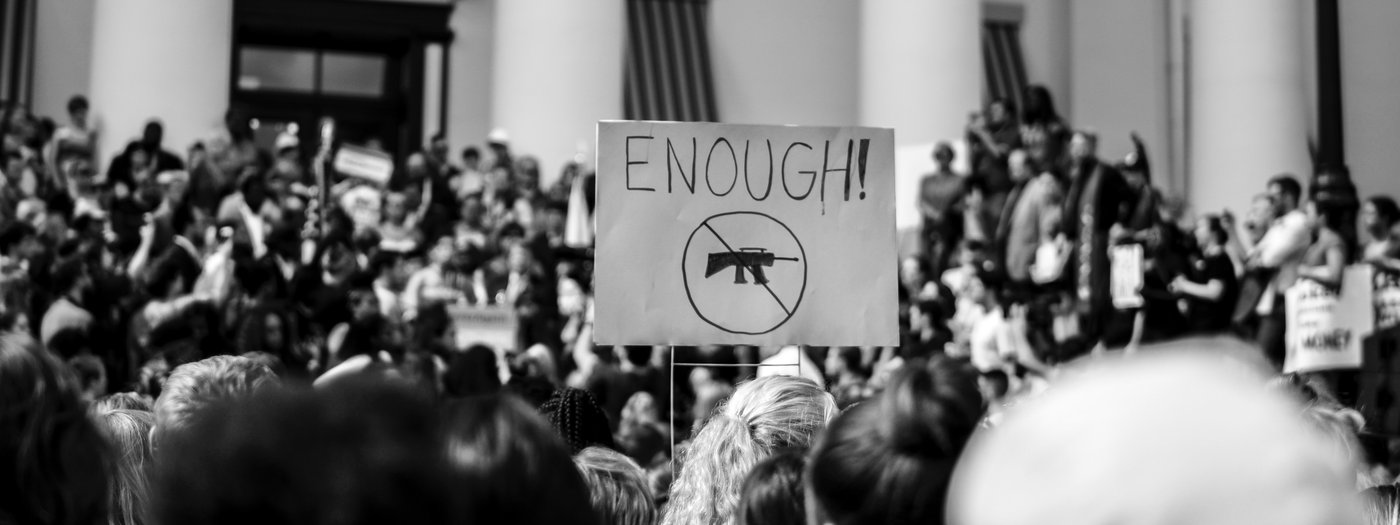
As the sun set in Dallas Wednesday night, more than a hundred people gathered outside the courthouse.
鈥淲e have to continue to organize,鈥� someone shouted.
Later, they walked to a nearby intersection, stopped traffic and shouted: 鈥淲ho runs these streets? We run the streets!鈥�
More 国产视频 the Authors
Juan Pablo Garnham
Related

“Getting the Golden Ticket”: Participants’ Perspectives on Lexington’s First Assembly

Civic Assemblies: A Framework for Community Colleges

Don鈥檛 START Now
