
Remembering Antisemitism When Public Memory Is Fleeting
Antisemitism is in the news again鈥攐r maybe it鈥檚 more accurate to say that antisemitism and its associated assumptions never truly leave the news.
There was the that antisemitic attacks are on the rise in the United Kingdom, the that such incidents also increased in France, and the uproar over House Representative Ilhan Omar鈥檚 February 10 on . (Though Omar subsequently , her remarks, in the course of about whether they were antisemitic, have drawn attention to other examples of how often resurface in U.S. politics.) In response to the CST report in particular, a recent Deutsche Welle story declared that 鈥�.鈥�
But this claim shows a fundamental misperception about the intended audience for reports on antisemitism. Jews don鈥檛 need to be told that antisemitism exists; Jews live in a world that never allows them to forget. Every time they attend a Shabbat service , every time they hear of Jewish , and every time they hear a conspiracy theory about , they鈥檙e reminded that antisemitism is hale and hearty.
In other words, reports on antisemitism don鈥檛 exist to inform Jews of what they already know鈥攖hey exist to force non-Jews to acknowledge the world around them.
Reports on antisemitism are important not because they act as a warning system to Jewish communities鈥攚hich they generally don鈥檛鈥攂ut, rather, because they play a crucial role in shaping society鈥檚 memory culture. It may seem like the mere existence of the Holocaust ought to serve as reminder enough that antisemitism is dangerous, evil, and persistent. But public memory isn鈥檛 static. Instead, seemingly permanent narratives are constantly supplanted, reinterpreted, and reconstructed in light of current events.
Of course, these reinterpretations can be positive when they guide us toward a more accurate understanding of history. For example, the Black Lives Matter movement has forced white Americans to start seeing how police brutality has ravaged black communities . Meanwhile, the #MeToo movement has prodded people to reconsider the stories of powerful men and widely vilified women, and rather than as villains.
And yet, reinterpreting the history of antisemitism is almost always done in a way that obscures the past, and it tends to be done in a creeping, insidious fashion. Some revisionist statements about antisemitic crimes seem inconsequential, such as asserting that the figure of . But even these kinds of small assertions are dangerous, because they start to chip away at the general public鈥檚 confidence in historical facts, leading to skepticism about whether antisemitism exists at all.
Indeed, Holocaust deniers seem to be waging a successful information war. A of 1,350 Americans found that 31 percent of all surveyed Americans鈥攁nd 41 percent of all Millennials鈥攂elieve that the number of Jews killed during the Holocaust was two million or fewer. These beliefs could be due to a lack of education rather than ill-intent, but : The existence of antisemitism is cast into doubt, and with it the need to combat such prejudice.
As a result, it鈥檇 be dangerous to explain away every revisionist comment as a lack of education, instead of acknowledging that such comments鈥攅ven if people make them ignorantly rather than maliciously鈥攃an change the public鈥檚 understanding of a genocide and negatively affect a vulnerable minority. For example, in April 2017, the then-White House press secretary, , commented that President Bashar al-Assad of Syria committed far worse crimes against humanity than Adolf Hitler did, because Hitler 鈥渄idn鈥檛 even sink to using chemical weapons鈥� and didn鈥檛 use 鈥済as on his own people.鈥� In addition to being categorically false, these comments conjure multiple antisemitic tropes, like the idea that German Jews were (and are) not actually German. This othering of Jews shapes the public鈥檚 historical memory of the Holocaust, priming society to fall into the ancient antisemitic trap of thinking that 鈥淛ews are not like us.鈥�
Soberingly, there aren鈥檛 many opportunities to correct this misinformation and disabuse people of antisemitic beliefs. Holocaust memorials are accessible only to those who happen to live near them or who have the time, money, and education to visit and understand them. International Holocaust Remembrance Day happens only once a year. Schools generally don鈥檛 teach students about Jewish culture or history. The number of living Holocaust survivors is . And most people have never met anyone Jewish. Even in the United States, which has (both in sheer numbers and as a percentage of U.S. citizens), Jews make up of the overall population.
Together, all of these circumstances have created an opening for new influences to shape the public鈥檚 memory of antisemitism in general and of the Holocaust in particular. And if we鈥檙e not careful, that memory may be shaped by antisemites and who see advantages to a for the world鈥檚 problems.
These kinds of casual attempts to rewrite public memory underscore why reports on antisemitism are so important. Reports reach people who may otherwise never question comments like Spicer鈥檚. When media outlets cover the release of such reports, not only do individuals encounter evidence that pushes back against antisemitic narratives, but they鈥檙e also prompted to interrogate their own prejudices by engaging in a revived conversation about antisemitism that may have slowly faded away since the last antisemitic tragedy or data release.
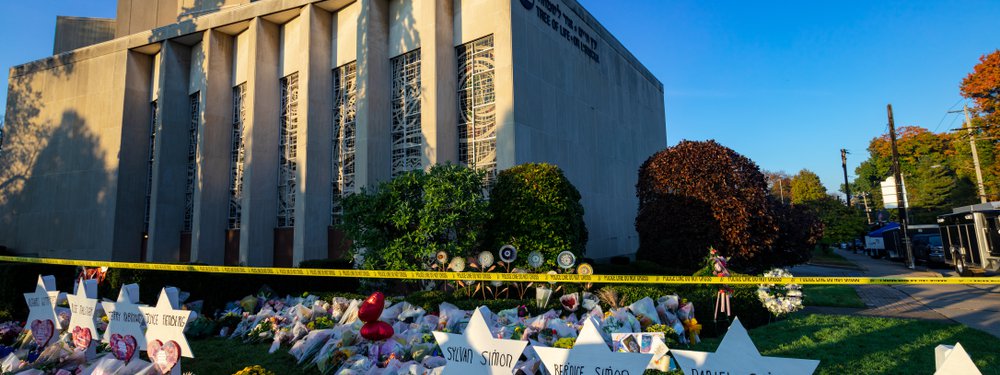
On top of that, reports serve as helpful reminders even to individuals staunchly opposed to antisemitism. With all that鈥檚 going on in the world, it鈥檚 easy to forget about the many different layers of prejudice that may benefit some and hurt others. In this light, reports on antisemitism remind the nation that Jews still face brutal violence as well as of quiet antisemitism, and they call everyone to the national table to discuss how to be supporters and allies of the Jewish community. This support has many faces. In instances of responding to antisemitism, it often materializes as members of other faiths in solidarity, or as like the Hebrew Immigrant Aid Society, whose after the Tree of Life Synagogue shooting in Pittsburgh in October 2018.
The same logic plays out when there are about hate crimes and discrimination affecting other minority groups, including , , and the . Like reports on antisemitism, these governmental and organizational reports serve a primarily outward-facing function: They don鈥檛 tell a minority to retreat to the bunker; they call the majority population to action.
Ultimately, reports on discrimination and hate crimes play a necessary role in shaping memory culture and our perceptions of the society we live in. In a world that鈥檚 constantly flitting from one fad to the next, these reports refocus attention on perennial problems鈥攁nd remind the broader population that, uncomfortable as it is, the past is still present.
More 国产视频 the Authors
Elizabeth Osman
Related

Don鈥檛 START Now

Room to Grow: Expanding Access to Early Education by Rethinking Physical Space

Cosmetology Students Deserve Better Than Debt and Broken Promises
