
The Approaching Reality of Equal Pay?
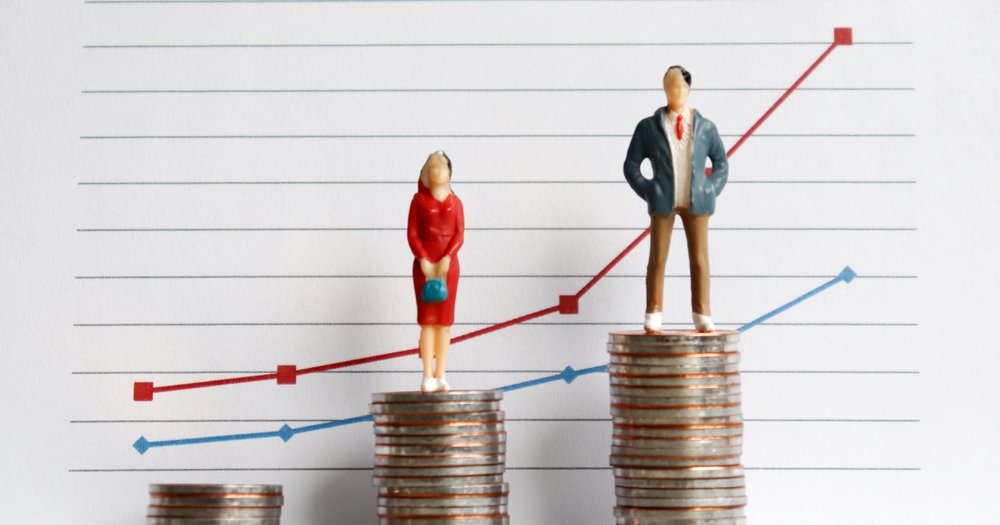
In 2012, Aileen Rizo learned that a male colleague had been hired to work for the Fresno County Office of Education鈥攂ut at a much higher pay than what she was receiving. This, despite the fact that she had more experience and seniority. When Rizo addressed the issue with her employer, she learned that new employees鈥� salaries were based on their salary history. So, because she had been paid less earlier in her career, Rizo was essentially doomed to be paid less at the education office.
Now, fast-forward to this month. On April 9鈥攖he eve of Equal Pay Day鈥擱izo won her case against the Fresno County Office of Education, a precedent-setting victory that may help women in the United States earn equal pay for the same work as their male peers. The U.S. Court of Appeals for the Ninth Circuit 听颈苍 Rizo v. Fresno County Office of Education that using prior salary to calculate current wages goes against the . In other words, the court found that because gender is so deeply linked to salary history, it鈥檚 largely a way to discriminate on the basis of gender.
Rizo鈥檚 story, in many ways, isn鈥檛 that unique. Across the country, women are routinely paid less than their male counterparts, in no small part because it鈥檚 always been that way. (The problem is even worse for minority women鈥攚hile white women 81 cents to the white male dollar, black women earn only 68 cents and Hispanic women 62 cents for the same work.) However, the court鈥檚 ruling arguably serves as a barometer of where society is and where it鈥檚 heading. As a result, it鈥檚 worth revisiting America鈥檚 long-entrenched 鈥攁nd investigating why this ruling is so meaningful.
To understand the stakes of gender-based wage inequality, let鈥檚 take a look at another recent example. American women in the international development profession . In an effort to be transparent and fair about wages, the U.S. Agency for International Development collects salary history for its contract workers. For each new job a worker begins, she or he must complete a 鈥渂iodata鈥� form, which includes past salary history. Common practice is to offer a 5- to 10-percent raise based on the highest salary the worker earned in the previous three years. Any raise over that amount, even in an effort to align a woman鈥檚 salary with her experience, could raise flags with the U.S. government and, in turn, jeopardize the contract.
However, wealth begets wealth. These issues therefore have drastic implications for women鈥檚 financial lives. Experiencing early wage discrimination can set women back again and again, as small-percentage raises prevent them from ever truly breaking the cycle. With less available capital, women typically can鈥檛 invest their money at the same rate as men and, in consequence, with only two thirds of the funds. Moreover, women more debt than men. Women for nearly 65 percent of U.S. student loan debt. Because women often聽 to earn the same salary as men, they begin with more student loan debt, and it only compounds itself over time. Earning less usually means that women make smaller payments on their loans, and with high interest rates, their debt only accumulates over time.
On top of that, it鈥檚 not a stretch to see how the wage gap鈥攅specially its attendant financial burden鈥攊nfluences women鈥檚 willingness to take career risks that can help them advance. In Lean In: Women, Work, and the Will to Lead, Sheryl Sandberg鈥檚 seminal 2013 book on women in the workplace, the author advocates for women to think of their careers as jungle gyms rather than as ladders. She argues that women may ultimately advance or find more satisfaction in their careers by making lateral moves that may mean stasis or a reduction in pay. While sound advice for many reasons, following it could lead women to earn less over their lifetimes, due significantly to wage discrimination based on salary history. (And this is to say nothing of how America鈥檚 approach to salary potentially makes everyone worse off鈥攆or instance, by unintentionally punishing both men and women who spend part of their careers in public service fields, which often pay less than the private sector.)聽 聽
In this light, what, more broadly, does the decision of the Ninth Circuit Court of Appeals reveal about gender equality in present-day America?
For one, it鈥檚 part of a reinvigorated focus across the country on the less subtle, though no less corrosive, ways in which women face discrimination in the workplace. More specifically, the court鈥檚 decision follows similar legislation recently passed in Massachusetts, California, Delaware, Oregon, and Puerto Rico that bars employers from asking for employees鈥� salary histories. While this decision only applies to the Ninth Circuit (which includes Alaska, Arizona, California, Hawaii, Idaho, Montana, Nevada, Oregon, and parts of Washington) and to those states that have passed their own legislation, it sets a powerful precedent for the rest of the country. Crucially, the ruling has implications for Silicon Valley, an area with a when it comes to its treatment of women.
This isn鈥檛 to suggest, of course, that this one court decision will eradicate gender inequality as we know it. Other states have previously tried and failed to implement parallel legislation. Michigan, Illinois, and Wisconsin have all proposed similar that were subsequently prohibited or vetoed. It鈥檚 also important to note that while the decision of the Ninth Circuit鈥攚hich is regularly as one the most liberal circuits鈥攎ay influence other federal courts of appeal, its decision isn鈥檛 binding. So, if another court of appeal rules differently on a similar case, the U.S. Supreme Court will decide on the final matter, and its ruling would take national precedence.
Still, despite the technical hurdles yet to be surmounted, this recent decision brings women hope for a more equitable future. While issues such as the unequal burden of child and elder care and a lack of access to affordable child care may continue to make it difficult for women to achieve wage parity, ending discrimination based on salary history is an important step in the right direction. Indeed, as U.S. Circuit Judge Stephen Reinhardt in the court鈥檚 majority opinion for Rizo鈥檚 case, 鈥淭o hold otherwise鈥攖o allow employers to capitalize on the persistence of the wage gap and perpetuate that gap ad infinitum鈥攚ould be contrary to the text and history of the Equal Pay Act, and would vitiate the very purpose for which the Act stands.鈥�
In addition to so much else, America鈥檚 apparent determination to close the gender wage gap is a promising sign that more rulings like it might follow鈥攔ulings that make clear that lower pay is all too often a proxy for being a woman, and that it鈥檚 high time we do something about it.
More 国产视频 the Authors
Related

Engagement in a Civic Education Desert

Built to Last: How Leaders Are Creating Sustainable Early Childhood Funding

Pre-K Is Having a Curriculum Moment. A Professional Learning Movement Needs To Follow.
