
Sabia Prescott
Policy Analyst, Education Policy
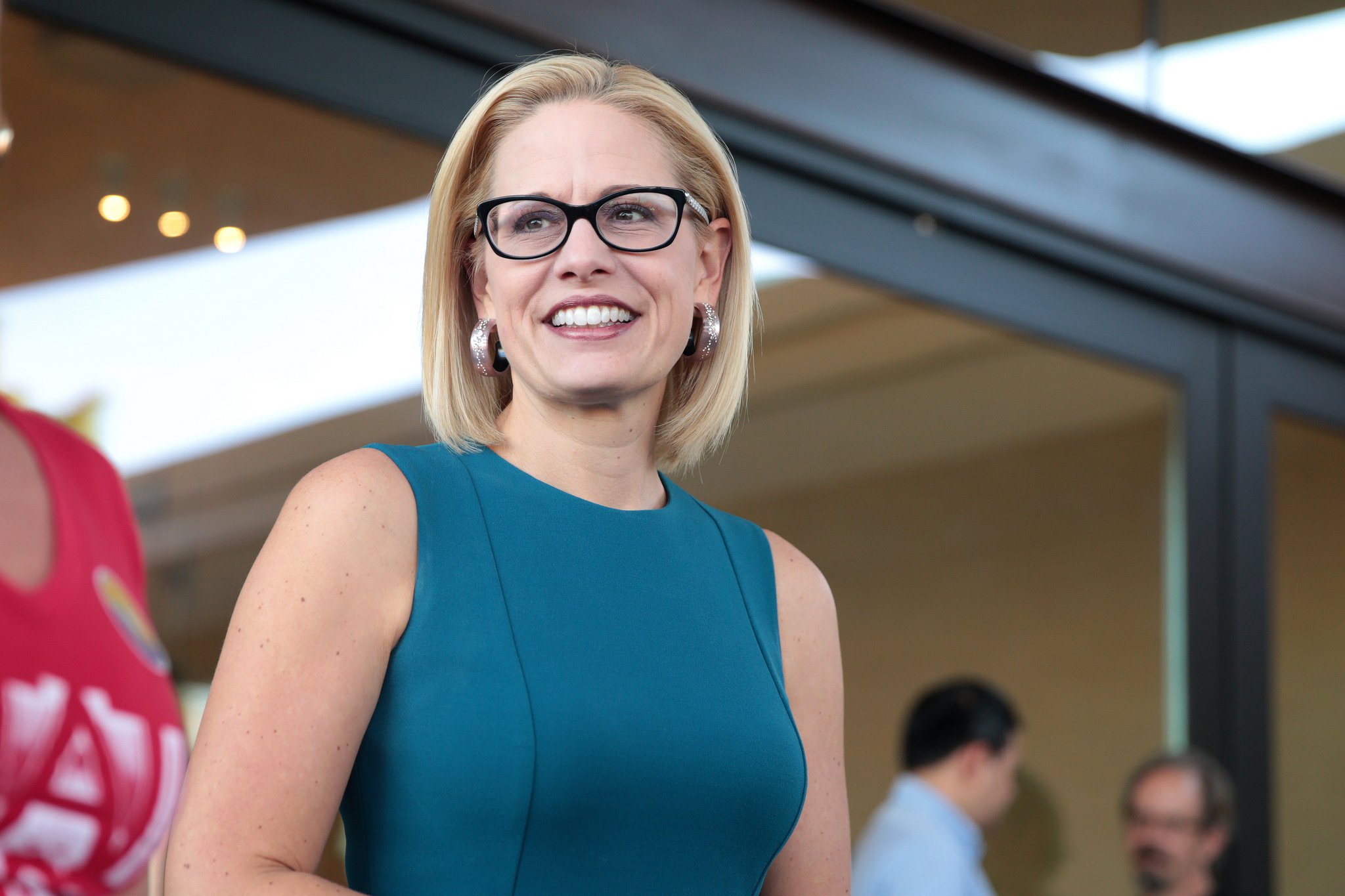

Six days after the 2018 midterm elections, Kyrsten Sinema was declared the winner of a close and contentious Senate race in Arizona. The news media hailed her come-from-behind win as historic鈥攁nd rightly so. She鈥檚 the first woman from Arizona to have ever been elected to the U.S. Senate, the state鈥檚 first Democratic Senator in more than two decades, and the first openly bisexual senator. Informed meaningfully by having grown up in poverty and attended community college, Sinema is known for being a strong advocate of affordable health care and public education鈥攖wo planks of her platform that inspire hope in her supporters.
And yet, despite the promise of Sinema鈥檚 victory, in Arizona, everything isn鈥檛 all rainbows. In fact, it鈥檚 possible that the state鈥檚 classrooms may become the next political battleground: Arizona is U.S. states with laws that prohibit the promotion of homosexuality (also called 鈥渘o promo homo鈥� laws) and that expressly forbid teachers of health and sexuality education from discussing lesbian, gay, bisexual or transgender identities in a positive light鈥攊f at all.
But before we go into all the ways in which these laws are harmful to, in this instance, queer Arizonans in the present and what they may mean for Sinema as a Senator in the future, let鈥檚 look at how they came about in the first place.
Oklahoma the country鈥檚 first anti-gay curriculum law in 1976. The legislation was primarily promoted by Anita Bryant, a popular singer and prominent Florida Orange Juice spokeswoman. In addition to innocuous publicity ventures, she was also involved in multiple anti-gay 鈥淪ave Our Children鈥� campaigns . Between 1987 and 1988, nine states adopted anti-gay curriculum laws鈥攄espite a 1986 from the Surgeon General of the United States that read: 鈥淭here is now no doubt that we need sex education in schools and that it include information on heterosexual and homosexual relationships.鈥� It continued, acknowledging that 鈥渙ur reticence in dealing with the subjects of sex, sexual practices, and homosexuality鈥� was inhibiting 鈥渙ur youth鈥� from gaining 鈥渋nformation that is vital to their future health and well-being.鈥� The report was deemed so critical to public health that Congress made the decision to mail a condensed version to every household in the United States, in order to ensure that the public was informed about HIV, which at the time was devastating, in particular, communities of queer men all over the country.
Apparently, Republican lawmakers in Arizona fell off the mailing list, because shortly after the report was delivered nationwide, an HIV education law was proposed that they initially rejected. But due to the mounting public health crisis across the country, and to the pressure to educate everyone about the spread of the virus, they felt compelled to pass something. Arizona Republicans compromised鈥攂y including anti-gay language in legislation. Arizona law specifically states that 鈥淣o district shall include in its course of study instruction which: 1. Promotes a homosexual life-style. 2. Portrays homosexuality as a positive alternative life-style. 3. Suggests that some methods of sex are safe methods of homosexual sex.鈥�
The price is too high for Kyrsten Sinema to do nothing鈥攑lus, she may have the cultural and political wherewithal to move things forward.
Now, fast-forward to the darkly ironic year of 2018. Arizona has both harmful, homophobic education laws and a bisexual, education-focused Senator-elect. A from the Gay, Lesbian, and Straight Education Network shows harrowing statistics for LGBTQ students in the state, and what鈥檚 at stake for them when it comes to LGBTQ equality in the classroom: In a 2015 survey, 82 percent of LGBTQ students reported hearing homophobic remarks in school, and 71 percent reported bullying based on their sexual orientation. At the same time, only 21 percent indicated having access to a queer-inclusive curriculum, and only 7 percent reported having a comprehensive anti-bullying policy at their school.
These numbers point to more than 鈥渏ust鈥� a disadvantage for some students. Researchers from the Williams Institute that early negative experiences in school not only shape the economic lives of LGBTQ people鈥攖he less engaged students are in school, the more likely they are to drop out, to experience poverty, and to attempt suicide鈥攂ut they also have a negative effect on a state鈥檚 economy writ large. 鈥淓ducation discrimination excludes LGBTQ students from opportunities to increase their human capital (that is, their knowledge and skills) and to be employed in higher-skilled jobs that contribute to overall economic productivity,鈥� the researchers explain. Recognizing the dependent relationship between how students are treated in school and what they鈥檙e taught, an inclusive curriculum remains a ripe opportunity for improving a critical aspect of queer students鈥� experiences in school.
In some ways, overturning Arizona鈥檚 no promo homo laws may seem like low-hanging fruit, especially in 2018. The laws are, after all, deeply homophobic, further marginalizing queer people in a particularly insidious fashion: disappearing them from public discourse. But this battle won鈥檛 be an easy one to fight. Early next year, Sinema will will represent a state whose government has actively fought LGBTQ protections. Governor Doug Ducey and State Attorney General Mark Brnovich, for instance, both have histories of actively working against LGBTQ legal protections in the deep red state. In addition, State Superintendent of Public Instruction Diane Douglas 2016 Obama-era guidance on transgender bathroom laws, claiming that communities, rather than the federal government, should decide whether to offer trans students basic rights. And the and the both rank Arizona in the bottom 3 percent of U.S. states in terms of how it regards people of gender and sexual minorities.
Clearly, the odds are stacked against the newly minted senator.
Still, the price is too high for her to do nothing鈥攑lus, she may have the cultural and political wherewithal to move things forward. Sinema鈥檚 background, support base, and momentum uniquely position her to make the sort of changes across Arizona that have never before seemed truly possible. No promo homo laws are a sobering reminder that policies born out of fear, discrimination, and the corrosive pieties of the past have adverse effects on all citizens, even the most prominent among us. How Arizona deals with reconciling its anti-gay state law with the results of this election will go a long way toward showing the nation what type of state it wants to be.
Policy Analyst, Education Policy