
Australia: Social Media’s Lab Rat
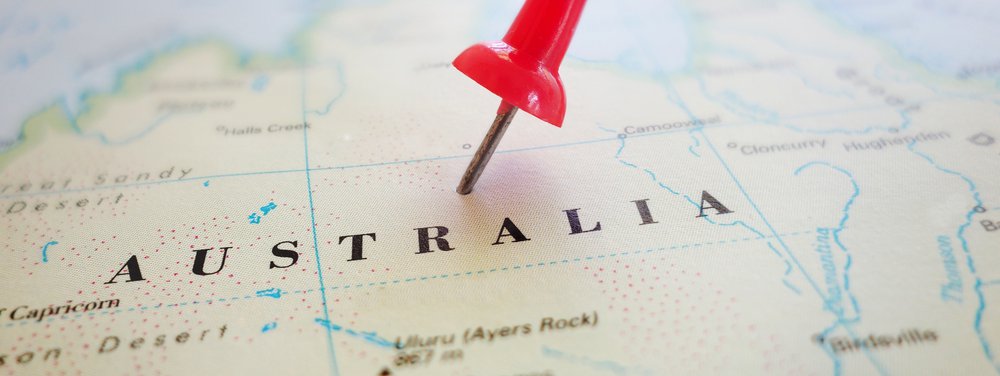
On the other side of the world, there is a remote and mysterious land where countries and companies alike go to perform dangerous underground experiments. Between 1952 and 1958, the U.K. conducted multiple there, using highly radioactive materials, the locals kept mostly unaware of the risks. China allegedly uses the place to , including 鈥渟trategies for breaking up the global reach of the United States.鈥� It has a relatively small, uninfluential economy, making it a great place to play around with money: Private equity firms have used it to test 鈥�,鈥� popular in the U.S. and Europe but untested in the region, while it鈥檚 also been called the 鈥溾�� due to the lack of fragmentation in its markets. Domino鈥檚, meanwhile, tested there.
The most far-reaching experiments, however, are conducted from afar. Managed from across the Pacific, in Silicon Valley, they take place on the inhabitants鈥� smartphones. Facebook, Spotify, Tinder鈥攁ll have used the society as a test dummy for new features.
That land is Australia, and it is social media鈥檚 favorite guinea pig鈥攐r guinea , if you will. Australia has become a favored testing ground for new features, a popular place to . As asked in 2015, 鈥渋f a product flops in the outback and no one hears about it, did it really happen?鈥�
Remember Facebook Messenger鈥檚 鈥溾��? No? Messenger tested the 鈥渂ulletin board-style鈥� messaging feature on Australians in 2016, allowing them to chat with strangers about specific topics, not unlike in a public Facebook group. (The trial appears to have failed, never making it out of Australia and Canada, and was .) How 鈥檅out ? In October 2016, Facebook tested its Stories precursor on us, a feature that allowed users to share sticker-filled content on Messenger that would expire after 24 hours (Australia was the first English-speaking nation to trial it). The feature was soon rolled out globally, although Day was later .
In August 2016, Facebook tried to see how much it would piss Aussies off. Apparently they could handle it, because it launched globally the following year (as did a bunch of articles explaining , with some annoyance at whoever gave that 鈥溾��). In January 2017, Messenger tested inbox ads in , then expanded the trial after 鈥�.鈥� In November 2017, Facebook used Australia as a practice pen for by asking users to upload their own nudes鈥攏ot a trial you want going wrong.
This year, Facebook鈥攚hich still treats me as an Australian, even though I now live in the U.S.鈥攍et me test its feature. That trial appears to have ended, but it鈥檚 now being tested on in the U.S. The wording of the instructions has since been tweaked, from 鈥淧ress the down arrow if a comment has bad intentions or is disrespectful鈥� to 鈥淪upport comments that are thoughtful, and demote ones that are uncivil or irrelevant.鈥�
Similarly, Spotify has called Australia its 鈥�.鈥� The streaming service used the land down under to pilot Discover Weekly in 2015 and is back at it again, currently a feature called 鈥淎ctive Media,鈥� allowing users to skip ads at any time. Tinder has been known to trial its products there too, including (helping you meet people who frequent the places you do), (allowing users to set up group dates), 鈥溾�� (ordering potential matches based on different criteria), (allowing you to force your friends to match), and the much-maligned .
On Sunday I was added to the test group for Facebook鈥檚 Tinder-esque meetup feature, which asked me to swipe right (or click yes) on the Facebook friends I wanted to hang out with so it could hook us up. first reported the trial in September 2017, when the feature was being tested on control groups in Toronto and New Zealand. (Facebook鈥檚 real Tinder, on the other hand, is being tested on Colombians, with the company announcing the trial rollout of there on Thursday.) Clearly, Australians are not alone鈥擪iwis, Canadians, and Colombians are Facebook test dummies, too. Or perhaps that should be crash test dummies, since so many of its ideas don鈥檛 work out.
Why us? Of course, it makes sense to test products in a limited market, especially given the way social media users freak out about the smallest change to their social (media) lives. The number of failed Facebook products is , and there鈥檚 no need to put everyone through it. But why must some of us be forced to put up with constantly changing apps?
Facebook didn鈥檛 get back to me about why Australia. A spokesperson would only say that the company tests features on small groups of people, sometimes a whole country, to make sure they鈥檙e moving in the right direction. But there are a few obvious reasons. Australia has a small, relatively contained, English-speaking user base and a culture from America鈥檚, making it a perfect product petri dish鈥攁 鈥済ood proxy for white, Christian America,鈥� according to business consultant . As points out, 鈥渁t a population of 24 million and with a predominantly Western culture, it鈥檚 a large enough test bed and small enough market.鈥� We have a reasonably high Facebook , but with our small population, we don鈥檛 even crack the .
We鈥檙e fairly remote, though maybe not as remote as Tinder co-founder Sean Rad thinks. At in 2016, Rad said Australia is a good place to trial features because we鈥檙e 鈥渇ar away from everywhere鈥� and we don鈥檛 鈥渃ross-pollinate鈥� with the rest of the world. (鈥淚f you are going to leave Australia it鈥檚 a big deal,鈥� he added condescendingly.) And hey, we鈥檙e basically financially worthless, so if things go wrong it hardly matters! As TechCrunch noted about , 鈥淎ustralia鈥檚 smaller market means any lost revenue will be relatively small.鈥�
It鈥檚 a reminder that we鈥檙e not the primary market鈥攏ot the real audience (as if we鈥檙e not reminded of our global irrelevance regularly enough). We鈥檙e just a faraway population to test things on. And when things go wrong, it鈥檚 Australians who suffer the consequences鈥攕uch as when Tinder tested Tinder Social on Aussies, inadvertently . Those privacy kinks were ironed out by the time the feature was rolled out, with the update launching as an opt-in feature (Tinder Social was discontinued in August 2017, according to ). Rad told , 鈥淥nce we felt that it was clear that solved some of the concerns we were getting around privacy and what not, then we rolled it out.鈥� Never mind those Aussies whose Tinder profiles had already been exposed to their laughing mates.
Tech companies are working desperately to meet the demands of its users, but obviously, some users matter more than others.
This article in , a collaboration among , 国产视频, and .
More 国产视频 the Authors
Related

Disability in the United States at 250

From 鈥楻isky Business鈥� to 鈥楳ission: Possible鈥�: Why ECE Learning Cohorts Work

State Education Budgets in Turbulent Times
