Brigid Schulte
Director, Better Life Lab
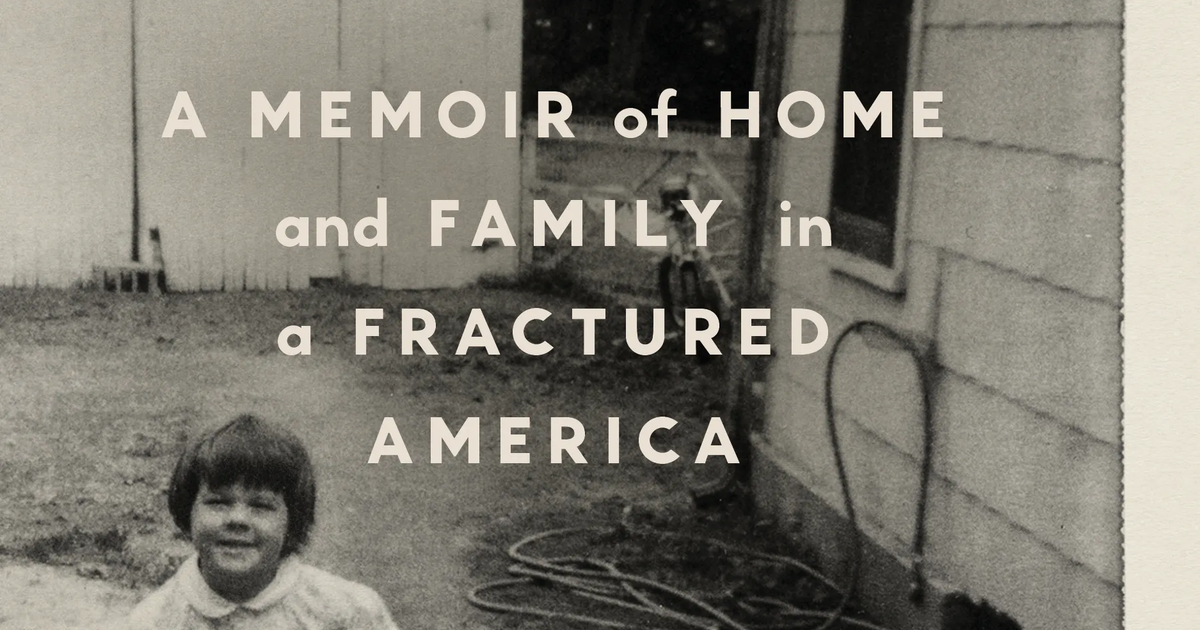
At a time when, journalist and author Beth Macy wonders, had she stayed in her hometown of Urbana, Ohio, would she have become a Trump voter like the rest of her family? In her new book,, Macy deploys her formidable reporting skills to ask a basic question: Did I change? Or did my hometown change?
In her visits home, Macy recounts how a once progressive ex-boyfriend became an angry right-wing conspiracy theorist, and high school reunions marred with fights over QAnon and vaccines. She follows a young man named Silas, who, like her, grew up poor. But whereas Macy had a mother who loved her 鈥渞oughly but well鈥� and public policies that gave her the opportunity to go to college and move up and out, Silas has none of that.
Like many small towns across the country, the middle class in Urbana has been hollowed out. Rural areas, she notes, have lost 48 percent of their jobs since 1970, when free trade policies and globalization sent many of them overseas. In her town, once the stable jobs went, opioid addiction set in. Graduation rates dropped. Foster care tripled. The share of people relying on public nutrition benefits soared.
At the same time, the local news crumbled. One by Northwestern University鈥檚 Local News Initiative found that nearly 40 percent of all local U.S. newspapers have disappeared, leaving 50 million Americans with no reliable local news source and subject to the vitriol spewing out of the internet, where lies spread than truth.
鈥淗ow,鈥� one of Macy鈥檚 friends asks in the book, 鈥渄o you love past what you don鈥檛 agree with or can鈥檛 understand?鈥�
Paper Girl follows Macy鈥檚 journey to try to find out.
The following is a transcript of our conversation, lightly edited for length and clarity.
Brigid Schulte: Your book is just beautiful. It鈥檚 a heartbreaking portrait of family and divided lives. It鈥檚 so of the moment. Let鈥檚 start with why鈥攚hy did you want to write this book and why now?
Beth Macy: As my mother was starting to get sick, she was diagnosed with dementia around 2015, we started going home more. And I just started noticing the changes in my hometown. It wasn't like it hit you over the head. But it was like, 鈥淲hy are there Confederate flags hanging in a town that once heralded itself as an important stop on the Underground Railroad and has a soldier of a victorious Union soldier in the middle of the town square?鈥�
Really, the initial thing was wondering, 鈥淗ow did my siblings and I end up so ideologically different?鈥� Hillary Clinton made her unfortunate 鈥渄eplorables鈥� remark, and months later, just as I thought I was in a sweet conversation with my brother-in-law, I would say, 鈥淗ey John, how you doing?鈥� He'd go, 鈥淒eplorable.鈥� And want to start [fighting] about it. Then my brother, Tim, unfriends me on Facebook because of all the 鈥渓iberal shit鈥� I post. And, I promise you, I was posting fact-check articles from the Washington Post and the New York Times. It was just becoming clearer and clearer that they were not at all in the same news silo that I was in. It was very much a case of two Americas: one 鈥渆lite鈥� people who had gone to college, and the other, everyone else. Well, only 36% of Americans have a bachelor's degree. So if we're going to turn this around, we've got to put more emphasis on public education again.
Schulte: You write a lot in the book about how education was what propelled you up and out of your hometown. And how, because of policy choices, that鈥檚 not as likely to happen anymore.
Macy: I consider myself really lucky to have come of age鈥擨鈥檓 61鈥攁t this brief moment in time when it was possible for a poor kid to get a four-year degree for free, via Pell Grants. And now, as in the case of the young man I write about in the book, the 鈥測oung me鈥� of the book, Silas James, a poor kid going to a four-year school, is only going to get about 30% of it paid for.
Had I been born just 10 years later, I wouldn't have been able to leave town. I wouldn't have been able be as productive as I am. I wouldn't have been as happy or as successful. And I may have fallen into patterns that have bogged my family down for many, many years, including addiction.
So I have a little survivor's guilt about it. I have a lot of curiosity about it. But also, I love my family and I just like, 鈥淚s this the end of us?鈥� That was the driving question behind the book. And how do we begin to have those conversations?
Schulte: You write about some really difficult moments trying to bridge that divide with your family. How has your family reacted to your book? And where are you now with your relationships?
Macy: My sister Cookie and I were together a few days before Mom passed away in November, 2020. We were in her hospice room, and the nurse said that they鈥檇 called the election for Biden. Cookie said, 鈥淵ou wait. It's fraudulent. He won't win.鈥� She鈥檇 posted some pro-Trump things on Facebook, but I'd never heard her talk like that. I was just shocked. And I wrote a about it for the New York Times. They only left it open for comments for about an hour, but there were hundreds.
So when I interviewed Cookie for the book, I used the same trauma-informed interviewing that I used for my books about opioids: be an active listener, start with what you have in common, which in our case is our mom, who is so hilarious and so feisty and funny and like no one else I鈥檝e ever known in the world. I brought some old family photos. I brought some letters mom had written that she was mentioned in, and we just went from there.
I think we have to start finding those little cracks. Like my brother. My brother totally comes around by the end of the book and we're friends again. He comes to see my non-binary child Sasha's band perform. He drives eight hours for their album release in Charlottesville. Tim is now a superfan of the band on Facebook. I鈥檓 really grateful to my brother for his tenderness and his support.
My mother's the comic relief and the grit of the book. She asked me, maybe around 2015, when she was still pretty with it, 鈥淲hat鈥檚 your next book about?鈥� This is when I was writing Dopesick, so I said, 鈥淚鈥檓 writing about the heroin epidemic.鈥� 鈥淗eroin?鈥� she says. 鈥淵ou should write a love story.鈥�
In some ways, this book is my love story to my mother who instilled in me a love of education. She proofread my first papers. She drove me to college, even though she really didn't want me to go. She was proud of me. We would clash sometimes. She wrote me a poem called 鈥淓aster Greeting to my Mean Daughter.鈥� There was just no one like her. And here she is helping me even now by giving the reader some lightness amidst all this darkness. I consider this book a huge tribute to her.
Schulte: In your book, you weave together not only what鈥檚 happening to your family and your town, but you show how these lives were shaped by policy decisions on the state and national level and by our turbulent national political discourse. What struck you most?
Macy: I originally thought the book was going to be more about the decline of news because I was a paper girl, and a long-time newspaper reporter. I think the decline of fact-based news and the barrage of wealthy billionaires getting rich off standardless practices online is a big part of why we're so divided.
As a reporter, when I have a question, I just always start from the ground. Here, I started with teachers. And what I started to see came as a real shock: how the value in public education has plummeted, and how Christian nationalists have really driven this homeschool movement, now the largest educational movement in the country. The deregulation of homeschools, which just happened a couple years ago, enables people to pull their kids out and they no longer even have any checks on what their children are being taught. There was even a in Ohio.
The few people in the middle class who do still have kids in Urbana City schools pull them out and are able to, because of and send their kid to an even more rural school with higher test scores, and that money goes with them. So that hurts the kids left behind. There are tons of charter schools and, and private schools, and all that money goes with those kids too.
An unintended consequence of that is the less-educated folks are left behind, some of them suffering from mental health and addiction. Those who aren't mentally or physically able to get their kids up in the morning, or who simply don't, can then say they're homeschooling to avoid truancy charges.
All these things are a shock to the people in my hometown, because the local newspaper there no longer exists and there鈥檚 been no reporting on it.
If you were driving through Urbana, you would think it was really cute, and it is really cute. But a block away or two blocks away from the city center, you start to see underbelly really quick: kids riding around on bicycles in the middle of the day who aren't in school, and a truancy officer running from one end of the county to the next, and they need about 10 of her. I think that's a story we're not telling enough.
Schulte: You write a lot about how more people know what Sean Hannity says on Fox News than they know what鈥檚 going on in their own town halls, or with that truancy officer. That鈥檚 happening all over the country.
Macy: The Roanoke Times has maybe four reporters. It had over 60 when I came there in 1989. There are some nonprofits that are starting up. Here in Roanoke we have Cardinal News. I鈥檓 on the advisory board. They have more reporters than the Roanoke Times. We also have the Roanoke Rambler, which gives a deep dive into what鈥檚 happening in the city. I鈥檝e also started writing a Substack to write about how the federal budget cuts are impacting people locally. But we need more, and we need everybody to support local news. We鈥檝e just got to start to stitch back these institutions that are so frayed.
Schulte: That鈥檚 so true. And if we don鈥檛 have a local media telling those stories of people and families left behind or overlooked in our own communities, then we can鈥檛 understand the turmoil of the current political moment.
Macy: Low-wage people don't have a voice in our press. The Pew Research Center looked at all the articles that came out right after the 2008 recession. Only 2 percent of those articles featured people who were impacted by the recession. Everything was from the point of view of companies and CEOs. That was shocking to me. So it's possible to be in a big city and never have to go home to a place like Urbana, or drive through a place like Martinsville, Virginia, where Factory Man is set and understand that wow, in Martinsville, half of the jobs have gone away.
Not just the furniture factories and the textile mills, but also the places where the former factory workers spent their money鈥攖he mom and pop diners. And now people are having to drive their clunker cars to North Carolina for work. That's a direct aftermath of NAFTA and China joining the WTO in 2001 and Clinton policies.
And we did nothing for the people left behind. We had this very watered-down program called TAA, Trade AdjustmentAssistance, that was supposed to re-train these workers for the knowledge economy. Only one third of the workers even took part in it. You had to be in school full-time to get the benefit. Well, how are people going to pay their mortgage? And even those who did go through the program ended up getting service jobs. We designed that program badly. We don鈥檛 bring the people and those who are most impacted into the conversation.
We have to understand where we are. I hope this book will help.
Schulte: So give us some hope here, Beth. If the goal is to help all families flourish in the United States, how do we get from here to there?
Macy: We can't just be out there, like the Ohio gun owner in my book stating, 鈥淎mmo up for the end times, train daily, eat red meat.鈥� No. We've got to participate in our communities and begin to elect better people who are fighting for really important things, like public education and childcare and a raised minimum wage.
And we have to start really connecting with each other. I took my own advice. After I finished the book, on President's Day, we had a rally [in Roanoke] outside of our congressman's office, who refuses to have a town hall meeting and who has voted against all these things I'm for.
And we've been showing up every Monday at rallies. For some people, this is the first time they鈥檝e ever protested in their lives. Suddenly, we鈥檙e building alliances. They start bringing food to deliver to food pantries, and they start organizing, collecting diapers for a diaper bank. I met somebody who talked me into packing Narcan kits with the Harm Reduction Group on Mondays. We have to start building these bonds back. Who would be against giving low-wage moms diapers and formula and wipes?
We've got to get out and register new voters. So I have put my journalist hat aside and am on my way to being an activist now. I鈥檝e got to walk my talk.
We are the solution. People are the solution. Community is always the answer.
Director, Better Life Lab