
Joe Wilkes
Editorial Manager
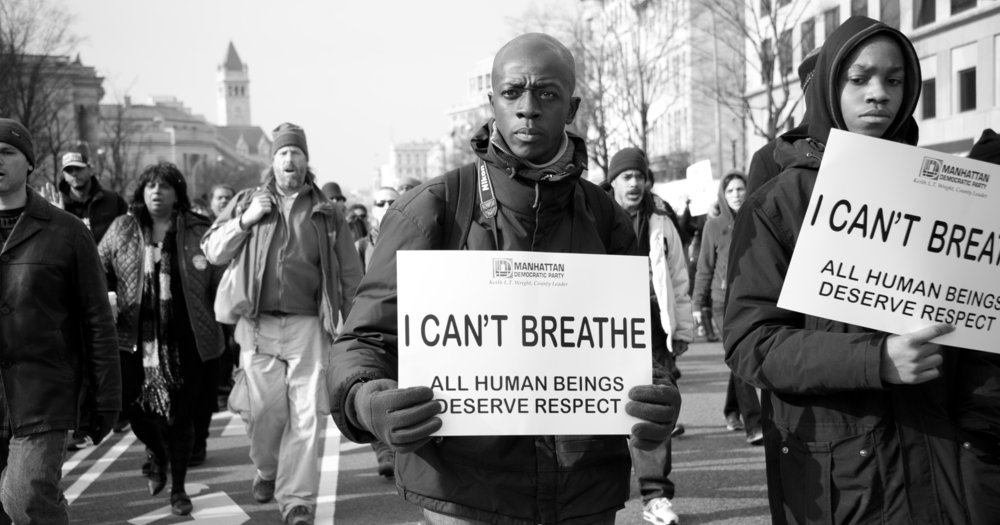
Now and throughout history, America has not been kind to those with darker skin. Being Black in America is like trying to breathe while someone has their boot on your neck鈥攁 pressure that fluctuates, occasionally granting the illusion that a full breath might be possible. In a country built on lofty, oft-cited notions of freedom and equality, people of color are still treated in a manner that makes a mockery of these ideals. And for all that, many of us love this country no less than those for whom it was built鈥攅ven while recognizing the innumerable ways it has failed us.
国产视频 campaign and presidency sparked a new time in our nation鈥檚 history鈥攁 time when the boot applied a degree of pressure that, as a Millennial, I have never experienced prior. But it also, paradoxically, came as a relief.
To understand what I mean by that, we have to take a moment to think about where we were coming from. Growing up in a small, very white town in North Carolina, I remember what a revelation it was to see Barack Obama run for president. I remember standing outside the Mooresville Public Library on election day, telling passersby that this was their chance to cast a ballot for a president who would bring about a new era鈥攐ne we鈥檇 been longing for.
These moments鈥擮bama鈥檚 campaign, inauguration, presidency, and reelection鈥攃hanged my life, for both better and worse. It showed me and the rest of the country that a Black man could become president鈥攂ut it also made clear that, in our present day and age, only a certain type of Black man can become president.
I have a deep admiration for Obama, but I鈥檓 also profoundly troubled by many Americans鈥� assumption that his presidency indicates a new era of post-racism. In 2008, Obama鈥檚 election was an inspiration, a sign of things to come. Today, it鈥檚 increasingly probable that America鈥檚 first Black president may very well be its last (especially now that the most diverse Democratic field we鈥檝e ever seen has dwindled, at present, to a handful of white candidates on the next debate stage). The fact is, the Trump administration has brought long-festering racial tensions to the surface: In social media, speeches, interviews, and policy proposals, Trump has taken overtly racist stances in a blatant effort to pander to his white supremacist base鈥攁nd while this has terrifying implications for the Black community, it has also forced us to see America as it truly is.
In short, the Trump administration has accomplished something Obama would never have been able to achieve: It鈥檚 legitimized our insistence that anti-black racism is still very much alive, and that being Black in America is far from easy.
For me, at least, there鈥檚 something cathartic about this. As a Black child growing up in an overwhelmingly white community, I rarely thought about race and had only a fragile understanding of my own identity鈥攐f my own Blackness. But that鈥檚 irrelevant now: Whether or not you recognized your Blackness before the Trump administration, it鈥檚 now shoved in your face on a daily basis.
Young Black people are shot in their own homes, while walking down the street in their own neighborhoods, while driving in their own cars, just for being Black. In the Netflix movie , Kerry Washington鈥檚 character notes that her missing son鈥攁 young biracial Black man鈥攆eels like the 鈥渇ace of a race.鈥� That鈥檚 what you are when you鈥檙e the only person of color in your classroom, on your soccer team, in your group of friends鈥攚hen you鈥檙e forced not only to wrestle with your own identity, but to translate it for the white people around you and help them feel at ease. To be Black in America is to carry the pain of an entire community鈥攁nd, thanks to Trump, that reality is no longer something we can choose to ignore.
This past October, a in Nashville, Tennessee unpacked the realities of being Black in the age of Trump. It was a fascinating discussion鈥攂ut what most impacted me was what was happening offstage. While the panelists talked about the difficulties that come with a Black identity, a group of white onlookers shouted back at them, calling them liars and deeming their experiences to be falsehoods. 鈥淲ow, white people can鈥檛 even give us one hour,鈥� I thought to myself. And I realized, yet again, how far we have to go to get to a place where racism isn鈥檛 conflated with patriotism, where my Blackness wouldn鈥檛 be a hurdle to living well鈥攖o living at all鈥攊n America.
You can鈥檛 understand how painful that is unless you鈥檙e Black鈥攏or would I want you to. Growing up Black in America is an injustice, and the truth is, I don鈥檛 know if I鈥檒l ever see a time when America can be said to have transcended racism. Still, I hope to at least see a time when, as a nation, we can come together, acknowledge the rot at America鈥檚 heart, and make a choice to stand against it.
Editorial Manager


