
Jordan Sandman
Senior Program Coordinator, Digital Impact and Governance Initiative
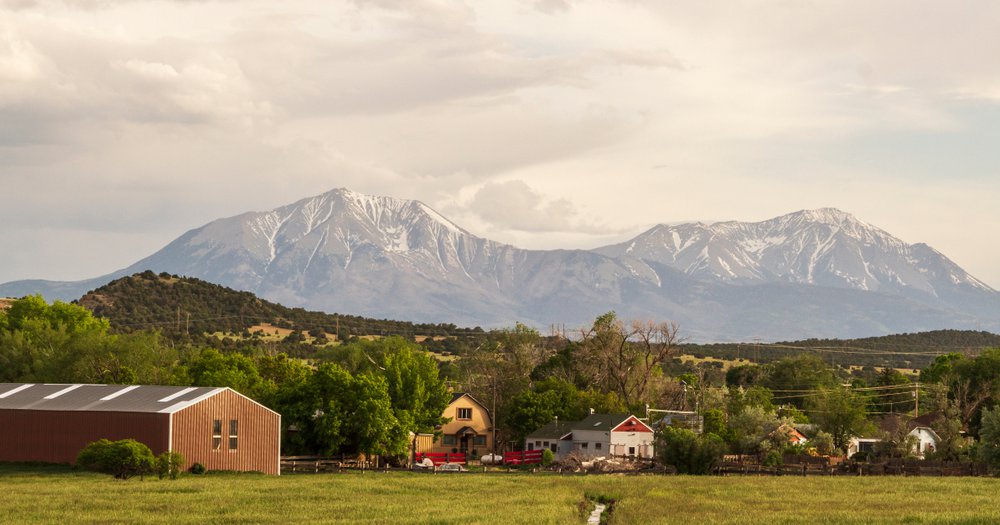
Pulling into Walsenburg, Colorado, I felt uneasy, aware of my status as an outsider: a Jewish urbanite from Washington, D.C. entering a town of 3,000 in quintessential Obama-Trump swing voter country. It would be my home for the next three months during my year serving as an AmeriCorps National Civilian Community Corps (NCCC) team leader.
Walsenburg has the rugged, postindustrial patina of a Rust Belt town in the foothills of the Rocky Mountains. Many houses display scrap materials for do-it-yourself projects and power vehicles in their yards. People drive pickups and wear Carhartt for durability, not fashion. The town鈥檚 businesses are adorned with neon signs that haven鈥檛 been replaced since they were popular in the 1950s. A local motel advertises that its rooms have color TV.
Driving my team鈥檚 15-passenger van through town for the first time, I fixated on a looming 25-foot cross perched on a hill above Walsenburg鈥檚 southern outskirts. Two thoughts popped into my mind: There doesn鈥檛 seem to be much going on here, and I wonder what they think of Jews?
Outside of AmeriCorps NCCC, my assessment of Walsenburg would have ended with this snap judgment. Walsenburg is flyover (or, more aptly, drive-through) country: For most, it鈥檚 a pit stop along I-25鈥攑art of a conduit, not a destination. I texted friends about that cross, incredulous at the town鈥檚 ostensible homogeneity. How am I going to live here for three months?
My perspective, of course, was driven by superficial observations. I needed to actually live in Walsenburg in order to gain an appreciation for it.
Walsenburg holds the seat of Huerfano County, Colorado. Huerfano, which translates to 鈥渙rphan鈥� in Spanish, encapsulates the county鈥檚 history. In 1914, the Colorado National Guard perpetrated the deadliest labor massacre in U.S. history to break up a mineworker strike just a few miles from town. After the mining companies pulled out during the post-WWII era, Walsenburg lost all major industry, shedding nearly half of its population.
In short, the county faced adverse economic odds鈥攅ven before the 2018 Spring Creek Fire.
The third-largest wildfire in recorded state history, Spring Creek destroyed over 130 homes and came within three miles of devastating , the second-largest town in the county. Locals are still suffering from the fire鈥檚 aftermath, and for Walsenburg and La Veta鈥攚hich are immediately downstream of the Spring Fire burn scar鈥攍ong-term damage could be particularly acute. Charred vegetation and soil have diminished the mountainous ecosystem鈥檚 ability to absorb rainfall, resulting in predictions of unprecedented flooding.
Two thoughts popped into my mind: There doesn鈥檛 seem to be much going on here, and I wonder what they think of Jews?
My team and I were sent to mitigate this impending disaster. We were dumbfounded when county commissioner John Galusha first briefed us: Both and faced a severe flood risk during a 10-year rain event. As I settled into the community, I learned of the iterative, dual-pronged trauma that the citizens of Huerfano County are experiencing.
鈥淲e鈥檙e not burning up, so now we鈥檙e drowning?鈥� one resident pondered.
My team attended flood-preparedness town hall meetings and watched residents break into tears over the prospect of losing their homes. Many were unable to afford flood insurance. I saw local government staff wake up before 5 A.M. each day鈥攊ncluding on weekends鈥攖o complete their normal duties in addition to preparing the county for imminent flooding.
Living in Walsenburg is an act of defiance. That鈥檚 hard to realize for people accustomed to labeling places like it 鈥渢he middle of nowhere.鈥� Contrary to my initial conceptions, I didn鈥檛 find it hard to live in Huerfano County. I felt at home working alongside people of varying political backgrounds devoted to a common cause: saving their community through collective rebellion against an existential threat. Similarly, my team鈥檚 diversity and energy eroded common myths that many locals held about urban millennials. They appreciated that we were willing to work hard and get our hands dirty. Each interaction and workday helped renew hope in the future of the town鈥攁nd in the United States itself.
Our country suffers from a geographically driven empathy deficit between people from rural and urban areas, and the divisiveness of the 2020 election only stands to exacerbate perceptions of this gap. This threat isn鈥檛 new鈥擜merica鈥檚 rural-urban divide has been evident since Hamilton and Jefferson鈥檚 agrarian-industrial debate and the Free Silver Movement鈥攂ut in a time of , policymakers should aim to increase interchange and understanding between different cultural segments of our country.
National service programs are an opportunity to institutionalize and scale such exchanges. Evaluations of national service programs show that the social benefits of investments routinely . But no cost-benefit analysis can capture the mutual edification and respect that blooms when people from Chicago and Brooklyn learn to live and work with their counterparts from Wyoming and Kansas. These programs don鈥檛 just inject resources and vigor into underserved communities鈥攖hey help foster the civic trust that forms the basis of our national identity and governmental institutions.
I was fortunate enough to experience the transformative power of cultural and community exchange firsthand. It鈥檚 my hope that other young Americans will continue to have similar opportunities to serve鈥攁nd learn from鈥攖heir neighbors. It may be key to ending our current zeitgeist of bitterness and division.
Senior Program Coordinator, Digital Impact and Governance Initiative


