
Can Malaysia Be Saved?
A coalition of Malaysian politicians met over the weekend to discuss their plans to by forcing the resignation of Prime Minister Najib Razak. It was a dramatic turn in an ongoing corruption scandal that has rocked Malaysian politics, undermined an already struggling economy, and revealed the fundamental weaknesses of Malaysia鈥檚 quasi-democratic system.
Malaysia has a fractured opposition and an institutional apparatus securely in the hands of the Prime Minister. Can the country, which until recently was seen as something of a regional success, still be saved?
Prime Minister Najib has been hounded by allegations of massive corruption since several news outlets, including The Wall Street Journal, last July that nearly $700 million from a state investment fund allegedly ended up in personal accounts linked to the Prime Minister.
The fund, known as 1 Malaysia Development Berhad, or 1MDB for short, was set up in 2009 following Najib鈥檚 election as Prime Minister, but has since suffered from severe mismanagement, accelerating debts, and swirling questions about transparency, which have spurred multiple investigations.
Najib claims there was no funny business. According to him, the $700 million was a donation from a Saudi royal with no connection to 1MDB. But the revelations have prompted calls for his resignation from all corners of the political spectrum, and, despite his attempts to tamp down the scandal, the controversy has just kept growing.
The financial scope of the case has now more than doubled to about $1.4 billion, and investigations into 1MDB-linked funds are underway in at least four countries, including the United States.
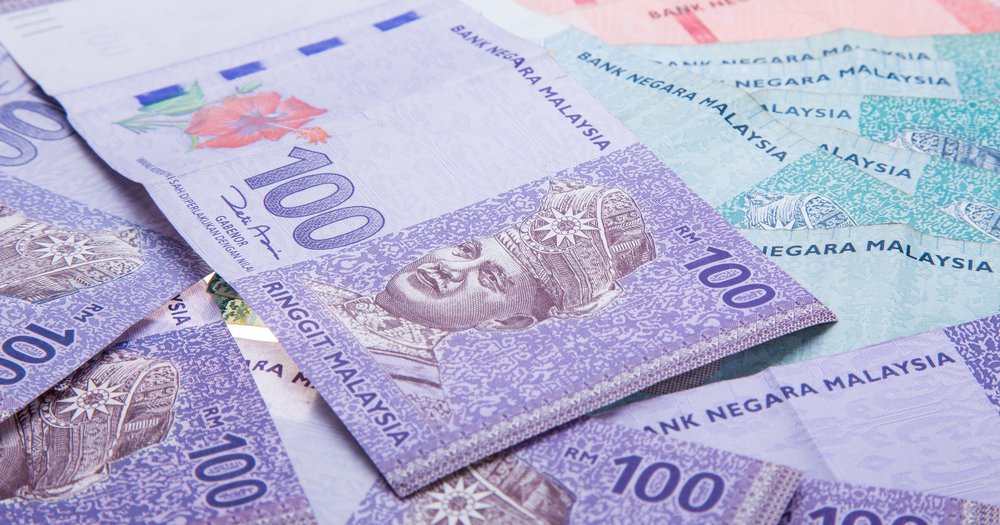
If the issue were just corruption, this might be little more than a salacious news story. Malaysia, however, has one of the in the region. The Malaysian currency, the ringgit, has plummeted in value, and the scandal has only fueled concerns about Najib鈥檚 handling of the economy. Many are worried that the controversy could further erode the confidence of potential investors.
Political pressure on Najib is rising as well. Among the attendees at this past weekend鈥檚 鈥淪ave Malaysia鈥� gathering was former Prime Minister Mahathir Mohamad, who ruled the country for over two decades between 1981 and 2003 and is still highly respected by many Malaysians for his record of strong economic growth. He has been calling on Najib to step down for nearly a year and officially in protest last month from the United Malays National Organization (UMNO)鈥攖he party that has ruled the country uninterrupted since independence from Britain in 1957.
But the implications of the ongoing crisis go beyond a struggling economy and the Shakespearean drama currently enveloping the political class. They strike at the heart of the Malaysian political system.
Until recently, Malaysia was hailed as a success story: a moderate Muslim country developing politically and economically at a rapid clip. But the 1MDB scandal has eviscerated this fa莽ade, as Najib wantonly demolishes the trappings of democracy and uses the system for a single purpose: maintaining power.
Government officials who questioned him have lost their jobs. Last July, Najib , Muhyiddin Yassin (now a prominent member of the 鈥淪ave Malaysia鈥� coalition), after Yassin called for more transparency around 1MDB. The attorney general who launched an investigation into the fund (and, as it was recently revealed, was planning to against the Prime Minister) also got the axe that month.
The authorities have gone after journalists and media outlets covering the story, too. After the revelations last July, the Malaysian government online access to one prominent news outlet with critical 1MDB coverage and of another. Two Australian journalists were recently for attempting to question the Prime Minister about the controversy.
The crackdown on criticism is, not unlike the economic crisis, about more than just this scandal. It is, in part, a response to the results of a hotly contested 2013 election, in which the opposition actually managed to win the popular vote. (It failed, however, to wrest control of parliament from the ruling party as a result of Malaysia鈥檚 heavily gerrymandered constituencies.)
Since the election, Najib鈥檚 government has stepped up use of the legal system to target government critics. The sedition law, a repressive British colonial-era statute that the ruling party last April despite Najib鈥檚 previous promises to ensure its repeal, has been used to since 2013. In December, the ruling party also a bill in parliament effectively expanding the Prime Minister鈥檚 emergency powers.
Najib has also moved to crush the opposition and prevent it from mounting another serious challenge to the ruling party鈥檚 supremacy. On that front, he has made some headway: Malaysia鈥檚 most prominent opposition leader, Anwar Ibrahim, is currently serving a on politically motivated charges. In a country that has been marked for decades by contentious racial politics, Najib has also appealed to deeply-rooted Malay nationalist sentiments to boost his flagging popularity among the ruling party鈥檚 base.
In sum, the government鈥檚 moves have left Malaysia with a crippled opposition, a persecuted media, a gerrymandered parliament, a judiciary eager to do the Prime Minister鈥檚 bidding, and a cabinet of yes-men who have little interest in tackling high-level corruption. These aren鈥檛 all the results of Najib alone鈥擬alaysia has for years to consolidate democracy. But it鈥檚 a striking indictment of the fundamental weakness of Malaysia鈥檚 democratic institutions that Najib has so easily bent them to his will.
It鈥檚 unclear where the story goes from here. The international investigations still hang over the case, but Najib has of corruption by Malaysian investigating authorities (thanks, in part, to his choice to replace key officials). There is of forcing Najib from power before the next election in 2018 given that the majority of his party still backs him and there is little procedural recourse for the opposition.
Even if Najib resigns, however, it is uncertain if a shaky opposition, with its main leader imprisoned, can really 鈥渟ave鈥� the country. The 1MDB scandal is a symptom, not the cause, of Malaysia鈥檚 current woes, and Najib鈥檚 removal will not resolve the country鈥檚 long-term challenges. The problems Malaysia faces run deeper than Najib, and the country can鈥檛 be truly saved until political leaders undertake serious efforts to reform and democratize key institutions.
More 国产视频 the Authors
Related

“Getting the Golden Ticket”: Participants’ Perspectives on Lexington’s First Assembly

Civic Assemblies: A Framework for Community Colleges

Don鈥檛 START Now
