Stephen Burd
Senior Writer & Editor, Higher Education
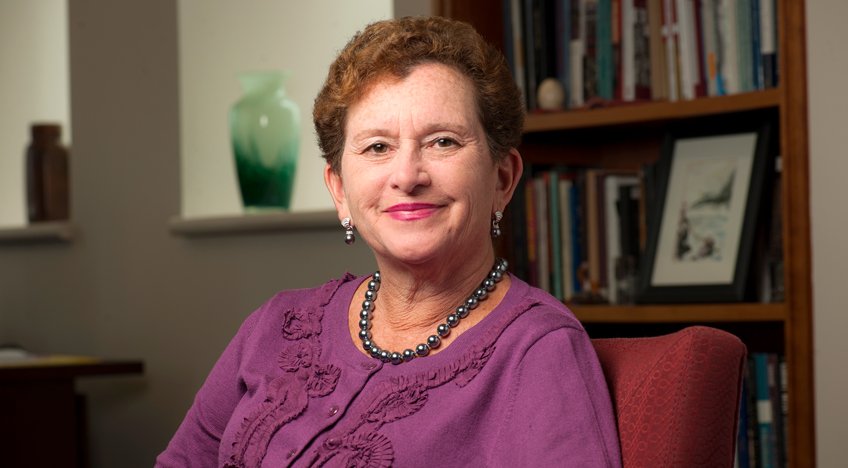
At a time when many colleges and universities are , it is refreshing to talk to , a college leader who believes that higher education should be more inclusive than exclusive when admitting students.
Cantor is chancellor of Rutgers University-Newark, one of the most socioeconomically diverse college campuses in the country. Before coming to Rutgers in 2014, she spent nearly a decade as chancellor of Syracuse University, a private nonprofit university in upstate New York.
During her tenure, she into one of the most economically and racially diverse universities of its caliber. And she 鈥攂y sending student tutors into local schools, for example, and providing full-tuition scholarships to graduates of those schools who qualified for admission to Syracuse.
Cantor believes that universities should act as 鈥渁nchor institutions鈥� in the towns and cities in which they reside, working with communities to address what at first glance appear to be intractable problems.
Some faculty members at Syracuse to diversify the campus and revitalize the city. They when the university saw its ranking drop in U.S. News & World Report, and accused her of allowing academic standards at Syracuse to slide, although there was .
When Cantor saw the opportunity to take the chancellorship at Rutgers鈥� Newark branch, she jumped at it. 鈥淚t鈥檚 really a good fit with the things that I believe in, in terms of the role of higher education in serving the public good,鈥� , Syracuse鈥檚 student newspaper, in 2013.
In her first two years at Rutgers-Newark, she has made the university 鈥攆rom promoting and leveraging arts and culture to encouraging entrepreneurship and economic development.
The (NCLC) is a great example of putting her philosophy into practice. The university鈥檚 has brought together 60 organizations throughout Newark to raise college attainment rates in this long-struggling city. As I wrote in my last two columns (see and ), the NCLC is seeking to increase the share of Newark residents with postsecondary credentials from 17 percent to 25 percent by 2025.
As part of Cantor鈥檚 commitment to the program, to increase the university鈥檚 enrollment of Newark residents from 6 percent to 10 percent among first-year students, and from 11 percent to 17 percent among transfers.
Cantor recently shared her thoughts with me about her leadership at Rutgers-Newark and on the work the NCLC is doing to promote college-going in Newark. Here is an abridged version of that conversation, edited for clarity.
Question: What do you mean when you use the term 鈥渁nchor institution鈥�?
Answer: I see anchor institutions as place-based organizations, committed to the sustainability of the place in which they are located鈥攁nd it doesn鈥檛 mean in a parochial sense, in the sense that you limit your boundaries. It鈥檚 that you take seriously that you are an institution of the community, not just happen to be located in the community鈥攕o that you feel a sense of collective responsibility, a sense of interdependence, where the fate of your community is interdependent with its fate鈥攁nd that you have an ability and a proclivity to bring to bear your intellectual and social capital in collaboration with the community.
Q: You often talk about 鈥渂eing of Newark, not just being in Newark.鈥� What does that mean for the university?
A: I think what it means for us is that we feel, quite literally, we are a part of, not just haphazardly located in, Newark.
Universities used to follow the monastic model. You鈥檇 create this neutral territory off on a hill away, and you would attract to it cohorts of like-minded, committed people in the monastic sense and they would think deep thoughts together鈥攚alled off from the community surrounding them. Then the other end of that is the marketplace analogy鈥攖hat everything is transactional. And your transactions, by that token, could be anywhere. So your students come from anywhere, your ideas go anywhere. In between those approaches is an anchor institution approach that says, no, we really are of this place. It doesn鈥檛 mean we鈥檙e not reaching globally. It doesn鈥檛 mean we鈥檙e not bringing people here who aren鈥檛 from here. But it does mean that we鈥檙e paying attention to what our identity is, as in and of the place.
As an anchor institution, we think about local procurement, we think about the fate of kids in schools in the district we鈥檙e in, and it鈥檚 not that we just want to help kids come here, although we want that. It鈥檚 that you鈥檙e cultivating their talent and seeding teams all over the place, but you care for the fate of the next generation of the place you鈥檙e in, and you care about the economy in the place you鈥檙e in.
Q: Your focus on enrolling low-income and minority students is refreshing at a time when so many schools are spending their resources recruiting the wealthiest students. What motivates you?
A: We may do it for social justice, but there鈥檚 a business case to be made for it. I mean all those institutions you write about that are chasing kids with merit scholarships, those kids are going to be like three kids in another 20 years. I sit at these higher education meetings nationally and I just want to go, 鈥楪ood Lord, don鈥檛 you know anything about demographics?鈥� Our kids are the kids of the future.
Q: What do you hope comes out of the NCLC?
A: At the risk of sounding grandiose, I really think that what we鈥檙e trying to do at the highest level is to create a collaborative infrastructure for the long haul that is committed to the diverse next generation that this place鈥攖he greater Newark鈥攔epresents. So I see this as creating this collective, collaborative infrastructure that brings everyone to the table鈥攃orporations, nonprofit CBOs [community-based organizations], higher education, public schools, other schools, various funders, and the city鈥攖o commit to that next generation.
Now in fact, as you know, there are lots of parts to the collaborative so that it is focused on disconnected youth, it鈥檚 focused on high-schoolers getting to college, it鈥檚 focused on adults with some credits but no degree. So there are lots of pieces. But at the highest level, to me, the most important thing about it is that this is going to commit all of the anchors鈥攑ublic and private鈥攖o the future social mobility of the city.
Q: How hopeful are you that the NCLC will be able to reach its goals?
A: I am uncharacteristically cautiously optimistic because I believe very strongly in the power of collaborative efforts. As long as things like NCLC can stay to the side of the vitriol [over the ], I鈥檓 optimistic.
That being said, I think we have to find a way for people both nationally and locally to understand that these situations grew up over decades and decades of the wrong things happening, and you don鈥檛 turn that around in a year. So we can鈥檛 let people give up.
This post ran first in .“
Senior Writer & Editor, Higher Education