
Casting a Vote on Electoral Security
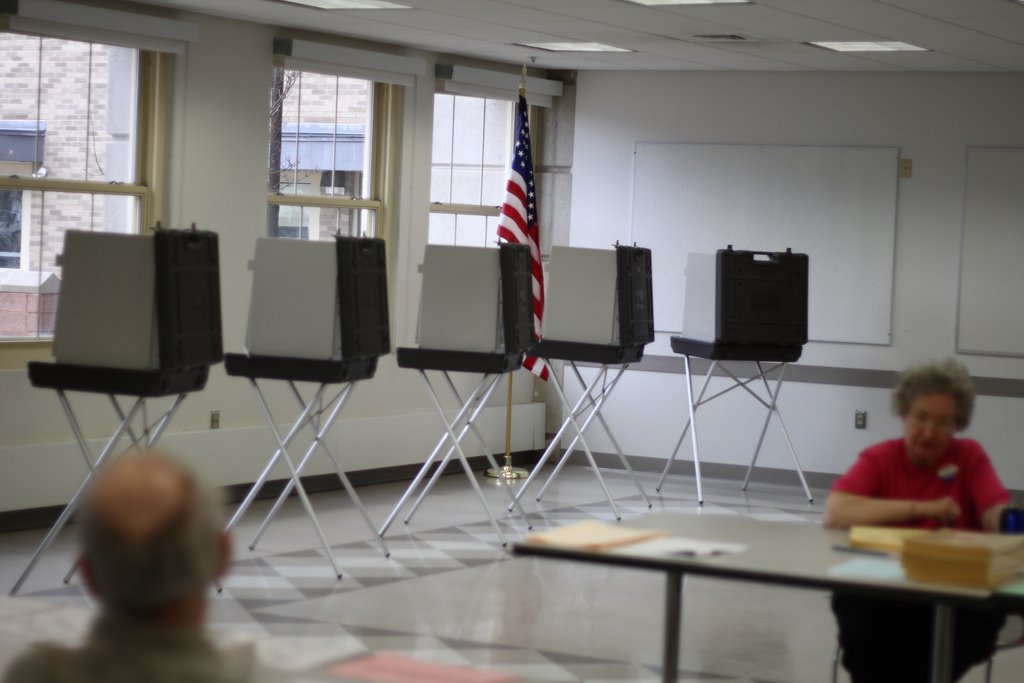
There鈥檚 something particularly unusual about the recent revelations that foreign hackers successfully .
It鈥檚 not just the intriguing possibility of Russian . Nor is it that FBI and Department of Homeland Security officials took the notable step of confirming the penetration and warning state election boards to conduct vulnerability scans.
It鈥檚 that the targets of the hacks鈥攕tate and local election data鈥攄on鈥檛 have the same obvious incentives as attacks before them. Missing are the monetary rewards for the perpetrators of ; lacking is the espionage value of a hack like the massive compromise of data from the Office of Personnel Management. Instead, these intrusions target the system at the heart of our democracy, and the incidents are rightly being treated as a very serious problem. But how do we fix it?
For his part, DHS director Jeh Johnson has discussed the idea of including U.S voting systems on the list of federally designated 鈥溾�濃�攁 protective designation it gives to resources such as nuclear power plants, banking and finance systems, and the electrical grid. However, unlike our nuclear or financial systems, both the institutional and network infrastructures that underpin our local elections have been cobbled together in troubling ways: They were done incredibly cheaply, over years and numerous eras of technology, and with virtually no standardization or even minimum security practices.
To be clear, it would actually be very hard for hackers to meaningfully alter a national vote count given our decentralized election systems. (, we鈥檝e got some 9,000 jurisdictions at the state and local level involved in the process.) But changed ballots aren鈥檛 the only meaningful consequences that can result from such attacks. Other less clear costs鈥攆rom weakened public confidence in election results to increased auditing expenses鈥攑ose serious concerns. Assessing this impact will be challenging, as will making changes to prevent future hacks. The vulnerabilities exposed by the Illinois and Arizona breaches, and credible concerns about the possibility of new ones, have exposed just how behind state and local governments are when it comes to protecting their systems and data.
Part of the reason for this comes down to serious and constraints. Almost all local governments to recruit and retain generally qualified IT professionals, let alone those specializing in cybersecurity. With short supply and high demand, competitive salaries and often rely on contractors for most or even all of their information security. This wouldn鈥檛 be a problem if the local governments knew exactly what they needed and had sophisticated contracting capabilities, but this is often not the case. The most resource-constrained jurisdictions aren鈥檛 taking steps to beef up their cyberprotections. And when it comes to electoral processes, these local setbacks become national issues.
The other reason that state and municipal governments have fallen behind on cybersecurity is a phenomenon known as 鈥渟ecurity debt.鈥� The idea behind the term is that computers and computer networks allowed institutions鈥攃ompanies, organizations, and governments alike鈥攖o decrease their costs, increase their efficiency, and shrink their staff levels. The problem is that the upsides of the switchover are front-loaded in the early years of deployment, and this new, efficient way of doing business becomes the norm. Only later, sometimes years down the line, do costs like network vulnerabilities become apparent. Malware and Trojans. Data breaches. Ransomware. Most result from pre-existing or unpatched vulnerabilities. This is the security debt coming due.
The problem is that too many organizations quickly adopted these new systems without sufficiently planning for their inevitable future costs and vulnerabilities. The resulting security debt is especially problematic for local governments, which are often unable to mitigate the unplanned costs in an era where their funding is declining and more is expected of them. And it鈥檚 not just electoral processes that have been put at risk. Think of all of the information your municipal government has on you鈥攙oting data, tax information, property records, criminal history, driver鈥檚 license numbers, Social Security numbers. Think of, if your kids go to public schools, all of the data they have on your children. There鈥檚 perhaps no better case study of governments diving into a new system without thinking of security and privacy pitfalls than the fast-paced adoption of . Few examples have a bigger security debt鈥攚hat kind of data are these companies collecting? Who can use this sensitive student information? How secure is this data?鈥攖han these digital learning tools. The impulse to chase after the newest, shiniest technological aide doesn鈥檛 help either.
We expect our local governments to do quite a bit of work for us鈥攆rom policing to collecting taxes to repairing roads to operating elections. In a modern world, all of those functions require information systems housing large amounts of sensitive data. Frankly, we haven鈥檛 thought enough about what goes into these processes. And when we have, we鈥檝e mostly assumed that governments were taking reasonable measures to keep these systems secure. It鈥檚 not clear that those were good assumptions.
There are, however, ongoing discussions about how to fix these problems. They include ideas like having local governments consolidate, -computing solutions, outsource to , or connect with and programs that would pool resource capabilities. All of these, if implemented with care, provide promising potential for future solutions. Until then, we should concede that we will be paying a high 鈥溾�� rate on our growing security debt鈥攊nterest that is likely to manifest as data breaches, intrusions, and emergency costs to respond to incidents and patch vulnerabilities.
It鈥檚 also worth noting that, even with good tools, there are no simple answers to these challenges. Federal financial and technical support to better secure local electoral process, for example, are sometimes viewed skeptically. Numerous state election officials that this represents creeping federal control over their elections, something many don鈥檛 want to see. Roadblocks like these pose serious challenges for a nation that relies on selecting leaders at every level at local ballot boxes. As we do so, we鈥檙e pushing the operations of our voting infrastructure to the most underfunded, understaffed, and underequipped levels of government.
Justice Louis Brandeis famously described the states as the 鈥�.鈥� In an age with more of our civic life online and more threats to it from around the world, we certainly have an interesting experiment on our hands.
This was originally published in ,聽a collaboration among , 国产视频, and .
More 国产视频 the Authors
Related

Engagement in a Civic Education Desert

Built to Last: How Leaders Are Creating Sustainable Early Childhood Funding

Pre-K Is Having a Curriculum Moment. A Professional Learning Movement Needs To Follow.
