Abbie Lieberman
Senior Policy Analyst, Early & Elementary Education

Earlier this week the Annie E. Casey Foundation released the 25th听补苍苍耻补濒听
http://www.aecf.org/resources/the-2014-kids-count-data-book/”
, which聽聽child well-being, from infancy through the teen years, in four areas: education, health, economic well-being, and family and community. The researchers found that on the whole, children today appear better off in terms of education and health than children five or even 25 years ago. Trends for economic well-being and family and community were not as encouraging, perhaps because families and states are still recovering from The Great Recession.
Over half of the KIDS COUNT indicators showed improvement in recent years, but this doesn’t necessarily translate to changes in welfare for America鈥檚 most at-risk children. Large disparities exist between kids of different races, income levels, and locations. 聽So while children overall may be doing better today than their predecessors, far too many children still aren’t receiving the resources they need to succeed. The Data Book ranks states, and judging by this map, children in the southern half of the United States are not faring especially well. While all states continue to feel the effects of the recession, some have been more successful overcoming these challenges to address child well-being than others.
The authors write that, 鈥淚n the area of education, the years since 1990 have brought steady, incremental success,鈥� which may be true, but paints a very optimistic picture of progress. KIDS COUNT uses four indicators to measure education: pre-K聽attendance, 4th grade reading proficiency, 8th grade math proficiency, and high school graduation rates. While these four metrics are valuable, they offer limited insight into how well our education system is serving children. And while all four measures did improve since 2005, progress was limited.
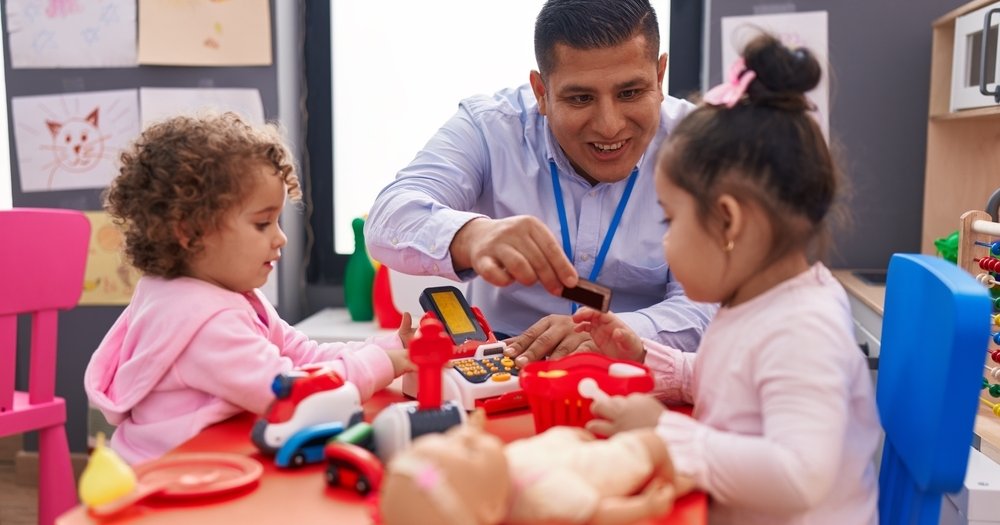
Pre-K enrollment increased an impressive 34% over the last 25 years, but it only increased by two percentage points from 2005 to 2012. And access varies significantly among states鈥攃hildren in New Jersey are twice as likely to be enrolled as those in Nevada, with enrollment hovering around 62% and 30% respectively. Despite initiatives to expand access to early education at the federal, state, and local levels, and an聽聽of public support for investment in this area, 54% percent (more than half!) of the nation鈥檚 3- and 4-year-olds are still not enrolled in pre-k. The authors explain that state efforts to expand pre-K聽access were largely hindered by the recession.
This past January, my colleagues at 国产视频 came to a similar conclusion in . This report outlines how early education has fared during and after the economic downtown. And after analyzing numerous indicators, they concluded that the lack of progress in early education policy goes beyond just pre-K enrollment. Instead, 鈥渓earning opportunities essentially stagnated for children from birth up through third grade.鈥�
These findings are especially worrisome considering that six of the eight KIDS COUNT indicators for economic and family well-being have yet to return to pre-recession levels. The official child poverty rate has increased to 23%, meaning about one in four children live in families that are聽. And more than one-third of children now live in single-parent families, a demographic聽聽to landing in poverty. With economic inequality worsening, and more children living in聽, it is crucial that low-income children have access to programs like pre-K that can help support their well-being and long-term academic success.
The Data Book breaks down the education data by race and state, but not by income level, making it difficult to determine whether the most at-risk children are improving. While not highlighted in the 2014 report, more specific education data is available at the 鈥攁 useful resource that breaks down the indicators by factors like income, English language learner status, and disability status. It鈥檚 important to take family income into account when measuring education progress. While the achievement gap between African American and white students has narrowed in recent years, it has聽聽in terms of income.
While overall improvements in pre-K access, test scores, and graduation rates across the population are promising, progress has been too slow. This is especially damaging for the most disadvantaged children who can suffer from exposure to toxic stress. As the report explains, the 鈥渨ell-being of our country鈥檚 children is the most important indicator of our long-term economic and social future.鈥� The data suggest that, similar to the country鈥檚 housing market and unemployment rates, children鈥檚 well-being has been slow to recover from the recession.
Senior Policy Analyst, Early & Elementary Education