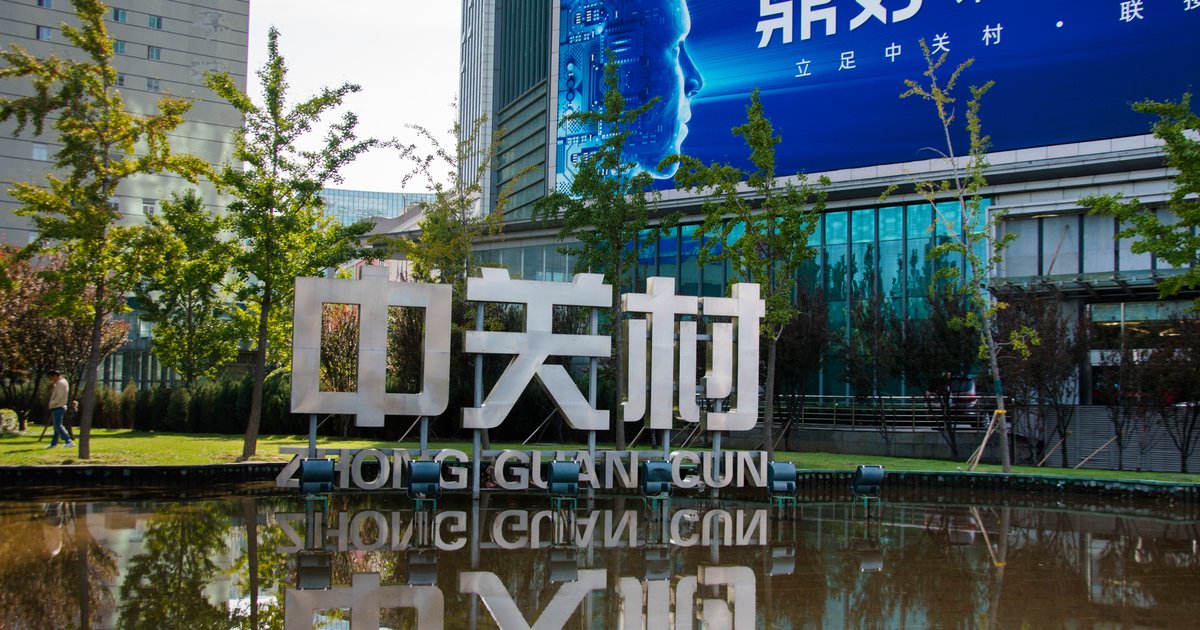
China鈥檚 World Internet Conference Struggles to Live Up to Its Name
Insights about Chinese priorities, but little real international engagement

With the Chinese government-sponsored World Internet Conference (WIC) convening for its fifth meeting this week, observers will once again be offered a window into China鈥檚 tumultuous Internet industry, Chinese leadership thinking on cyberspace, and foreign company postures toward Beijing鈥檚 policies.
But will the WIC鈥攈eld annually in Wuzhen, Zhejiang, since it was initiated by Chinese leader Xi Jinping in 2014鈥攍ive up to its name as a true world conference?
The gathering has historically drawn different types of participation from different quarters. Among governments, U.S. officials are especially wary of being seen supporting the event鈥檚 aura of cyber propaganda or a Chinese-led alternative to Washington鈥檚 preferred multi-stakeholder model of Internet governance. The U.S. government has thus previously sent low-level embassy officers from Beijing or Shanghai. Meanwhile, Central Asian countries and Russia have sent high-level delegations, for instance including Russian Prime Minister Dmitry Medvedev in 2015. Europeans have been slightly less disdainful than their U.S. counterparts, sending teams of mid-level officials from the European Commission to document the event in detail and report back.
Western private sector attitudes towards the WIC are reflective of the prevailing political winds. Companies balance the fear of being seen as too close to the Chinese government against the fear of appearing too far away. Much therefore can be gleaned from the level of representation of key tech firms at the WIC. The third WIC, in 2016, featured few top-level Western tech CEOs, but the fourth edition, last year, drew a veritable quorum. Among those giving keynotes or sitting on panels were the CEOs of Apple, Cisco, and Google. Other Western companies sent lower level officials to participate in various sector-themed panels and roundtables.
A political podium
The event has typically featured a taped appearance by Xi Jinping himself, each time delivering a series of exhortations and slogans new and old, giving life to now well-worn phrases such as 鈥渂uilding a shared community of destiny in cyberspace.鈥� Xi is rumored to be considering making a personal appearance this year, something he has done only once before. If he does, it would add weight to the message he delivers.
Given the current state of U.S.鈥揅hina relations and Xi鈥檚 recent efforts to assure China鈥檚 private sector that the government is not going to nationalize leading firms, it seems likely that Xi could make an appearance and reiterate these themes.
There will, of course, be other speeches. For last year鈥檚 opening plenary, the Party dispatched its top ideologue Wang Huning, who gave his first major speech on the internet (one that DigiChina translated in full). Wang waxed eloquent about the need for data to flow across borders, perhaps seeking to calm foreign business fears emerging from China鈥檚 evolving data governance regime. But the text of the speech was never officially released in full, limiting its potential effect as well as Wang鈥檚 prominence in cyberspace governance.
Wang鈥檚 speech nonetheless stood out in part because the Chinese official line-up was otherwise dominated by the dour and distinctly uncolorful Xu Lin, who had replaced the bombastic and now disgraced Lu Wei as head of the Cyberspace of Administration of China (CAC), the nominal host of the event. This year, Xu in turn has been replaced by Zhuang Rongwen, whose short tenure so far as CAC chief has produced few public signals beyond an essay emphasizing CAC鈥檚 propaganda mission, also translated by DigiChina. Regardless, a Zhuang speech will likely provide hints about the direction and progress of implementation of the system surrounding China鈥檚 2017 Cybersecurity Law.
Gleaning insight into China's path
An annual 鈥渃losed door鈥� session on cybersecurity policy has provided some of the more interesting substantive moments at the WIC, with a senior CAC official patiently listening to foreign corporate and government concerns about market implications of the Cybersecurity Law, and providing at least some sense of CAC鈥檚 thinking on key issues such as cybersecurity reviews of network products and services, definitions of critical information infrastructure, and data governance issues. This year CAC Is likely to be less forthcoming, given the leadership changes, U.S.鈥揅hina tensions, and ongoing bureaucratic turf battles鈥攖hough foreign businesses are eager as ever to hear more about measures CAC released in 2017 on cross-border data flows.
Beyond rhetoric and nuts-and-bolts policy, the WIC is also a showcase for China鈥檚 official technological ambitions and the visions of its top internet companies.
Artificial intelligence (AI) is sure to be a focus of both official ambitions and private-sector bravado. This year鈥檚 WIC comes the week after Xi convened a Politburo study session on AI, which emphasized the strategic importance of AI for the Party and country, and the need for China to develop and control AI technologies. Last year was no different, featuring a three-hour session on AI that built on a major leadership boost for the sector in Xi鈥檚 Work Report to the 19th Party Congress and the release of the State Council鈥檚 New Generation AI Development Plan (AIDP), which DigiChina has translated.
Last year鈥檚 AI forum featured a surprise appearance by Andrew Ng, a deep learning star who had recently left his post leading AI efforts for Baidu while based at the Chinese company鈥檚 Silicon Valley lab. Ng took the stage with the CEOs of half a dozen Chinese AI startups, who portrayed the Chinese government as understanding AI, and the AIDP as a forward-leaning document. Then all the CEOs touched a screen in the background, setting off a literally flashy light show to capture the heights China鈥檚 AI sector was bent on achieving. It was a bit of hype designed to impress that China is an up-and-coming player in AI, but none of the startups included, such as Horizon Robotics and Cambricon, are sure bets to succeed globally in a very competitive sector.
China鈥檚 internet 鈥榳orld鈥�
Despite some prominent Chinese and foreign appearances, and a big show each year, the WIC has so far struggled to live up to the title of being a 鈥渨orld鈥� event. The politics surrounding major questions such as internet governance get no serious discussion; proponents of the current multi-stakeholder model (favored by the United States and others) and those preferring a multilateral, state-led approach (favored by China and others) have minimal substantive interaction.
Indeed, the WIC鈥檚 potential for true international engagement may have been irreparably squandered from the outset in 2014, after Chinese officials by slipping a draft under their hotel room doors around midnight and giving an 8 a.m. deadline for suggested changes. The draft resembled far more the official Chinese government line on cyberspace than any triangulated consensus incorporating different views.
While some governments who tend to agree with their Chinese counterparts do voice their views in sub-events or closing ceremonies, the WIC is primarily about China鈥檚 achievements in technology and the cyber domain, as well as its efforts along the 鈥淏elt and Road鈥� and the related slogan, the 鈥淒igital Silk Road.鈥� Last year鈥檚 WIC featured a hastily convened press conference where an official 鈥溾�楤elt and Road鈥� Digital Economy International Cooperation Initiative鈥� was rolled out, with from Egypt, Laos, Saudi Arabia, Serbia, Thailand, Turkey, and the United Arab Emirates endorsing a pledging to support better connectivity and the free flow of data.
In sum, the WIC remains unable to live up to its billing as a global conference and remains mired in the perception that it is primarily a platform for Beijing and 鈥渓ike-minded鈥� governments to put forward an alternative narrative on how the Internet should be governed, and to advance China鈥檚 concept of cyber and data sovereignty. This year will be no exception, but it also comes in the midst of a growing U.S.鈥揅hina trade and technology confrontation. Senior Chinese leaders will have another opportunity to exhort the domestic ICT industry to master 鈥渃ore technologies鈥� and put AI at the forefront of the digital economy, but the event will almost certainly continue to fail to live up to its billing.
More 国产视频 the Authors
Issues
Programs/Projects/Initiatives
Topics
Related

Visit digichina.stanford.edu for new and updated DigiChina publications
How will China鈥檚 privacy law apply to the Chinese state?

Personal Data, Global Effects: China鈥檚 Draft Privacy Law in the International Context