
Consolidation Is Eating Our Food Economy
The Obama Administration quietly an Executive Order last month encouraging agencies to promote competition in the American economy. The Order identified certain aspects of consolidation鈥斺�渋llegal bid rigging, price fixing, and wage setting鈥濃�攖hat work to 鈥渆rode the foundation of America’s economic vitality.鈥�
The Order came at a time of rising consciousness across the political and economic spectrum about the need for a closer look at corporate consolidation in America. Bernie Sanders has energized crowds across the country with his calls to regulate and restrict the power of large banks. Paul Krugman has Amazon鈥檚 unchecked monopsony power in the book market. At a Senate Judiciary subcommittee in March, Senator Richard Blumenthal (D-Conn.) put it bluntly: 鈥淭he merger policy of our nation simply has failed.鈥�
But despite that rising consciousness, our current economic landscape remains, in many industries, extremely consolidated. Last year saw the highest value of merger deals ever, at . And those mergers are becoming increasingly bloated: Anheuser-Busch鈥檚 pending acquisition of SABMiller could create a beer monolith with a global market share of close to , and 50 percent of U.S. sales. As that particular deal suggests, consolidation has become a serious concern of many advocates, producers, and policymakers in the food industry.
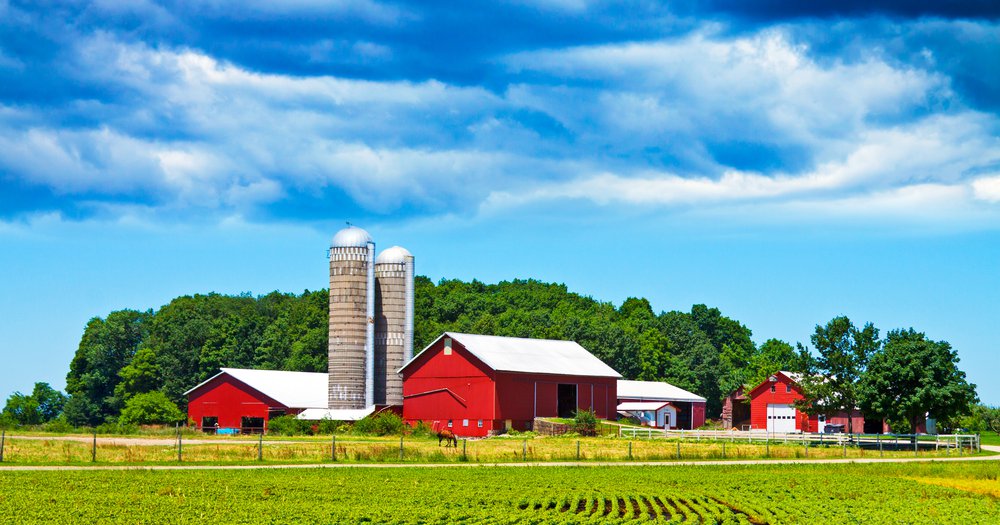
A generation ago, America鈥檚 farm and food economy was dominated by small family enterprises. Today, just four companies control of pork slaughter, of cattle slaughter, and of chicken slaughter. Milk production is largely shaped by one large processor, Dean Foods, and one large cooperative, Dairy Farmers of America. Dean Foods鈥� national market share hovers near and DFA controls about of the national milk supply. Recent mergers, such as the Brussels-based Delhaize鈥檚 (Food Lion) of the Dutch company Ahold (Giant, Stop & Shop), have reduced the number of large grocers down to four.
Such consolidated power has real effects on producers, distributors, workers, eaters, and animals. Farmers face less competitive markets in which to sell their goods, leaving them vulnerable to any price offered by a buyer. Distributors and suppliers feel their prices squeezed as large retailers like leverage their growing power over the supply chain. Eaters are faced with an illusion of choice, wandering through supermarket aisles where dozens of seemingly competitive products might be owned by the same one or two food processors. Workers on farms and in meatpacking plants face pressure to increase production, sometimes at the expense of their safety. Animals living on factory farms are crowded into stifling barns, often receive unnecessary antibiotics, and are susceptible to disease.
Large multi-national companies can also wield more political power and influence. Smithfield Foods, the largest pork company in the country鈥攚hich is now owned by the Chinese company Shuanghui, the largest pork company in the world鈥攈as worked in several states to undermine or overturn long-standing laws that restrict corporate ownership of land and livestock. Those laws have historically protected open and competitive markets for livestock producers. In 2003, Smithfield to overturn Iowa鈥檚 corporate farming laws. Recently, Smithfield was also in a fight over Nebraska鈥檚 restrictions on corporate ownership of hogs.
The influence of corporate power can even be seen in seemingly innocuous organizations, such as 鈥渃heckoff鈥� programs鈥攏ational promotion and marketing funds into which certain commodity and livestock farmers must pay. The National Pork Board, American Egg Board, and National Dairy Promotion & Research Board are just a few such groups. Although the checkoff tax program is supposed to support the interests of all farmers, control over most of the funds has been by institutions controlled by the largest agricultural corporations. The National Cattlemen鈥檚 Beef Association, for instance, has spent checkoff money lobbying against antitrust review of large meatpackers and campaigning against sustainable food advocates.
In recent years, neither the Obama Administration nor Congress has done much to address such consolidation in U.S. food and farming systems. In 2010, the Justice and Agriculture departments hosted a to hear farmers鈥� complaints about the collapse of competition in livestock markets. Farmers pushed especially hard for an update to certain regulations in the Packers and Stockyards Act that would protect farmers from retaliation by giant slaughterhouse corporations.
But little came from those hearings. And six years later, the rulemaking procedure has not been completed for those farmer protections. In fact, just days after the Administration issued their Executive Order on competition, the House Appropriations Committee in favor of a in the Agriculture Appropriations Bill to defund rulemaking for the Packers and Stockyards Act.
For the sake of producers, distributors, and consumers of food, changes need to be made. At 国产视频鈥檚 Open Markets program at 国产视频, we鈥檝e recently undertaken a research project to document and investigate the particular effects of consolidation on the food system. Our new website, , which launched this week, will provide original research and reporting on consolidation and economic power in the food system. It will help to explain how this concentration affects what we grow and eat, and how food gets to our plates.
Consolidation presents a threat to our domestic food system, both politically and economically. Questions about the effects of consolidation are usually limited to cost efficiencies and consumer harm. But there are many other ramifications of a highly consolidated food industry. As we look to the 2016 elections and a new administration, it鈥檚 time to consider how consolidation has come to shape our food economy, and what that means for anyone who grows, processes, distributes, or eats food.
More 国产视频 the Authors
Issues
Programs/Projects/Initiatives
Related

Tech for the People, by the People: From Tracking Antarctic Seals to Wrangling America鈥檚 Water Data with EmmaLi Tsai

Take Back Tech鈥擴nderstanding How Surveillance Culture Impacts Advocacy

New Study Finds Declining Rates of Entrepreneurship