
Coronavirus Tests Are Supposed to Be Free. Some Texans Are Still Being Saddled with Large Bills.
This article in The Texas Tribune.
The symptoms hit Pamela Shaw in mid-March. She was coughing and couldn鈥檛 get enough air. She felt achy. It was unlike any cold or flu she had ever experienced.
Worried, she called a hospital hotline to see if she could get tested for the new coronavirus, and the woman who answered the phone insisted she call an ambulance and go to the emergency room.
All Shaw wanted was a coronavirus test. Instead, she got a battery of screenings to rule it out, she said鈥攁nd later a bill for at least $1,440.
鈥淚t would have been so easy just to give me a test right then,鈥� said Shaw, 61, an Elgin resident. 鈥淚 was there. I was having symptoms.鈥�
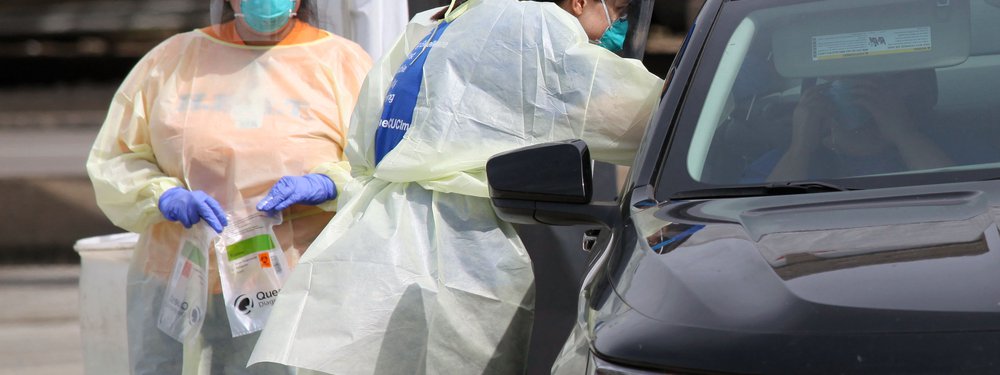
Tests for the virus, which typically involve a painful swab up the nose, are often advertised as free. Congress directed most insurance companies to cover test costs for insured patients in March and has to reimburse providers for testing those who are uninsured.
But experts say there are gaps in the protection, including for people like Shaw, who sought a test early in the pandemic, or those who went to a doctor and left without being screened for the virus. Not only could they be on the hook for the cost of the visit, like a co-pay or emergency room facility fee, but also any diagnostic procedures used to check for ailments besides COVID-19.
With a nationwide shortage of test supplies, clinicians have been encouraged to rule out illnesses, like the flu, before testing for the coronavirus.
That鈥檚 what happened to Shaw.
When she arrived at St. David鈥檚 hospital in North Austin on March 17, she was whisked into the emergency room, where she got a flu test, an X-ray of her lungs and an electrocardiogram, or EKG, to check her heart, she said. Her test came back negative and her scans were normal, but the doctor told her she couldn鈥檛 get a coronavirus test and discharged her with several prescriptions, she said. Shaw spent the next 10 days recovering and wondering what a coronavirus test would have shown.
She received one bill for physician services that says she owes $1,370 for the emergency department visit and $72 for the EKG. Her online claims show the ambulance and medical facility, both in network, charged $2,736 and $10,583, respectively; the insurance plan paid $982 and $173, and she may owe $246 and $2,458.
鈥淭he whole uncertainty of it is stressful,鈥� Shaw said. 鈥淚 mean there鈥檚 already enough stress.鈥�
Contacted by a Texas Tribune reporter for comment, UnitedHealthcare, Shaw鈥檚 insurance company, said it would be 鈥渞eprocessing these COVID-19 related claims under her plan鈥� based on changes it made in March, which include 鈥渞etroactively waiving cost share back to early 2020.鈥�
Ken Mitchell, chief medical officer for St. David鈥檚 HealthCare, said given Shaw's "medical assessment and improvement in symptoms while at the hospital, she did not meet the criteria for testing," which at the time was very limited and being administered by the local health authority with direction from the Centers for Disease Control and Prevention.
REFERENCE
(38.9听碍叠)
Patients confused
The protections passed by Congress prevent testing costs for most people, and some insurers have said they'll cover more services than required by the legislation. But health insurance experts say patients are facing a disjointed health care bureaucracy made even more complicated by the changing guidance and the limited availability of tests.
Under recent legislation, the steps a doctor takes to rule out the coronavirus鈥攆rom blood tests to listening to a patient鈥檚 heart鈥攕hould be covered if a COVID-19 screening is also ordered, said Sabrina Corlette, founder of the Center on Health Insurance Reforms at Georgetown University.
鈥淭hat's the good news. The bad news is that if you get all those services but a COVID test is not ordered or administered, then none of it鈥檚 required to be covered,鈥� she said.
It鈥檚 a situation many people may have found themselves in, particularly early in the pandemic, as lack of testing capacity meant some patients with COVID-like symptoms were denied tests and guided to isolate at home unless their condition worsened, Corlette said.
The fast-moving directives can leave patients confused about what they owe.
Take Mark Sonego. The same week he was furloughed from his job in furniture sales, he called his doctor, wheezing and feverish. The doctor鈥檚 office was closed, and the woman who answered the phone told him to go to a San Antonio emergency room and urgent care center, where he had his nose and throat swabbed and a CAT scan taken.
鈥淚 was nervous, like, 鈥楪eez do I have this thing?鈥欌�� Sonego said.
The doctor said he had bronchitis and didn鈥檛 test him for the coronavirus. He paid $379, but this month got an explanation of benefits from his insurance that says he may owe $6,331 after discounts and reductions. That includes a $495 deductible or copay on the CAT scan.
鈥淏ack on March 22, there weren't many options; I didn't know where to go,鈥� Sonego said.
But after being contacted by a reporter, the medical facility he went to said Sonego should, in fact, owe nothing.
The facility expects his insurance to adjust the claim based on the recent legislation and has issued him a refund.
鈥淭he amount billed to insurance was in accordance with fair health standards,鈥� the statement from Spectrum Healthcare says.
REFERENCE
(87.1听碍叠)
The insurer, Blue Cross and Blue Shield of Texas, said it does not comment on individual members鈥� cases out of respect for their privacy.
鈥淲e understand how freestanding emergency room (FSER) charges for services can be costly and frustrating for patients,鈥� a spokesperson, Laura Tolley, said in a statement. 鈥淥ur members and patients shouldn鈥檛 have to worry about a surprise bill, particularly during an emergency.鈥�
REFERENCE
(35.9听碍叠)
Patients who think they have been incorrectly billed can file appeals or call their insurers to find out what鈥檚 covered.
鈥淕oing to be mistakes made鈥�
There is no guaranteed protection for those screened for the virus before federal was enacted March 18, though some insurers volunteered to cover the cost of testing in early March. Short-term or other bare-bones insurance plans have been to cover testing costs but are still not required to. And patients who are tested out of their insurance networks may receive balance bills鈥攐r the difference between what the provider charges and the insurer pays.
Stacey Pogue, a senior policy analyst at the Center for Public Policy Priorities, a left-leaning think tank, said patients might receive bills due simply to human error in responding to quickly changing directives during a global pandemic.
鈥淭here's just going to be mistakes made, there's going to be COVID tests administered that were coded wrong 鈥� and there鈥檚 going to be insurers that changed their policy but did not process a medical bill or claim correctly,鈥� said Pogue, who focuses on health policy issues. And 鈥渏ust because your insurance company by law is required to cover it with no cost sharing, there is nothing that prohibits the provider from sending you a bill and asking you to pay up front.鈥�
Tamara Stephney estimates she鈥檚 already paid several hundred dollars since she began to feel ill in late March. In quick succession, Stephney鈥檚 daughter, two sons and the girlfriend of one of her sons鈥攁ll adults who lived with her in Dallas鈥攁lso became feverish and sick.
Stephney was eager to get tested, and not just because one of her kids sleeps in the same room as she does. She helps lead an organization that offers health care to people with HIV, an immunocompromised population that would be particularly vulnerable to the virus.
鈥淚 needed to know unequivocally that I either had it or I didn鈥檛,鈥� Stephney said.
Her daughter, who tested positive, was able to get screened at a site offering free tests to people with symptoms. Stephney, who didn鈥檛 have a fever, was turned away.
But she felt sure she had the virus. It was like someone was sitting on her chest. She had no sense of smell. Walking to the mailbox down the street left her winded. It was debilitating and scary for Stephney, who was used to working out vigorously with cardio and weights three days a week.
Ultimately, she found an out-of-network doctor who gave her a flu test and a coronavirus test that came back positive, she said. It cost some $300, after the office visit, medications and a chest X-ray she got when her symptoms didn鈥檛 improve, she said.
鈥淥ne of my concerns is just 鈥� who鈥檚 supposed to be responsible for these medical bills? I鈥檝e already spent $100 on that one visit. The other bills haven鈥檛 started rolling in yet, but they will,鈥� Stephney said. 鈥淚 understand why they wanted to rule out the other things, but I just wanted the COVID test.鈥�
It 鈥渂urned a hole in my pocket鈥�
In one respect, Shaw, Sonego and Stephney are fortunate: They have health insurance. In Texas, there are approximately 5 million residents without it, amounting to 18% of the population, the highest uninsured rate of any state.
The federal government is reimbursing some medical providers for testing or treating those without insurance. But it鈥檚 unclear how patients can get their money back if they were tested in February, March or most of April, before the reimbursement program was .
Texas officials also Medicaid funding to cover uninsured patients鈥� doctor visits associated with COVID-19 testing. It had not been approved as of Monday.
These measures could help a patient like Hannah Nichols, who does not have health insurance and came down with a fever several weeks ago. Her employer, a home improvement store, told her she would need to be tested before returning to work, and she said she went to Austin Regional Clinic in April and was billed $222 for a coronavirus screening. Now, she鈥檚 not sure if she鈥檒l get her money back.
It 鈥渞eally burned a hole in my pocket,鈥� Nichols said. A spokesperson for the clinic said it is enrolling in a provider relief program and 鈥渨ill reach out to our patients who have reimbursable claims to provide refunds or waive charges.鈥�
There are other ways to get free tests, but they can be hard to find or to access.
The federal government is reimbursing providers for testing uninsured people through a national disaster medical .
There are also free government-supplied testing sites scattered across the state. But due to the short supply of tests, especially in March, the sites prioritized people with symptoms and are limited to those able to drive to one of the designated locations.
鈥淛ust immense uncertainty鈥�
Coronavirus expenses are not just a concern for patients.
A consulting firm hired by America鈥檚 Health Insurance Plans, a trade association, COVID-19 testing and treatment could cost insurers $56 billion to $556 billion over the next two years. There isn鈥檛 legislation requiring insurers to cover coronavirus treatment with no out-of-pocket costs to patients. But some have to waive copays and deductibles, and the federal government has tried to protect patients from being balance billed for their care.
Jamie Dudensing, chief executive officer of the Texas Association of Health Plans, said the test costs could become expensive.
鈥淲hat happens when someone needs to test every day?鈥� Dudensing asked, referring to workplaces that might require it for employees.
Premiums may rise as a result, with one March estimate out of California they could increase more than 40% in the absence of federal action.
For those without insurance, Congress has sent health care providers relief funds that are supposed to be used, in part, to pay for the cost of treating the uninsured.
Wendy Netter Epstein, a law professor and faculty director of DePaul University鈥檚 Jaharis Health Law Institute, said there鈥檚 little clarity about how much of the funds will be dedicated to it.
鈥淔rom a provider perspective, there鈥檚 just immense uncertainty,鈥� she said.
More 国产视频 the Authors
Related

鈥淧eace Through Strength鈥� Is Hard to Read

“Getting the Golden Ticket”: Participants’ Perspectives on Lexington’s First Assembly

Civic Assemblies: A Framework for Community Colleges
