Tim Robustelli
Senior Policy Analyst, Future of Land and Housing
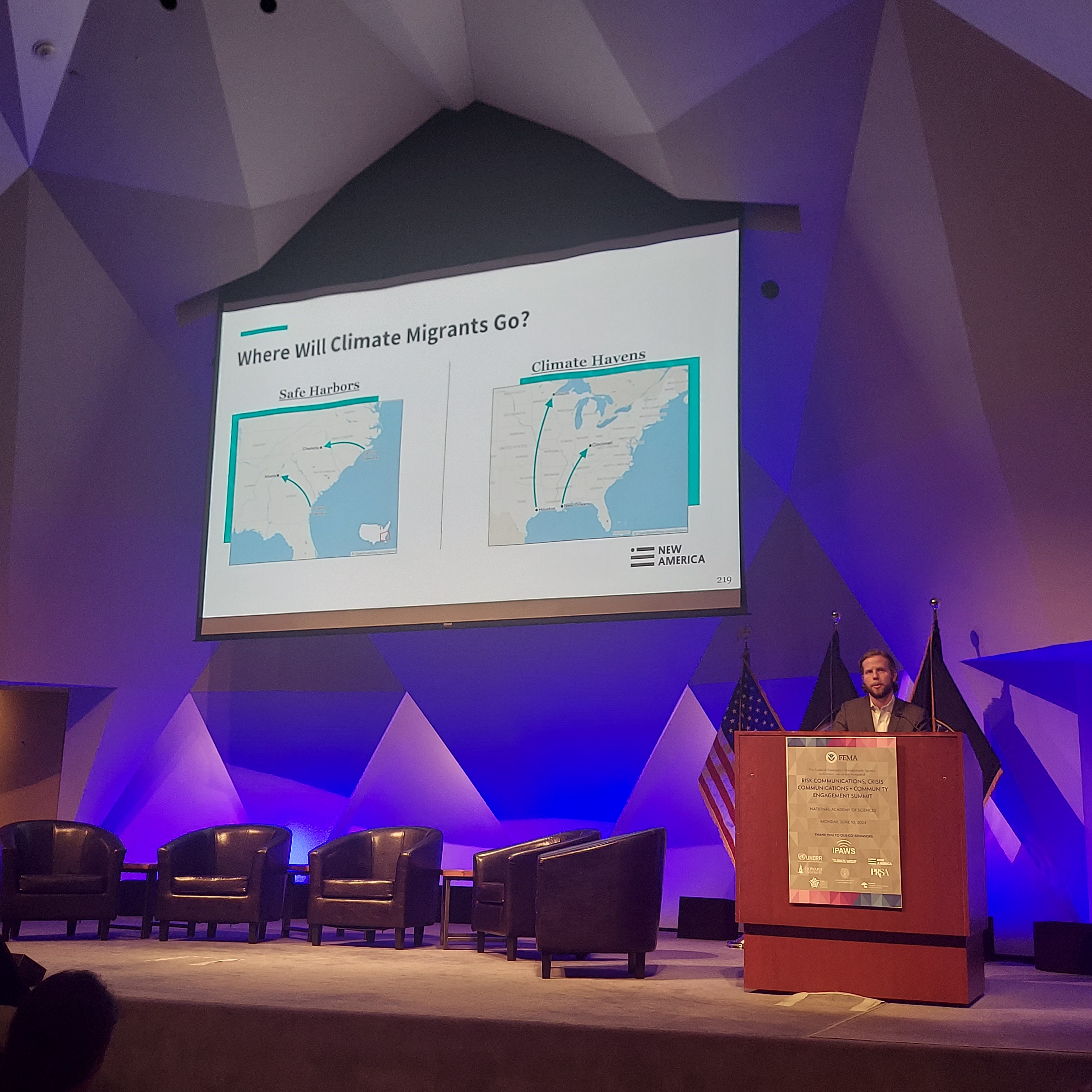
FLH Senior Policy Analyst Tim Robustelli spoke at FEMA鈥檚 inaugural on June 10, 2024. This blog post is an adapted version of Tim鈥檚 presentation on how both the federal government and local leaders can reframe U.S. climate migration as an opportunity instead of a crisis.
Daily headlines in the United States always seem to include some type of natural disaster, from along the Gulf Coast, to across the Great Plains and out West. These climate-fueled hazards pose an unprecedented risk to U.S. housing, resulting in billions of dollars in damages annually. Indeed, for many Americans, home is where they鈥檒l feel the first and worst impacts of the climate crisis.
The Future of Land and Housing Program has approached the nexus between housing security and climate change from a few different angles, including what domestic climate migration means for receiving communities鈥攐r those cities and towns that are projected to receive millions of Americans over the coming decades.
Building off research we published in April 2024, we think that both the federal government and local leaders can communicate about climate migration as an opportunity instead of a crisis.
To start: As climate impacts become more frequent and severe, it鈥檚 increasingly likely that will move away from climate-vulnerable parts of the United States. Estimates on how many people will move vary鈥攆rom a few million climate migrants to . But there鈥檚 general agreement that most migrants will move this century and that the U.S. South, from Los Angeles to Miami, will become increasingly at-risk of natural hazards and perhaps even become unlivable for some of the year. And, perhaps obviously, mobility will be a reflection of socioeconomic class. will be able to relocate more easily because they have greater financial means and access to other resources.
So where will America's climate migrants go? Research indicates two primary paths.
First, evidence suggests that many migrants will stay close to their original community. A year after Hurricane Katrina, for example, had resettled elsewhere in Louisiana or in Texas. That makes sense, as many people will prefer to move where they have social and cultural ties, and where things are a bit more familiar. In similar scenarios, climate migrants could move from the southeast coast to such as Atlanta and Charlotte. We call these communities "safe harbors." They鈥檙e cities in a climate-vulnerable region that nonetheless will continue to grow as people relocate from smaller or more at-risk places close by.
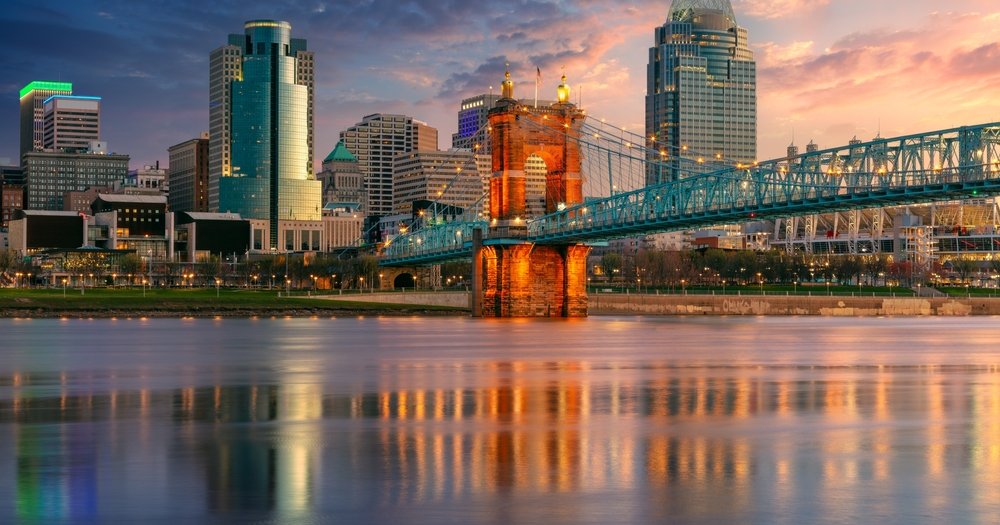
But, second, as the South becomes hotter and more climate-vulnerable, migrants could relocate over greater distances, to more resilient regions such as the Midwest and its and Cincinnati. In fact, these could be better suited for climate migration due to factors like vacant housing stock, desire for economic revitalization, and access to natural resources such as fresh water. They鈥檙e sometimes called "climate havens."

But even though there鈥檚 a general idea of where climate migrants might go, receiving communities鈥攚hether safe harbors or climate havens鈥攁re largely unprepared for new arrivals. Many of these cities currently underinvest in housing, infrastructure, and other public needs, and population growth could easily lead to overcrowding, gentrification and displacement, and economic insecurity. Recent experiences demonstrate these challenges, from following the Camp Fire to Orlando .
And as , labels like 鈥渃limate-proof Duluth鈥� and Buffalo as a 鈥渃limate refuge city鈥� are to an extent marketing campaigns, because they aren鈥檛 backed by concrete planning and action. Climate migration feels like an insurmountable and looming challenge, and the 鈥渃limate haven鈥� conversations may feel a bit unrealistic, as a result.
But there鈥檚 an opportunity, as well, particularly for more climate-resilient cities that have seen disinvestment and population decline in the last several decades. For these communities, climate migration could be a chance for . To turn that optimistic vision into reality, policymakers need to rebrand climate migration as an opportunity, while receiving cities need to start preparing right now for population shifts.
Three lines of communication are integral to this reframe:
First, there鈥檚 the federal government鈥攁gencies like FEMA and HUD, along with the White House鈥� communicating with future receiving communities.
Second, there鈥檚 local leadership銋uch mayors and city councilors鈥攃ommunicating with their constituents.
Third, there鈥檚 the federal government communicating with potential climate migrants, or the Americans that are increasingly considering a move but who are hesitant or unaware of their options.
For the federal government, one of the most important messages is that with proactive and inclusive planning, climate migration is indeed an opportunity for revitalization and growth. It鈥檚 a chance for legacy cities in the Northeast and Midwest to reshape themselves.
A second message is that these receiving communities don鈥檛 need to reinvent the wheel. The tools to accommodate climate inflows look a lot like the tools a city already has to accommodate any sort of population growth. This includes , affordable housing development, improved public service delivery, and walkable communities with accessible amenities.
The federal government should also communicate to local leadership that it鈥檚 a partner that can provide funding and technical assistance to help with planning and implementation. Major legislation like the Infrastructure Investment and Jobs Act shows that the federal government can direct significant and flexible resources towards adaptation and resilience. And decision makers in DC can leverage existing initiatives such as to support receiving communities.

Next, an equitable and inclusive future means that residents need to be part of planning processes. Mayors, city councilors, and other local decision makers with their constituents on preparations for climate migration.
Further, local leaders must be clear about the benefits of climate migration for their community. They might discuss how holistic planning offers an opportunity to change development patterns that have historically resulted in poor living and working conditions for low-income and minority populations. Or, looking forward, these decision makers can communicate how policies to boost housing, infrastructure, public service delivery, the local economy, and overall quality-of-life will benefit both newcomers and long-time locals.
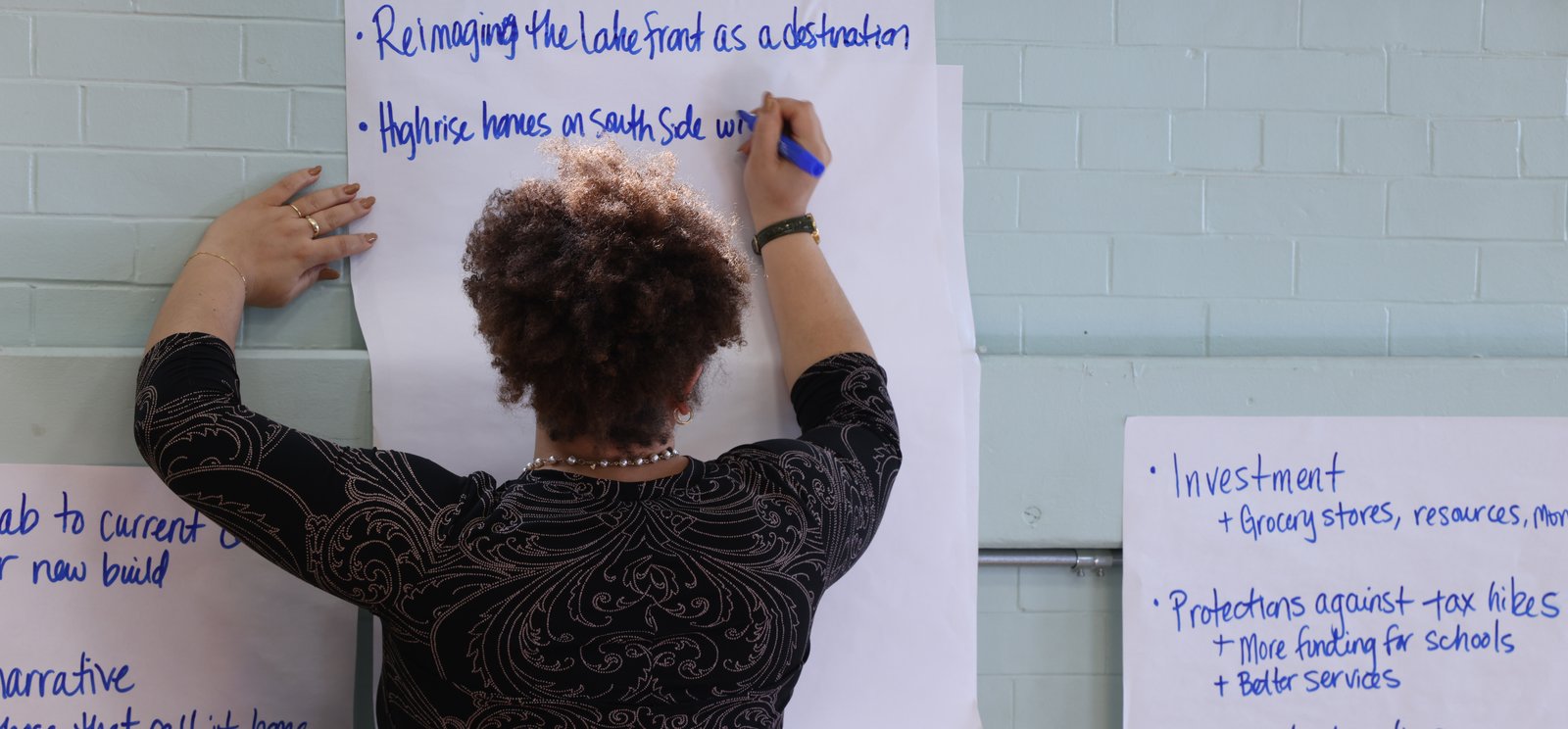
The from Cincinnati, a potential receiving community, shows how the city engaged with residents in an under-resourced neighborhood to collaboratively develop a hyper-local resilience plan. Something like that should be replicated across receiving communities.

Finally, there should be a line of communication between the federal government and potential climate migrants. No one wants to leave their home, but there needs to be realistic, empathetic, and open discussion on climate risk in some places, and the many negative impacts that climate change will have on well-being, housing security, and livelihoods for those who stay put.
Additionally, the federal government should make clear that, while nowhere is immune to climate change, some places will be better equipped for climate migration. And that it鈥檚 worth relocating to more resilient communities sooner rather than later, for health and safety reasons, to safeguard household finances, and maybe even get a head start in a revitalized market.
But none of this will happen overnight. That should be communicated, too. This will take years to plan and decades to implement. All those won鈥檛 become immediately habitable. It will take a lot of effort, and climate migrants should know that their input is valued.

To close, the federal government, its local partners, and communities themselves can make decisions today that boost local economies, encourage inclusive development, and result in thriving neighborhoods amid climate change and climate migration. We have to communicate that the time for everyone to act starts now.
Senior Policy Analyst, Future of Land and Housing