
Cultivating the Young Artist Builds Skills for Success
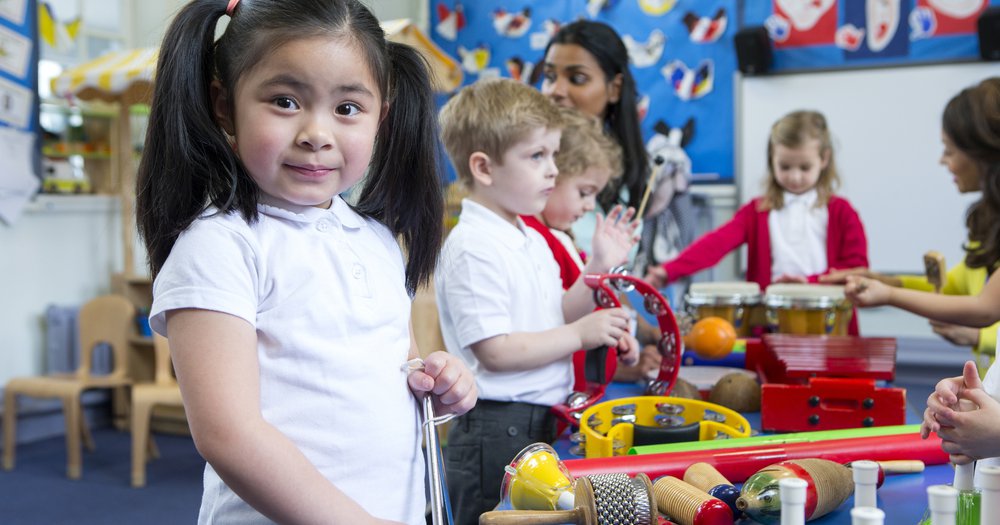
Watch any child play for just five minutes and you鈥檙e sure to see them engage in some form of artistic expression. 聽Children use sticks to draw pictures in the sand and sing along to their favorite songs. They dress up to pretend they鈥檙e kings and queens and tap on empty boxes to generate music. In fact, in a recent paper published in The Journal of Child Development,聽, the authors describe art as a 鈥渃entral pursuit of childhood.鈥�
Arts education advocates have long called attention to the positive effects arts engagement has on children, especially how it can increase student educational and lifelong success.聽聽has shown that arts programs and arts-integrated instruction can improve skills like critical thinking, perseverance, self-discipline, collaboration, and communication which in turn have been shown to have a significant impact on student achievement.
The authors of this new study, however, argue that the current body of research is insufficient. They urge developmental scientists to engage in more thorough investigations of how such 鈥渘aturalistic activities鈥� can impact child development. They argue that 鈥渟uch study will not only help arts advocates discover the effects of engagement in the arts but will also enrich our understanding of development鈥� more generally. They call for future studies to look beyond formalized arts programs to focus on artistic activities that occur spontaneously as part of play (e.g., drawing, singing songs, making up plays). In short, arts engagement is so natural and commonplace that further study will be able to tell us much more about how and why children learn the way they do.
Better understanding the impact of arts engagement on聽skills, habits, and mindsets for success, and in turn on a child鈥檚 long term personal, educational, and professional success, bolsters the case for learning environments infused with arts-based learning. A number of research studies have documented the impressive impact of skills for success on student academic achievement. For example, in a聽聽of 140 eighth-grade students, it was self-discipline that predicted final grades, school attendance, standardized test scores and selection into a competitive high school program the following spring. And in a study that evaluated the social-emotional skills of more than 9,000 incoming kindergartners, researcher聽found聽that those students considered 鈥渘ot ready鈥� for kindergarten were up to 80 percent more likely to have been retained or require special education services; and up to聽seven times聽more likely to be suspended or expelled at least once by the fourth grade.
Notably, similar to the research on arts engagement, large bodies of聽聽show that learning through play also serves to strengthen the same set of critical skills, habits, and mindsets like executive function (including self-regulation and ability to pay attention) and social adeptness. In fact, there is so much overlap between arts engagement and play-based learning activities that it鈥檚 no surprise engagement in these activities have very similar effects on children鈥檚 learning and development.
Why does this matter? Well, there is聽聽that today鈥檚 kindergarten has dramatically increased in academic rigor through teacher-led tasks, severely limiting opportunities for children to engage in student-directed, free play. And, in an era of聽, calls for widespread change to incorporate more opportunities for playful learning have largely fell on deaf ears. 聽But, 聽if early childhood advocates and arts advocates could band together to create a stronger, more unified message about the importance of creating opportunities for social-emotional and other skill development from the early years through elementary school, maybe there is an opportunity to put play back into the lives of our youngest learners.
Unfortunately, in most districts there is a divide between early childhood education and the formal K-12 school system, despite the best聽聽of early childhood advocates to better link them. As a result, the play-based curricula that children enjoy in many pre-K programs come to a sudden halt when they enter kindergarten. Given the overwhelming research about the importance of play in the development of skills for success and the link between these skills and later achievement, school systems should find ways to fully embrace 鈥� rather than limiting classroom time for 鈥� 聽arts education聽and聽the play-based strategies that are central in early childhood education.
More 国产视频 the Authors
Issues
Programs/Projects/Initiatives
Related

Built to Last: How Leaders Are Creating Sustainable Early Childhood Funding

Pre-K Is Having a Curriculum Moment. A Professional Learning Movement Needs To Follow.

Federal Early Education Update: June 2026
