
Digital Sales Are Transforming Business Within Prisons
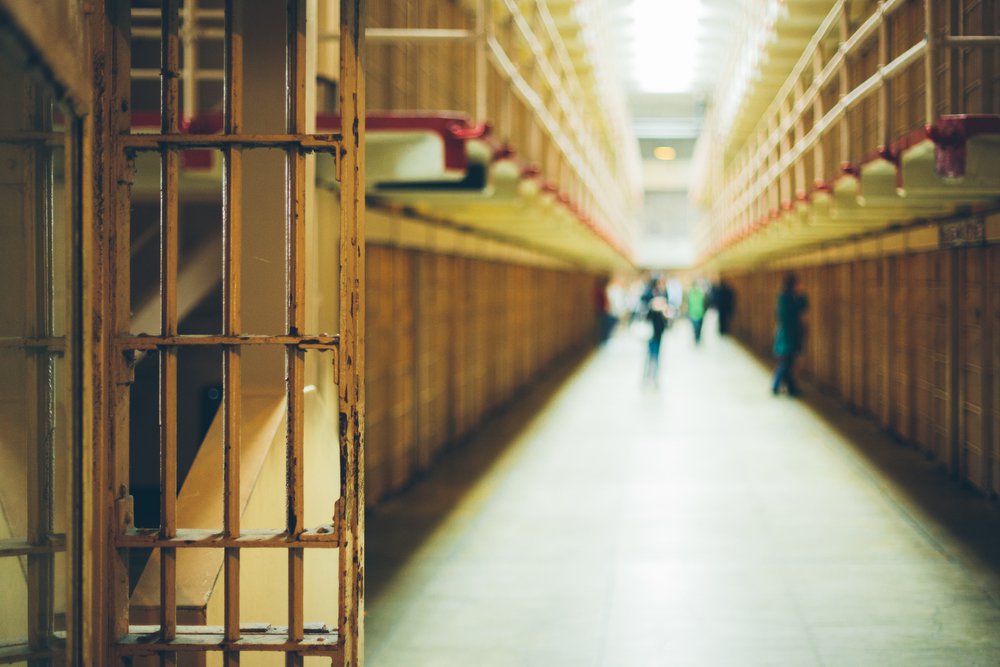
Many companies seek captive markets鈥攖hose in which consumers have little choice, like food in a sports arena or cable access in a rural area. But the ultimate captive market is the U.S. criminal justice system, where consumers are captive in both an economic and a physical sense.
Traditionally, private companies providing services in prisons have focused on food and personal items, as well as phone calls. These items are often priced at聽鈥攖hink $21 for a聽, $31 for a聽, or $15 for a聽聽(no small cost when you鈥檙e earning an hourly wage of聽). Now, many private companies are expanding to sell digital services to incarcerated people and their families. As they do so, companies break into a market with little existing regulation鈥攚hich, some argue, leaves room for exploitation.
While most commerce within prisons revolves around food and hygiene products, a聽聽on prison commissaries, published in May, found that digital sales are the 鈥渇uture of commissary.鈥� The report also argues that digital sales serve as a new way to 鈥渟hift the costs of corrections to incarcerated people鈥� by monetizing opportunities for communication, education, and entertainment.
What do digital sales in prison look like? Prison systems contract with for-profit companies to provide inmates with tablets or MP3 players. (Sometimes these devices are聽; other times inmates or their family members foot the bill.) Then, the companies sell access to content, which, depending on the facility, may include things like music downloads, e-book subscriptions, games, electronic messaging, and phone and video calling.
These tablets can help inmates connect with family members (particularly those who live far away), access educational content, and simply pass time. Inmates, for example, might be able to聽, read the Bible or the Quran, browse an Alcoholics Anonymous application, or watch a birthday message sent by a kid. In Pima County, Arizona, the implementation of a tablet program corresponded with a 66 percent reduction in suicide attempts and ideations, as well as a 60 percent decrease in staff assaults, corrections captain Sean Stewart wrote in a September聽聽for the Washington Examiner. According to Stewart, the tablets incentivize good behavior鈥攂ecause they can be confiscated at any time鈥攁nd provide access to education and training programs that reduce recidivism.
The tablets in Pima County are provided by Global Tel Link, a leading corrections tech company that works in more than 2,300 correctional facilities in all 50 states. By聽, the company reaches more than 1.8 million inmates鈥�82 percent of the U.S. prison population. JPay, a company similar to GTL, currently operates in 35 states.
GTL and JPay both offer free access to educational material on their tablets. Jade Trombetta, a JPay spokeswoman, said in an email that inmates have earned more than 34,000 college credits to date through the company鈥檚 free educational offerings. These companies also offer free access to what Brian Peters, GTL鈥檚 vice president of facility product management, calls facility efficiency applications. Through these applications, inmates can do things like file grievances, access calendars, and review facility documentation. According to Trombetta, these services provide 鈥渁dded layers of transparency and accountability鈥� for the facilities in which they鈥檙e offered.
Peters told me that while one-half to three-quarters of the services on GTL鈥檚 tablets are free, the company makes revenue from offering 鈥渆nhanced services鈥� like music, movies, games, podcasts, and secure web browsers. This is part of what he called GTL鈥檚 鈥渄ouble bottom line鈥�: to make a 鈥渃hange in the corrections environment,鈥� but also to make a profit. Inmates can purchase content through a subscription model, pay a per-minute fee, or, if they own the tablet, download material. Pricing for these services varies from facility to facility, but Peters said the company tries to provide services at close-to-market prices. For example, he said that inmates are typically charged 3 to 5 cents per minute of connectivity.
JPay wouldn鈥檛 tell me the average prices of its services, which vary by facility, but the company does list location-based prices on its website. For example,听, each typed page of an email sent to an inmate costs 50 cents.聽, video visitation costs $8.95 per half-hour. Just depositing money into an inmate鈥檚 media account聽聽comes with a fee鈥�$3.95 for a deposit of up to $20.
In its report, the Prison Policy Initiative expressed concerns over price gouging for digital products, giving the example of the commissary company Keefe, which offers digital music downloads to Massachusetts inmates at $1.85 per song (43 percent more than the $1.29 you might pay for a song on iTunes鈥攐r almost 20 percent of the $10 you would pay for a monthly subscription to Apple Music). In Illinois, the report notes, inmates spent $839,000 on music provided by GTL over the course of a year. Similarly, i苍听, Issie Lapowsky wrote that video visitation programs are often marked by price gouging, an example of how 鈥渃orporate and government greed鈥� stop these programs鈥� potential benefits dead in their tracks.
Companies like JPay (a subsidiary of Securus Technologies) and GTL often benefit from monopoly contracts in the prisons in which they operate. According to Wanda Bertram, a communications strategist for the Prison Policy Initiative who worked on the organization鈥檚 recent report, monopoly contracts in prisons are fairly unique to the digital and telecommunications realms. 鈥淪omehow because people in prison are a captive market, the same concerns which I think ought to be raised aren鈥檛 usually raised for them,鈥� she said.
Peters said he understands criticisms that companies like GTL are monetizing mass incarceration, and he thinks it鈥檚 important to listen to those concerns. But he said corrections technology companies face huge infrastructure burdens that are incomparable to companies operating in the free world; when I buy a Spotify subscription, I already have a phone and Wi-Fi to enjoy it on, which is not the case for incarcerated people. 鈥淭he reality is that we are providing the infrastructure,鈥� he said. 鈥淚n order to recoup some of that investment, we have to charge rates that may not always be palatable in the consumer marketplace.鈥�
In its report, however, the Prison Policy Initiative argues that incarcerated users should be charged rates similar to those in the consumer marketplace, calling price markups for digital services 鈥渦nquestionably exploitative.鈥� One of the biggest barriers for making such comparisons and regulating these programs is a relative lack of public data in the first place. Of the three states the Prison Policy Initiative analyzed, only Illinois included digital sales in its commissary records. 鈥淲hen the state pays nothing, sometimes there鈥檚 little incentive for the state to begin collecting data,鈥� Bertram said. Sales and usage data naturally rest in the hands of private companies, and those companies aren鈥檛 exactly excited at the prospect of increased oversight. In fact, as聽聽obtained by the Prison Policy Initiative show, companies are strategically investing in areas not currently regulated by the Federal Communications Commission.
Critics have also raised serious privacy concerns related to this new generation of prison tech, particularly for nonincarcerated users on the other end of a communication. Understandably, tablets are聽聽by companies鈥攂ut there are questions about the scope of data collection and limits on data sharing. For example,听, when parties use the company鈥檚 technology to make a phone call, they give consent to track the location of that call. (The company says the nonincarcerated party is told this via voice prompts.) Within the GTL system, administrators can conduct a reverse look-up of any call to pinpoint a Google Maps location of the call鈥檚 recipient. While there are important reasons law enforcement might need this information, GTL can also track the recipient鈥檚 location for 60 minutes after the call has ended鈥攁nd retain that information for up to a year. Additional highlights of GTL鈥檚聽include the company鈥檚 stipulated right to share user data with third parties including law enforcement officials, 鈥渕arketing partners,鈥� and other service providers. In a聽聽on cyber communication in prisons, the Prison Policy Initiative highlighted potential negative effects surrounding these companies鈥� sharing of user data, particularly as law enforcement agencies continue to experiment with database algorithms to聽.
It鈥檚 worth noting that JPay鈥檚 parent company, Securus Technologies, has been implicated in a number of privacy and user rights controversies. In 2015, an anonymous hacker聽聽records of more than 70 million calls made through Securus鈥攊ncluding calls between inmates and their lawyers, which聽. The company is currently facing a lawsuit in conjunction with CoreCivic, a private corrections company, for recording 1,300 private conversations between inmates and attorneys in Kansas, according to聽. And in May,听聽that law enforcement officials in Missouri used a Securus service to track nonincarcerated people鈥檚 cellphones (thanks to data shared by wireless carriers) without a warrant鈥攁 privacy scandal Slate鈥檚 Will Oremus聽聽鈥渟hould be bigger than Cambridge Analytica.鈥� (Wireless carriers have聽聽to stop sharing users鈥� location data with companies like Securus, and the Supreme Court聽聽that the Fourth Amendment protects cellphone location records.)
Still, Bertram said that tech programs like tablets or video visitation could have real, tangible benefits for incarcerated people鈥攊f it weren鈥檛 for what she called 鈥減rivate enrichment at the expense of largely indigent families.鈥� She thinks states can prove they care about these tangible benefits by negotiating fairer contracts and working with tech companies to develop more free, effective programs. Similarly,听, a writer and advocate who was formerly incarcerated, told me in May that while she was generally opposed to the 鈥減ay-to-play鈥� nature of many prison tech programs, 鈥減rofit motive has led to innovation鈥濃�攊nnovation that can and should be replicated on a not-for-profit scale.
In the meantime, Bertram suggested, we should stop measuring prison programs by a standard of 鈥淥h, this is better than nothing.鈥� Instead, she thinks we ought to ask: 鈥淗ow good can it be?鈥�
罢丑颈蝉听补谤迟颈肠濒别听听颈苍听, a collaboration among聽,听国产视频, and聽.
More 国产视频 the Authors
Related

Disability in the United States at 250

From 鈥楻isky Business鈥� to 鈥楳ission: Possible鈥�: Why ECE Learning Cohorts Work

State Education Budgets in Turbulent Times
