What Arne Duncan鈥檚 Speech Means for Possible ESEA Reauthorization
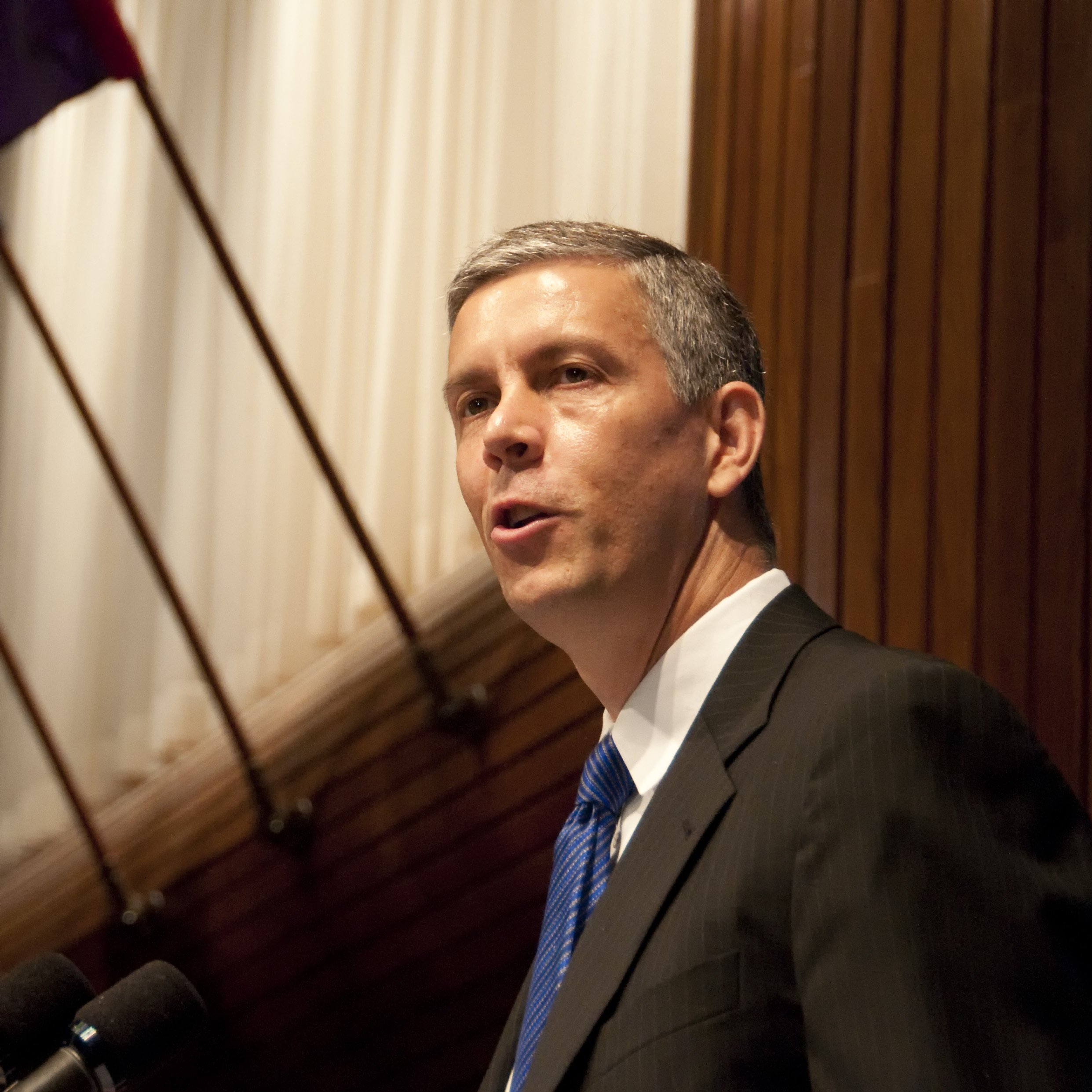
In a yesterday, Secretary Arne Duncan outlined the administration鈥檚 key priorities for reauthorizing No Child Left Behind (NCLB), the latest iteration of the 1965 Elementary and Secondary Education Act (ESEA). His speech serves as a prologue to the Republican Congress鈥� reauthorization to scale back the federal role in education and undermine the administration鈥檚 key reforms. Leading that effort are Sen. Lamar Alexander (R-TN) and Rep. John Kline (R-MN), the helms of the Senate and House education committees, who are to unveil their proposals soon.
The movement to reauthorize NCLB is long overdue鈥攖he law has been up for reauthorization since 2007鈥攂ut not new. Multiple failed mostly due to partisan politics and debates over accountability, particularly related to a mandate on teacher evaluation based on student outcomes. While it鈥檚 too soon to tell whether partisan politics will preclude reauthorization this go-around, the big topic of debate is clear: the law鈥檚 annual testing mandate. Parents, teachers unions, and states鈥� weariness with testing has reached new heights this year. Alexander and Kline have indicated they could do away with the annual testing requirement despite to keep it. Meanwhile, Duncan and the Obama administration have committed to annual testing for civil rights and accountability reasons.
If the administration won鈥檛 budge on the annual testing requirement, are there any areas where it might give a little? Here are our first thoughts on the priorities laid out in Duncan鈥檚 speech, and what they might mean for a possible bipartisan reauthorization.
- Testing 鈥� Duncan affirmed the administration鈥檚 commitment to annual testing for students in math and reading in grades 3-8 and once in high school. Still, he readily acknowledged the high volume of testing in many U.S. schools and suggested a need for fewer state and local assessments. He proposed a revised ESEA that would require states to set limits on the amount of time spent on state and local tests. Funding in President Obama鈥檚 budget would also be set aside to support states in streamlining their number and quality of assessments. But, given Congressional Republicans鈥� antipathy towards increasing the federal role in education, it seems unlikely Congress will be amenable to a mandatory restriction of states鈥� testing time. And without specifics on that restriction, it is unclear whether it would have any teeth. Congress probably won鈥檛 be too keen to accept more federal spending on tests either鈥攅ven if the intent is to help states 鈥渟treamline.鈥�
- Accountability 鈥� As part of the administration鈥檚 commitment to testing, Duncan also highlighted the need for federal reporting of student progress, including by student subgroups. He highlighted the need for accountability requirements to ensure that states continue to reward student growth and provide support to students who fall behind. He indicated that the administration would 鈥渟tand strong for accountability鈥� but without getting into too many details on exactly how. In its 2010 ESEA , the administration proposed granting states flexibility in developing school improvement and support strategies to make progress toward performance requirements but made it clear that there would be real rewards and consequences for student growth or lack thereof. While the big debate so far has been about annual testing, we should soon see the tides turn toward NCLB鈥檚 state performance requirements.
- Teacher evaluation 鈥� Duncan also stuck to the administration鈥檚 guns with regards to requiring teacher evaluation based, in part, on student outcomes. Such multiple measure teacher evaluation systems were one of the administration鈥檚 hallmark reforms incentivized by Race to the Top. As a result, states across the country have implemented more robust teacher evaluation and improvement systems to help ensure all students have access to effective teaching. But, the administration will not only face push-back from congressional Republicans who seem the teacher evaluation mandate. It will also face continued antagonism from teacher union leadership who believe that tests are an unreliable measure of teaching quality. Michael Petrilli recently that Republican push-back against annual testing is really just a bluff to get the administration to soften its grip on teacher evaluation. But, the president鈥檚 veto power ought to be strong enough to withstand this tactic.
- Resources 鈥� Acknowledging that genuine educational improvements and greater equity will not come from accountability alone, Duncan called for an increase in resources to support students and educators in schools. This builds on the administration鈥檚 2010 ESEA Blueprint which encouraged greater resource equity between high- and low-poverty schools. He again alluded to the President鈥檚 budget, which will call for a $2.7 billion hike in spending on ESEA programs with $1 billion directed at Title I. He said the administration would 鈥渇ight鈥� for greater resources in coming ESEA debates, but any increase in federal spending will likely be met with unified Republican opposition.
- Preschool 鈥� Increasing children鈥檚 access to high-quality early learning has always been a priority for the Obama Administration. No surprise, then, that it featured prominently in this speech. The Secretary emphasized the importance of early education stating, 鈥渘o family should be denied preschool for their children.鈥� Duncan also said that expanding children鈥檚 access to high-quality preschool should be part of a new ESEA. This language seems to build on the administration’s 2010 ESEA Blueprint which called for 鈥渃ontinued Title I support of preschool.鈥� Title I funds are allowed to be used for children, birth-to-five, but few schools use these dollars to support early education programs. Perhaps a portion of the additional $1 billion proposed for Title I could be used to encourage districts and schools to put dollars toward supporting children鈥檚 learning and development prior to school entry. Or maybe the Administration hopes to make the new Preschool Development Grant program part of ESEA. Either way, , an increased focus on early learning in ESEA will be tough to move forward.
So, what does this all mean for a possible ESEA reauthorization? In laying out the administration鈥檚 priorities, Duncan鈥檚 speech suggests that the road to bipartisanship will be both bumpy and fraught. Will Congressional Republicans introduce a bill without the annual testing mandate, as they鈥檝e indicated they might, which Obama will then veto? Or will they take the administration鈥檚 priorities鈥攑articularly around ensuring equal educational opportunity through annual tests along with school and teacher accountability鈥攖o heart and pursue compromise?
It appears Duncan鈥攁nd the administration鈥攚ill not back down from their commitment to staying true to the core of NCLB鈥檚 original intent, which was to hold states accountable for improving educational equity for all students and to prompt them to work toward closing achievement gaps among poor and minority students, while granting states some flexibility. Duncan even seems committed to further expanding the federal role.
国产视频 will be following the details of this commitment over the coming weeks and months. We will watch the push for reauthorization closely, including Alexander and Kline鈥檚 draft proposals, the former of which is rumored to be coming out this week. Check for updates and watch Duncan鈥檚 full speech .
More 国产视频 the Authors

Laura Bornfreund
Senior Fellow, Early & Elementary Education
Issues
Programs/Projects/Initiatives
Topics
Related

Prioritizing Students with Disabilities in AI Policy

In 2026, States and Congress Will Need to Mitigate the Damage to PreK-12 Education
Inside 2025: A Year of Urgency and the Wins That Mattered Most