David Loewenberg
Intern
But most classrooms and teachers underprepared to teach math well, according to Transforming the Workforce report

As a pre-K teacher, one of my favorite things to do with my students was to find learning opportunities outside. In the school garden and on the playground, I saw how my students鈥� eyes lit up with curiosity and fascination over seemingly mundane objects 鈥� a smooth pebble, a colorful leaf, a wandering ant. It became clear that, when given the opportunity, they showed a remarkable capacity for problem-solving, inquiry, and exploration. I tried to harness that into both reading and math activities.
One day, for example, 聽we went on a 鈥渓eaf hunt鈥� around the school, gathering leaves of all different shapes, sizes, and colors. The previous day, we had read 鈥溾�� by Steve Metzger 鈥� it was a hit with my students and they were eager to go on their own 鈥渉unt.鈥� During the walk, I asked questions like 鈥渨hich one of those leaves is bigger? Are there more brown leaves or yellow on that tree?鈥� Later on, we counted and sorted the leaves we had collected.
This type of 鈥渕ath talk鈥� and inquiry-based learning activities are essential to effective math instruction. That鈥檚 according to the report which synthesizes years of research regarding the ways in which children learn and how early childhood educators, working with children birth-through-age eight, can best support their learning. When it comes to early math exposure, the research is clear 鈥� mathematical thinking early on helps 鈥渇orm a foundation for general cognition and learning.鈥� In fact, children鈥檚 knowledge of mathematics in pre-K is a of later achievement, even into high school. And achievement gaps in math in later grades can be traced back to the early years as children from low-income families and, even by pre-K, demonstrate less extensive math knowledge.
And yet, despite the research on the importance of math, Transforming the Workforce finds that 鈥減reschool educators tend not to support mathematics learning, and when they do it is often of .鈥� Early childhood teachers, for example, spend engaging children in math than in any other subject. that observed early childhood programs serving working- and middle-class families revealed that 60 percent of three-year-olds had no math exposure at all in their classrooms. And when math is taught, the report notes that too often the approach is to emphasize rote memorization and basic concepts like numbers and simple shapes rather than encouraging inquiry, reasoning, and intellectual curiosity 鈥� foundations for fostering 聽high-level, conceptual understandings of math rather than seeing it as simply a 鈥済uessing game鈥� or 鈥渟ystem of rules without reason.鈥�
What鈥檚 causing the gap between research and practice? The report points to one major reason that deserves attention 鈥� weak educator preparation in the area of math. Compared to subjects like literacy and language, math instruction tends to be much less emphasized in professional learning and development. Many early childhood teachers simply are not taught the pedagogical skills to confidently teach math effectively, if at all. If early math teaching is to improve, increasing math knowledge and pedagogical skills among early childhood educators is a must.
So what does effective math instruction in the early years look like? First, it鈥檚 important for children to begin building foundational math knowledge well before first grade, as children to learn math and develop an interest in it from a very early age. Effective math instruction is intentional, fosters reasoning, problem-solving, and discussion, and takes into account 鈥渕athematical learning trajectories.鈥� refers to the progression, or developmental path, of children鈥檚 thinking when it comes to math concepts. In what can be thought of as a learning staircase, research shows that children follow a certain developmental path, reaching gradually higher levels (or steps) of thinking as they grasp new concepts. Effective math instruction sequences learning goals and activities in a way that recognizes children鈥檚 developmental learning trajectories and gradually builds on what they already know.
For example, a common math goal for pre-K students is to be able to accurately count a group of objects and tell how many total objects there are in the group. While this may seem like a relatively simple task, there are actually a number of skills packed into this goal that students must grasp before being taught to count and total a group of objects. Students must know how to verbally count, they must have mastered one-to-one correspondence between counting words and objects (one word for each object), they must know to organize the objects in such a way that they can be easily counted (in a line, for example),and they must know that the last counting word they say represents the 鈥渢otal鈥� number of objects they have (cardinality). Effective math instruction follows a progression of learning goals so that children can work their way up to these higher-level math skills.
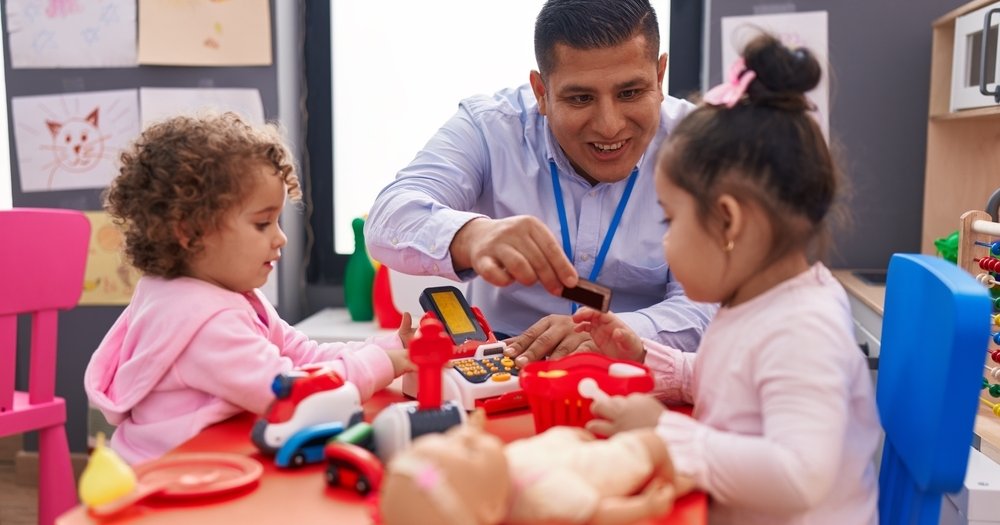
A learning environment that fosters high-level math thinking gives children the opportunity to explore patterns, quantities, shapes, and spatial relations, invent solutions, and problem solve. Children do this naturally in play-based learning environments, but, as Transforming the Workforce notes, math instruction also needs to be intentional 鈥� that is, giving students blocks and puzzles alone is not enough to foster mathematical learning.
Of course, when math is taught in a way that goes beyond rote memorization and basic concepts, lessons and activities may appear less structured or less 鈥渁cademic鈥� to an observer who is unfamiliar with how young children learn. That鈥檚 why, as my colleagues have written about, training principals so they are knowledgeable about child development and what teaching and learning should look like in pre-K and early grade classrooms is critical. As instructional leaders, principals should be able to help teachers improve their practice and ensure that they are providing the right kind of instruction and using the best learning strategies for young children. And administrators of other early care and education programs should be equipped to support teachers in building the early math skills of their infants, toddlers, and prekindergarteners.
Given the importance of early math skills and the fact that internationally in math, it鈥檚 imperative that we seek to figure out how best to foster mathematical learning with young children. 国产视频, in collaboration with the , is due to release a paper in the coming months which will make recommendations on how best to approach STEM in early learning. And, in the meantime, 国产视频 will continue to unpack the Transforming the Workforce report as part of our efforts to improve teaching and learning in the early years.
Intern