
Tyra A. Mariani
Former President & Chief Operating Officer, 国产视频
鈥楾is the season of giving. 鈥楾is the season to be joyful. There are numerous Christmas songs, in particular, that tell us how to do and feel exactly that: 鈥淛oy to the World,鈥� 鈥淛ingle Bells,鈥� 鈥淲e Wish You a Merry Christmas,鈥� the list goes on.聽Indeed, for those of us who recognize a being greater than us鈥擟hristians call that being Jesus鈥攚e鈥檙e told, over and over again, that there鈥檚 reason to celebrate (I happen to agree).聽
Yet with or without that faith, there are many struggling to find joy, happiness, or anything to be merry about. The world abroad and at home, in the United States, seems to be in some form chaos. Social media feeds are filled either with rants and venting or with people you know painting a picture of a happiness that seems to escape the life you know. There are many people who are angry and frustrated or sad, and who sit with a void that seems to occupy every corner of free space available, clouding the space occupied by that void.聽
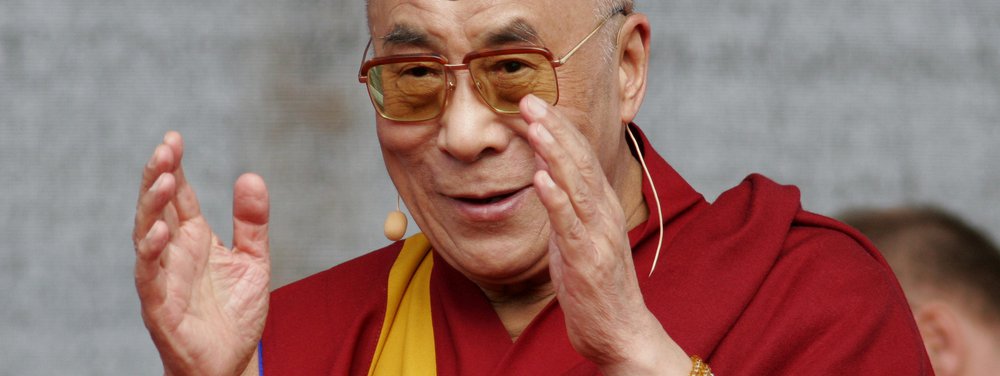
In light of all that, it鈥檚 easy to lose sight of鈥攖he experience of鈥攋oy. But in The Book of Joy, readers learn, through author Douglas Abrams, about the conversation His Holiness the Dalai Lama and Archbishop Desmond Tutu had over the course of a week, in 2015, to celebrate their birthdays and, more importantly, to give a gift to the world about how to have more joy and happiness.
These two men, of different faiths, have witnessed an untenable about of suffering over their lifetimes, yet they have joy. Because of that fact, I was anxious to read about it. The Book of Joy discusses, in detail, the true nature of joy, the obstacles to joy, and the pillars of joy, which they define as 鈥渢he positive qualities that allow us to experience more joy.鈥� What are they? Well, you鈥檒l have to read the book to find out. But if that isn鈥檛 enticing enough for you, the two men also offer joy practices鈥攖o overcome obstacles, yes, but also to cultivate the pillars.
It seems undebatable to want more joy, but we shouldn鈥檛 conflate that basic desire with the belief that having it will serve as an inhibitor to negative experiences; rather, having joy serves as a sort of coping mechanism. Archbishop Tutu says it best:
Discovering more joy does not, I鈥檓 sorry to say, save us from the inevitability of hardship and heartbreak. In fact, we may cry more easily, but we will laugh more easily, too鈥�. Yet as we discover more joy, we can face suffering in a way that ennobles rather than embitters. We can have hardship without becoming hard. We can have heartbreak without being broken.
I venture to suggest that there鈥檚 nothing earth-shattering in this book. But what readers will find are some valuable nuggets, some important reminders, and some very practical tips about how to get and hold onto joy. I did when I read the book the first time, and again as I flipped through it to write this article. My ancestors remind me that this joy I have鈥斺�渢he world didn鈥檛 give it to me, [and so] the world can鈥檛 take it away.鈥澛燭his book is an important reminder to that fact. Ase!
Former President & Chief Operating Officer, 国产视频


