
Employers Pay it Forward by Helping Staff Return to College
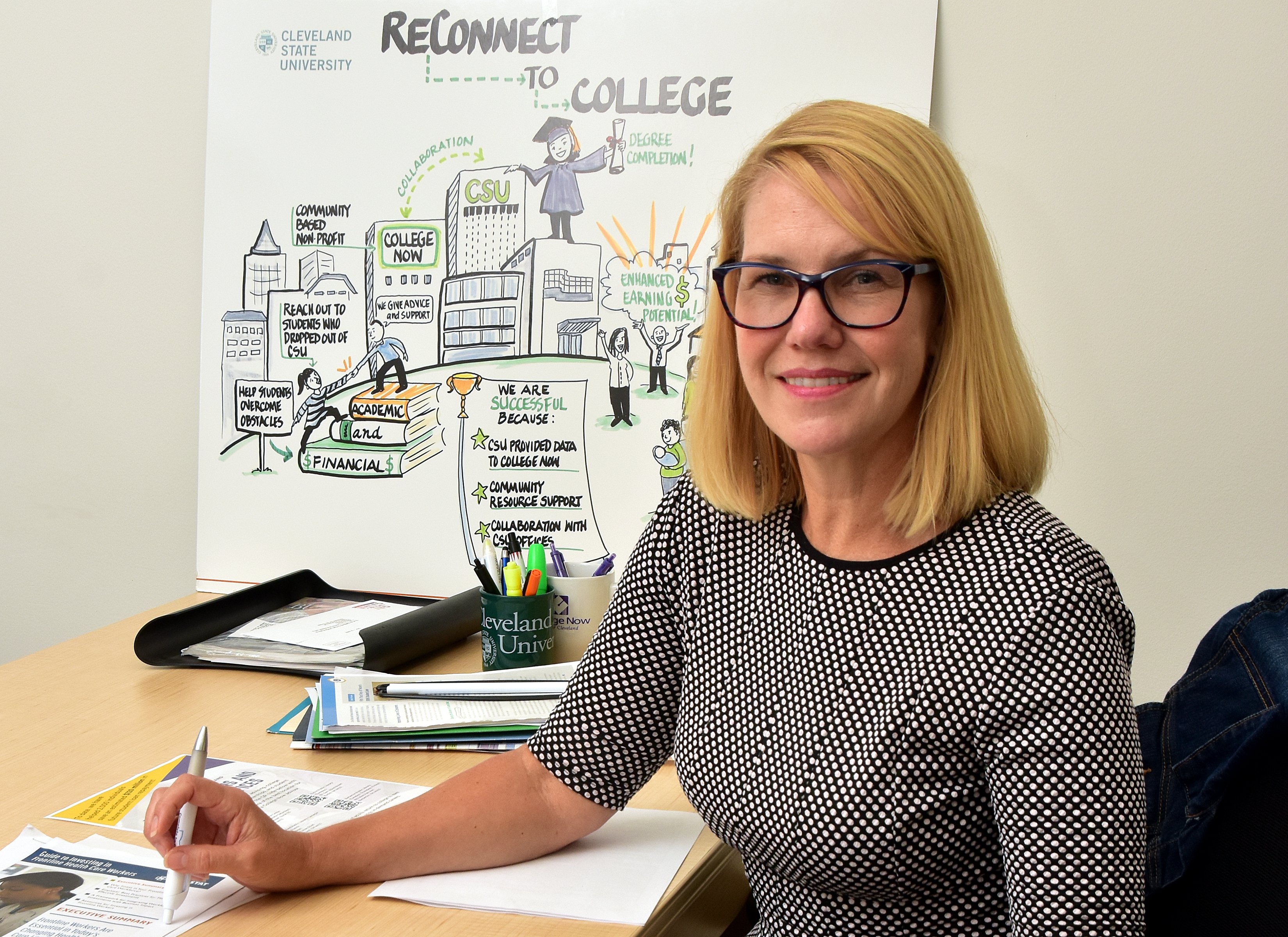
Chief executive officer Ingrid Tolentino knows the value of employee benefits. Her company sells them.
Employers can buy legal services for their workers through MetLife Legal Plans Inc. Good benefits build employee loyalty, Tolentino would argue from MetLife Legal Plans鈥� office in a Cleveland skyscraper. That鈥檚 why she always thought it made sense to offer tuition reimbursement to her employees, particularly her call-center workers who need a four-year degree to advance.
Good benefits might be good business but getting employees to use them can be challenge. That鈥檚 why Tolentino upped her company鈥檚 reimbursement offer from $250 a semester to $2,500 a semester or $5,000 a year. Even so, it might not be enough.
Cleveland鈥檚 Bridging the Talent Gap* survey of both employers and employees lays out the challenges.
Employers think their employees are aware of existing tuition assistance programs. They are not, according to the survey.
Employers think their employees are too busy to pursue a degree. True, but employees also don鈥檛 see how education will advance their careers. They worry about making the wrong choices 鈥� those who 鈥渟topped out鈥� often quit because they didn鈥檛 pick the right credential to meet their educational goals. To go back, they need both time and career advice.
But money matters most.
MetLife Legal Plans鈥� previous tuition reimbursement of $250 鈥渨asn鈥檛 enough to motivate anyone,鈥� Tolentino acknowledged.
In fact, tuition reimbursement itself may not be enough to move the needle on adult enrollment.
Why? Because many adults, already burdened with student debt 鈥� either their own or their children鈥檚 — can鈥檛 afford to pay up front. No wonder the number one barrier to returning is money, as the survey said. That鈥檚 the situation for Patrick Flynn, a MetLife Legal Plans employee interested in finishing his degree, but so deep in past college debt that he doesn鈥檛 want to take on one more dime. "I would definitely be interested in going back to college,鈥� he said. 鈥淏ut that $27,000 [debt], I don鈥檛 want to add to that.鈥�
Other tuition assistance models exist. Some employers, including Wawa Inc., a 36,000-employee convenience-store chain headquartered outside of Philadelphia, are turning to disbursement, paying the college directly at the start of the school term, rather than reimbursing students later.
鈥淭he best practice is to make all the resources available up front,鈥� said Hadass Sheffer, president of The Graduate! Network, a national alliance of an alliance of organizations like College Now Greater Cleveland working to increase college completion among adults.
A U.S. Federal Reserve survey found that in 2018 40 percent of U.S. adults didn鈥檛 have enough savings to cover a $400 emergency, let alone tuition.
Employers may think that adults will be more likely to complete their coursework if they have financial skin in the game, Sheffer said. But their employees can鈥檛 even get in the game if they don鈥檛 have the money.
Employers also may worry about losing money if they pay upfront. But Sheffer said, employers can more readily assume the financial risk. 鈥淓ven if they quit, you can still dock their final paycheck,鈥� Sheffer said.
The way she sees it, the employee is putting forth effort and sacrificing time with family. Meanwhile, 鈥渁n employer benefits with every class session,鈥� as employees bring fresh knowledge into the workplace the very next day.
The resources, she said, include money, but don鈥檛 stop there.
At MetLife Legal Plans, Julie Szeltner, College Now鈥檚 director of adult programs and services, and her crew offer help with student loans, showing employees how they might set up new payment plans. They help them navigate the dreaded FAFSA (Free Application for Federal Student Aid) form for themselves and their children. They provide career and college counseling in one-on-one sessions.
鈥淢y representative was fantastic,鈥� Flynn said. He described MetLife Legal Plans as 鈥渙ne of the best companies I ever worked for.鈥�
That鈥檚 the kind of employee engagement that makes Tolentino a believer. A College Now board member, Tolentino plans to monitor what happens at MetLife Legal Plans if more employees return to college. She wants College Now to use her company鈥檚 data to convince other employers that there鈥檚 a business case for helping employees get the college education they started but never finished.
鈥淚 believe I can track this over time, show them that retention is increasing, and that productivity is increasing,鈥� she said.
In the call center world, productivity can readily be measured, Tolentino said: Number of calls taken. Average talk time. Referrals. Absenteeism. Amount of time on the phone as opposed to long bathroom or chit-chat breaks. 鈥淭he employees I support will come to work more energized.鈥�
鈥淗opefully we get a good take-up rate and can demonstrate a solid business case,鈥� she said.
Her motives are both professional and personal.
Tolentino grew up in Spanish Harlem in the Bronx. 鈥淢y whole life, my parents between them had three or four jobs to take care of their kids 鈥� truck driver, bodega in the Bronx, house cleaner, nanny, home health care, taxi driver.鈥�
Her parents insisted on college for Tolentino and her four brothers. 鈥淚 got to go to Syracuse University on pretty much of a full-ride,鈥� she said.
Returning home for the holidays, 鈥淚 realized how it changed my life, seeing my friends who never went. We probably have the cure for cancer sitting in some ghetto somewhere or in a call center in Cleveland.
鈥淚鈥檓 responsible for enabling that in as many people as I can,鈥� she said. 鈥淚鈥檓 going to do everything I can and if College Now gives me a tool, I鈥檓 going to use it.鈥�
[*College Now Greater Cleveland and other partners in The Graduate! Network participated in The Graduate! Network鈥檚 Bridging the Talent Gap initiative, supported with funding from Walmart.]
Interested in staying up to date on education and workforce policy? Subscribe to our newsletter to receive updates on the latest from our experts.
More 国产视频 the Authors
Issues
Programs/Projects/Initiatives
Related

Quality Principles for Workforce Pell Programs


The Rural Advantage鈥攁nd Challenge鈥攚ith Workforce Pell
