
The Enduring Spirit of Germany’s 1968 Movement
The 1960s were a transformative and often roiling decade for countries around the world, but 1968 was a watershed year for West Germany in particular. For one thing, that year crystallized the deep social and political fault lines between West Germany鈥檚 first postwar generation and older generations. Intergenerational conflict isn鈥檛 anything new, of course, but this specific break was especially sharp. As young West Germans came of age, they also began to question their families鈥� narratives about the Nazi era, and parents, unwilling to discuss their wartime conduct, tended to respond with evasion or silence. But instead of dropping the issue, the so-called 68ers dragged it into the public sphere, hoping to force both their older relatives and West German society to wrestle with their complicity in Adolf Hitler鈥檚 genocidal regime.
While the 68ers weren鈥檛 able to move society as far left as they would鈥檝e liked, they did set a lasting example for subsequent progressive coalitions, and they helped minorities gain a foothold in politics. On top of all that, the difficult conversations provoked by this largely student-led movement, which soon moved beyond merely addressing the ills of the past and into protesting continued systemic injustice, marked West Germany鈥檚 first foray into a genuine national debate focused on the rigid boundaries the country had drawn around tolerance and diversity.
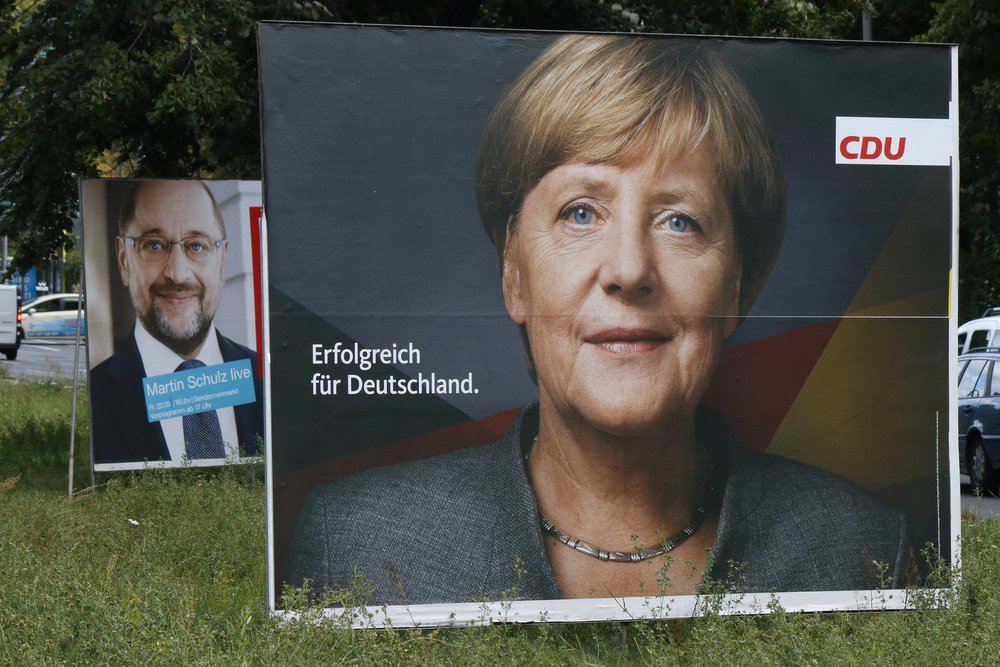
Sound familiar? Even 50 years on, it鈥檚 safe to say that Germany is still grappling with the legacy of 1968. A quick scan of the country鈥檚 political elites today reveals that many of these leaders fall into one of two categories: those who wouldn鈥檛 have risen to power were it not for the spirit of 1968 (from , Germany鈥檚 first female chancellor, to, ironically, Alice Weidel, the lesbian co-leader of the far-right party the Alternative for Germany, or AfD, which opposes gay marriage), and those whose current political appeal rests on a rejection of all that the student movement stood for (including Alexander Gauland, co-chair of the AfD, and Horst Seehofer, the leader of the Christian Social Union, or CSU, and an opponent of Merkel鈥檚 refugee policy).
Put another way, the more you think about Germany鈥檚 political landscape in 2018, the more obvious it becomes that it mirrors and sustains the zeitgeist of 1968 in important ways.
Perhaps the most significant of these similarities lies in Germany鈥檚 civil rights struggles. Yesterday鈥檚 progressives are, of course, today鈥檚 centrists. And so, even as certain quarters of German society struggle to accept the social baseline set by 1968, contemporary adolescents are dramatically expanding the movement鈥檚 notion of inclusion. The disconnect between these two camps was particularly evident in debates around two political developments in 2017: The first was a bill legalizing gay marriage, which the Bundestag in a conscience vote on June 30, and the second was a ruling by the Federal Constitutional Court that gives German lawmakers until the end of 2018 to decide whether to remove gender as a category on all public documents or allow German citizens to , rather than as male or female.
While these two developments were lightning-rod issues, in part due to what some people saw as their sheer radicalism, they represented, , the logical next steps in the country鈥檚 decades-long battles for the civil rights of gay and intersex citizens. Civil partnerships have been , but gay marriage confers additional legal rights to same-sex couples, including the right to adopt. Likewise, since 2013, German parents have been able to whether to record their baby鈥檚 gender on birth certificates, which amounts to a tacit acknowledgment that defining gender in binary terms is insufficient. But the court鈥檚 ruling wouldn鈥檛 only officially recognize the existence of a third gender (proposed formulations are ), but it鈥檇 also permit individuals born prior to 2013 to select this third gender category on official documents, a change currently not permitted.
The fierce backlash against these 68ers-like attitudes isn鈥檛 unlike what the 68ers experienced five decades ago. Above all: The resurgence of liberation and anti-racism movements has long galvanized conservative segments of society to rally against changes they see as threats to social cohesion and moral integrity. Indeed, part of the playbook for pushing back against today鈥檚 version of the 68ers involves framing progressives as an unreasonable minority. Take AfD politician Beatriz von Storch鈥檚 about the court鈥檚 third-gender ruling: 鈥淣o father or mother thinks up such idiocy. 鈥� It鈥檚 a rejection of reality,鈥� she said in a recent interview.
Yet one need not look solely to the radical right to see the enduring, and often emotional, reaction against 1968 and what it symbolizes. Politicians from less controversial parties have expressed similar frustrations with progressive shifts in German society. For instance, in a recent , Alexander Dobrindt, a prominent member of the CSU, the Bavarian sister party to Merkel鈥檚 Christian Democratic Union, specifically tabbed 1968 as a societal tipping point. According to him, ever since 1968, left-leaning individuals 鈥渉ave become spokespeople of public opinion, self-proclaimed educators of the public, and vocal mouthpieces of a left-wing minority.鈥� This line of thinking is, again, nearly identical to the rhetoric conservatives employed in 1968, when they argued that students and their supporters were only a 鈥�.鈥�
These largely conservative efforts to portray social progressives as a minority, though, belie the statistical realities of contemporary German society. The 68ers faced severe polarization, yes, but, today, despite some differences, some of Germans supported legalizing same-sex marriage before the Bundestag voted on it, and nearly support or are indifferent to the court鈥檚 third-gender ruling (compared to 34.4 percent against). There is, clearly, a disconnect between traditional conservative (and even between ) viewpoints and the facts on the ground. The reason is clear; von Storch herself explained it: 鈥淚 am still standing where my parents and the generation before that stood鈥攊t is the others who have moved on.鈥�
While the 68ers were the first generation to loosen the ties that bound postwar German society to its traditional conservative values, subsequent generations have continued that movement鈥檚 work. As a result, there鈥檚 been a steady, albeit gradual, leftward shift in German public opinion about issues ranging from same-sex marriage to Germany鈥檚 sustained efforts to accept foreign refugees into the country. In that, today鈥檚 standard bearers of progressive values have a clear advantage over the 68ers: This time around, both history and public opinion are on their side.
More 国产视频 the Authors
Related

Engagement in a Civic Education Desert

Built to Last: How Leaders Are Creating Sustainable Early Childhood Funding

Pre-K Is Having a Curriculum Moment. A Professional Learning Movement Needs To Follow.
