Michelle Forest
Senior Communications Associate, Open Technology Institute

While the United States鈥� lesbian, gay, bisexual, transgender, and queer community has won many legal battles over the past two decades, growing up LGBTQ still isn鈥檛 easy. Recent estimates indicate nearly of U.S. youth identify as LGBT鈥攁nd yet, these young people are still forced to contend with anti-LGBTQ sentiments on a daily basis. (Editor鈥檚 note: this article uses the term "LGBT" when referring to studies that did not explicitly sample queer individuals.) Schools, in particular, tend to be hotbeds for hostility, with one 2019 study finding that a of surveyed LGBTQ students had encountered biased language, experienced harassment or assault, and been subject to discriminatory policies and practices at school.
While many of these LGBTQ students benefit from using the internet to discover health care resources and online friend groups, an untold number of LGBTQ youth struggle to navigate life without reliable broadband access. A 2020 report found that between K鈥�12 public school students lack a high-speed internet connection at home. Often, the issue isn鈥檛 living in an area without internet access鈥攊t is being part of a household that cannot afford the United States鈥� exorbitant broadband prices. These average a whopping $68.38 a month, according to OTI鈥檚 2020 Cost of Connectivity study鈥攁nd that鈥檚 without equipment rental fees, let alone installation, activation, and equipment purchase fees.
Getting by without the internet can be difficult for anyone, particularly as more and more essential services transition online, but fixed home broadband access is uniquely vital for lesbian, gay, bisexual, and transgender youth. Young LGBT people with internet access tend to be more active in utilizing the web than most, with one 2013 study finding that surveyed LGBT youth reported being online for an average of a day鈥�45 minutes a day more than surveyed non-LGBT youth reported spending online.
Where does all that time go? For one, the LGBT youth surveyed in the same study were much more likely to report seeking information on health and sexuality topics online than non-LGBT youth鈥� as likely, in fact, to report searching the web for information about HIV/AIDs and other sexually transmitted infections, and five times as likely to report searching the web for information about sexuality or sexual attraction. Sexually active LGBTQ youth need to learn how to practice safe sex somehow, and quite often, the safest place for them to seek those answers is the internet.
The internet can also afford LGBT youth greater opportunities for peer support, with of the LGBT youth surveyed in one 2013 study reporting that they had at least one close online friend (compared to less than one fifth of surveyed non-LGBT youth) and almost two-thirds of surveyed LGBT youth reporting that they had connected with other LGBT people online in the past year.
鈥淎llowing LGBTQ+ youth to explore their identities is vital for them to mature into fully formed adults. LGBTQ+ youth may also use online spaces to connect with peers who have similar experiences,鈥� Dr. Natalie Ramos, a child and adolescent psychiatrist specializing in LGBTQ affirming mental health care, the Human Rights Campaign. 鈥淪afe, and affirming online LGBTQ+ spaces allow them to feel like they are part of a community and worthy of respect and celebration.鈥�
To connect more LGBTQ youth to the information and support networks they need, we need to increase broadband availability and affordability for all populations, across the board. OTI鈥檚 2020 Cost of Connectivity study makes a number of recommendations for the Federal Communications Commission, internet service providers, and Congress to implement to help people鈥攊ncluding LGBTQ youth鈥攁ccess broadband.
For one, the FCC should create a better system for recording broadband availability data, as policymakers can鈥檛 effectively advocate to improve broadband availability if the data is inaccurate or nonexistent. While the FCC鈥檚 2020 Broadband Deployment Report that around 18 million Americans are going without high-speed internet at home, evidence shows that this figure fails to capture the true scope of the U.S. broadband accessibility dilemma. Even if we set aside the fact that the FCC鈥檚 standards for 鈥渉igh-speed鈥� are far too low, requiring a 25 megabits per second download speed and a 3 Mbps upload speed (whereas OTI has that the FCC should implement a new download speed standard of at least 100 Mbps)鈥攖he FCC鈥檚 dataset relies on ISP self-reports of broadband availability, submitted through a technicality-ridden process that has made overstating broadband availability all too easy. We need conclusive data on where broadband is and isn鈥檛 offered so that policymakers can fund infrastructure expansion in areas where people, including LGBTQ youth, are being forced to do without high-speed internet service.
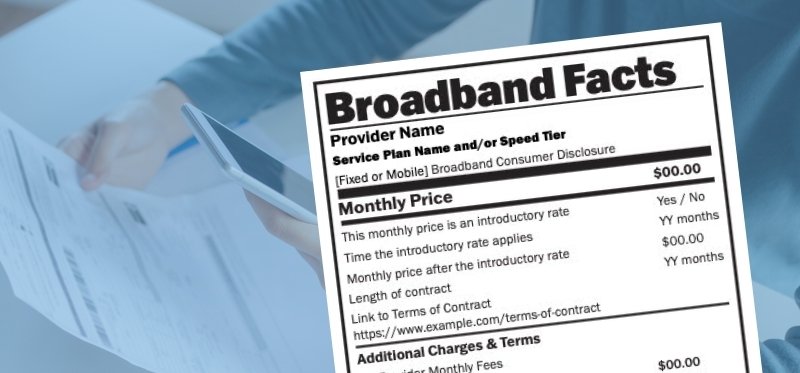
Just as a better system for recording broadband availability data would help policymakers more effectively advocate to improve broadband availability, a better system for recording broadband affordability data would help policymakers more effectively advocate to improve broadband affordability. To this end, the FCC鈥攐r some other government agency鈥攕hould collect data on internet prices. ISPs have historically kept the cost of connectivity 鈥渄ifficult to find and often hidden in convoluted pricing schemes or obscure contract terms,鈥� making the process of acquiring and retaining high-speed internet service a minefield鈥攅specially for the low-income households most adversely impacted by unexpected price hikes and fees. For their sake, ISPs should be required to use a standardized format for disclosing the prices, speeds, and terms of their different plans, as well. This 鈥渂roadband nutrition label,鈥� first proposed by OTI in 2009, should finally be coming to fruition, now that President Biden has signed into law the Infrastructure Investment and Jobs Act, which will that ISPs adopt a broadband nutrition label. While this is great news for corporate transparency advocates, for such a law to be effective, it must be enforced. Therefore, the Biden administration should strive to ensure that ISPs implement these labels swiftly and effectively. The increased pricing transparency that will result shall empower households鈥攊ncluding households with LGBTQ youth鈥攖o make informed decisions about their internet investments.
All told, for LGBTQ youth, reliable broadband access is especially crucial鈥攁nd advocating for broadband access for all also includes advocating for more reliable broadband access for LGBTQ youth.
This blog post is part of a series examining the unique impacts of tech policy on LGBTQ youth. Read more:
Senior Communications Associate, Open Technology Institute