Delia Marinescu
Editorial Fellow, Future Tense
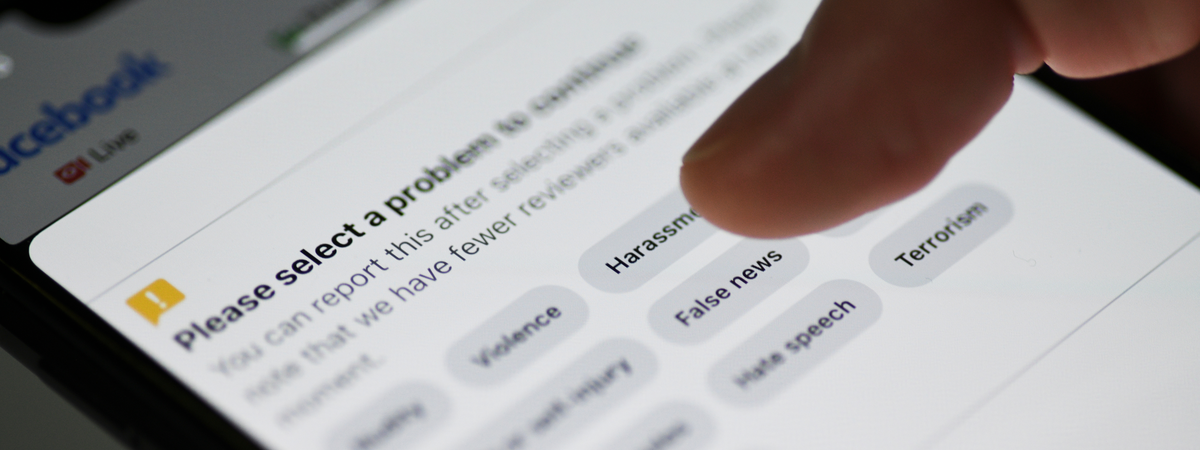
Facebook鈥檚 content moderation has been under a magnifying glass as COVID-19 vaccine misinformation has spread throughout the United States. And to avoid triggering the platform鈥檚 algorithms, people are using . Anti-vaccine Facebook groups are changing their names to 鈥淒ance Party鈥� (40,000 members) or 鈥淒inner Party鈥� (20,000 members) and using the terms 鈥渄anced鈥� or 鈥渄rank beer鈥� to mean 鈥渧accinated,鈥� all in order to avoid being banned.
But in other parts of the world, people don鈥檛 have to invent codes鈥攖hey can simply use their own language. Facebook鈥檚 human moderators and content-moderation algorithms are much less likely to detect misinformation in languages other than English. To understand the problem, look no further than Romania. There, the Roma people have been the main of attacks, as the Romanian population were falsely accusing the Roma of spreading COVID. Without fixing its language loophole, Facebook risks abetting the persecution of one of the world鈥檚 most marginalized ethnic groups.
With around people living across the continent, the Roma are the largest ethnic minority in Europe. And the most persecuted one too鈥攖hey have been targets of extreme violence and social exclusion for centuries. Approximately 500,000 Roma people were murdered during the , of Roma currently live below the poverty line, and in June, a policeman in Czech Republic kneeled on the neck of a Roma man who died shortly after. Activists coined it 鈥溾��
While the Roma have suffered offline oppression鈥攕egregation, , and lack of access to health services, work, and education鈥攖he presence of online discrimination and hate has continued to grow: 鈥�,鈥� is a common sentiment expressed by Romanians on Facebook.
Marian Mandache underlines that the migration of Roma people abroad from Romania has been an accelerator of offline and online hatred, especially because Romanians blame them for making the country 鈥渓ook bad.鈥� The waves of hate regarding the in 2007鈥�08 and 2010鈥�11 worried us, because they have already made many victims, Mandache explained. Back then we saw programs implemented by the French and Italian governments for collective and of Roma people.
A recent event shines a light on the complicated space that Facebook occupies in Romania. Since the beginning of 2021, around have been apprehended crossing the border between Mexico and the United States as they sought political asylum. The news triggered a renewed wave of online abuse toward the Roma people.
Facebook users started posting pictures of crows (a racial slur associated with the Roma in Romania) in the comments of news stories, paired with outrageous racist and fascist speech. 鈥淚 heard that Texans can have a gun without a permit. They have just started to receive targets for free. They are cheap and they move,鈥� a user in Romanian.
鈥淭hey need to be sent to the concentration camp until the 9th generation.鈥� 鈥淎ntonescu, I invoke you,鈥� others, referencing former Romanian Prime Minister Marshall Antonescu who deportations of Roma people in , where most of them died.
Despite going against Facebook鈥檚 community standards, all of these hateful comments are still available.
鈥淭he truth is that in the pandemic begging and pickpocketing weren鈥檛 possible anymore. You can鈥檛 really make profit from these activities when people stay home and you have strict rules of social distancing. Probably the government should compensate them for these losses,鈥� one user, to the delight of at least 125 readers.
Since the beginning of the pandemic, towards Roma has increased and often gone viral online, with vocal supporters. 鈥淭hese guys need to be beaten, it鈥檚 the only thing they understand,鈥� and 鈥淭he cops should not be punished, they were doing their jobs,鈥� Facebook users.
Facebook is the most popular social media platform in Romania, where of people use Facebook a week. And despite going against Facebook鈥檚 , all of these hateful comments are still available on the social network.
Facebook has hate speech detection algorithms in more than , such as English, Arabic, and Hindi, which are spoken by hundreds of millions of people. At the time this article was published, Facebook did not respond to my questions regarding hate speech detection algorithms and human moderators existing in Romanian, a language spoken only by some 20 million people.
Only some 20 million people鈥攖he relatively small number not only of Romanian speakers, but also Roma, might at least partly explain why anti-Roma sentiments remain so pervasive on Facebook in Romania.
A much smaller group like the Roma community has 鈥渇ar less power鈥� in the international landscape, Spandana Singh, researcher of misinformation and disinformation at 国产视频鈥檚 Open Technology Institute, told me. 鈥淭raditionally, groups that don鈥檛 have as much representation鈥攅specially in civil society鈥攈ave fewer opportunities to engage with companies on a regular basis. As a result, companies are not always sure how to develop meaningful and impactful policies that address the issues that these communities face.鈥�
But the fact that Romania is a small country with a doesn鈥檛 mean that hateful content should be left up, adds Singh. 鈥淚f companies want to operate in a global manner they need to have a responsibility to make sure that all of their users are safe, and not just people who speak the major languages of the world.鈥�
Protecting societies鈥� most vulnerable groups is not impossible. Facebook 100 content moderators who speak Burmese after the breakout of the Rohingya genocide in Myanmar and the escalation of towards the Ronhingya people. Facebook鈥檚 moderators developed a dataset which was later used by the company to train its algorithms to detect harmful speech. It鈥檚 time they took the same approach to Romanian, and other languages with 鈥渙nly鈥� 20 million speakers.
As we finished commemorating the , we still see Facebook comments calling for a repeat of a half million Sinti and Roma deaths, we shouldn鈥檛 have to wait for another genocide for Facebook to take action.
Editorial Fellow, Future Tense