
Federal Court Rules You Have the Right to Record the Cops鈥擡ven in Secret
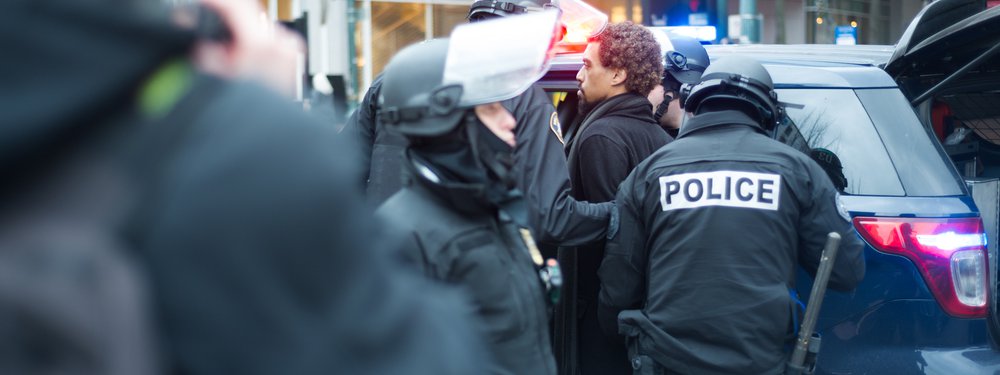
Eric Martin and Ren茅 P茅rez are civil rights activists with a very specific passion: They record the police. When Martin and P茅rez see law enforcement officers performing their duties, they take out their phones to capture the scene on camera, ready to film any misconduct that might occur. Officers sometimes retaliate鈥擯茅rez they have even grabbed his phone鈥攕o both would like to film in secret. But they have a problem: Massachusetts鈥� prohibits the covert recording of anyone, even government officials doing their jobs in public. Violators can be imprisoned for up to five years.
But on Monday, U.S. District Judge Patti B. Saris blocked the wiretap law鈥檚 application to the secret filming of police in public, ruling that it infringes upon freedom of expression. Her is an important step forward for the First Amendment 鈥渞ight to record,鈥� which has become increasingly valuable鈥攁nd hotly contested鈥攁t a time when images of police brutality .
Massachusetts has a dark history of punishing civilians who dare to record cops. In 2007, police arrested Simon Glik for filming officers as they punched a man on Boston Common. Prosecutors charged Glik under the wiretap law, known as Section 99, though a trial court dismissed the charges. Aided by the American Civil Liberties Union of Massachusetts, Glik then filed a lawsuit against the police department, alleging a violation of his civil rights. In 2011鈥檚 Glik v. Cunniffe, the 1st U.S. Circuit Court of Appeals that the officers had, indeed, infringed on Glik鈥檚 freedom of speech. It expressly affirmed the right to record, noting that the First Amendment bars the government 鈥渇rom limiting the stock of information from which members of the public may draw.鈥�
Nobody seriously argues that the government could forbid us from taking notes in public to detail police officers鈥� behavior. Why should it be permitted to ban audiovisual recordings鈥攚hether covert or conspicuous?
The police department eventually and settled the lawsuit for $170,000. Yet Massachusetts police continued to suppress recordings, arguing that the First Amendment did not protect the secret filming of law enforcement. In 2012, the Shrewsbury Police Department charged Irving Espinosa-Rodriguez under Section 99 for teaching a passenger how to covertly record his interaction with an officer during a traffic stop. In 2014, the Chicopee Police Department charged Karen Dziewit under Section 99 for secretly filming police officers as they arrested her. In 2015, the Hardwick Police Department charged Destiny McKeon as an accessory to illegal wiretapping because she knew about another person鈥檚 secret recording of a traffic stop and did not alert the officers.
This pattern of persecution is deeply disturbing. Although the Supreme Court has never specifically discussed the right to record, the 1st, 3rd, 5th, 7th, 9th, and 11th U.S. Circuit Courts of Appeals have all held that the First Amendment plainly protects the filming of officers and public. And for good reason: A long confirms that the government may not 鈥渞epress speech by silencing certain voices at any of the various points in the speech process.鈥� As the 7th Circuit , the 鈥渁ct of making鈥� a recording is 鈥渁 corollary of the right to disseminate the resulting recording.鈥� The 鈥渞ight to publish or broadcast鈥� the recording 鈥渨ould be insecure, or largely ineffective鈥� if the recording itself were banned. Nobody seriously argues that the government could forbid us from taking notes in public to detail police officers鈥� behavior. Why should it be permitted to ban audiovisual recordings鈥攚hether covert or conspicuous?
Massachusetts, however, has refused to modernize Section 99 to comply with these legal developments. (It has also been body cameras for cops, which would theoretically create continuous video of their public activities.) So, in 2016, the ACLU of Massachusetts , this time on behalf of Martin and P茅rez. It argued that police were working around the landmark Glik decision by targeting secret recordings, when the Glik court made no distinction between open and furtive filmings.
The evidence is undeniable: Massachusetts officers don鈥檛 just continue to arrest individuals who record them. The Boston Police Department鈥檚 official training material actually instructs officers that they may arrest and charge people who secretly record them performing their duties in public. The Boston Police Academy even issued a training bulletin informing officers that they can arrest individuals who surreptitiously record them doing their job. It also put out a training video that instructs officers they can 鈥渢ake charges out against鈥� an individual who secretly records them.
Judge Saris disagreed. As a content-neutral restriction on conduct protected by the First Amendment, she wrote, Section 99 must be 鈥渘arrowly tailored to serve a significant government interest鈥� to pass constitutional muster. It is not. The 鈥渄iminished privacy interests of government officials performing their duties in public,鈥� Saris held, 鈥渕ust be balanced by the First Amendment interest in newsgathering and information-dissemination.鈥� Here, the First Amendment wins out: Section 99 is not narrowly tailored to protect privacy, but is rather a blunt instrument that officers can exploit to suppress expression. The Constitution does not permit public officials to limit 鈥渢he stock of public information鈥� in this way.
Oddly enough, Saris鈥� decision consolidated the Massachusetts ACLU鈥檚 case with a similar lawsuit鈥攐ne brought by Project Veritas, James O鈥橩eefe鈥檚 undercover troll operation. While the ACLU and Project Veritas didn鈥檛 work together closely, their suits took aim at the same statute. Unlike the ACLU鈥檚 plaintiffs, who wish to capture potential police misconduct, O鈥橩eefe wants to film progressive public officials, then falsely implying that they broke the law. The cause may be less noble, but the First Amendment protects the act of filming these officials all the same.
Thanks to the ubiquity of smartphones and the vigilance of courageous bystanders, police brutality and misconduct are increasingly difficult to cover up. The killings of and are lodged in the public consciousness, vivid reminders of the cruelty, racism, and injustice that still infects American policing. Saris鈥� decision ensures that Massachusetts cops can鈥檛 invoke Section 99 to censor secret videos of their work. Martin and P茅rez鈥攁nd, yes, even O鈥橩eefe鈥攃an finally record Massachusetts鈥� public officials clandestinely without fearing their films will land them in prison.
This article in , a collaboration among , 国产视频, and .
More 国产视频 the Authors
Related

State Education Budgets in Turbulent Times

Making the Case for Youth Apprenticeship: The Appeal to Gen Z

Nothing 国产视频 Us Without Us Can Actually Raise Us
