
Aaron Loewenberg
Senior Policy Analyst, Early & Elementary Education
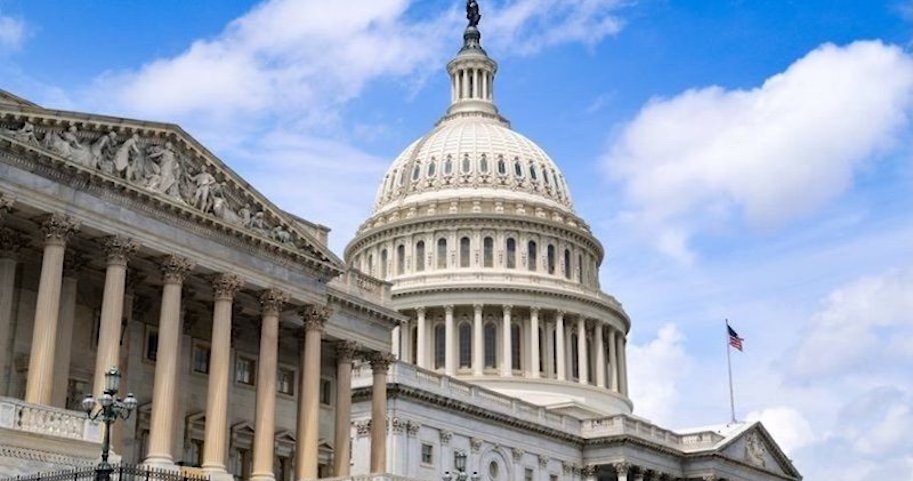
It鈥檚 been an past few weeks in the nation鈥檚 capital due to the administration鈥檚 deliberate of dozens of executive orders and multiple major announcements each day. Below is a roundup of recent events that have a direct impact on early education.
Confirmation Hearings
On Thursday, the Senate confirmed Robert F. Kennedy Jr. to be the next Secretary of Health and Human Services in a , despite Kennedy鈥檚 . All Democrats voted against his confirmation and were joined in their opposition by Mitch McConnell (R-KY) who Kennedy鈥檚 鈥渞ecord of trafficking in dangerous conspiracy theories and eroding trust in public health institutions.鈥�
Prior to the Senate vote, Kennedy appeared for questioning before both the Senate Finance Committee and the Senate Committee on Health, Education, Labor and Pensions (HELP). While much of the committee's questions , such as vaccines, several questions for the record were submitted focused on early care and education. Kennedy鈥檚 answers to these questions were vague, but it鈥檚 worth noting that to maintaining the public availability of approved CCDF plans, CCDF data tables, and Head Start Program Information Reports. Kennedy to 鈥渟trengthen the Head Start program,鈥� something that鈥檚 good to hear considering Project 2025鈥檚 proposal to eliminate the program entirely.
On February 13, Linda McMahon before Senate HELP as the nominee to serve as Secretary of Education even as President Trump in his desire to eliminate the department entirely. The hearing mostly focused on issues of school choice, DEI and antidiscrimination, as well as to the Institute of Education Sciences. The committee will hold a vote to consider McMahon鈥檚 nomination and it will then head to the full Senate for a vote.
Executive Orders
On the evening of January 27, from the Office of Management and Budget was issued that directed all federal agencies to 鈥渢emporarily pause all activities related to obligation or disbursement of all Federal financial assistance鈥� that could conflict with the new administration鈥檚 agenda. The memo immediately created as several nonprofit organizations were unable to get into a system used to access federal funds to pay for expenses.
Early education programs were also impacted by the funding freeze, with Head Start being the most notable. Head Start programs from reported an inability to access needed funds and faced uncertainty about the ability to keep their doors open. While the White House claimed that Head Start programs shouldn鈥檛 have been impacted by the freeze and a judge quickly blocked the action amid legal challenges, from the National Head Start Association on February 4 found that at least 45 grant recipients serving about 20,000 children were experiencing delays in accessing critical funds. And dozens of programs challenges accessing approved grant funds on February 6, ten days after the temporary freeze. While the payment issues have slowly been resolved over the past week, introducing uncertainty into these vital programs comes with , including added stress for parents and educators.
The upheaval continued on February 11 when the administration terminated in Education Department contracts overseen by the Institute for Education Sciences (IES). The research collected by IES is used by teachers and state and local departments of education to better understand student achievement, .
Additionally, the president to issue an executive order at some point this month to begin dismantling the Department of Education (ED). While actually abolishing ED would take an act of Congress (something Linda McMahon during her confirmation hearing), the administration plans to shut down functions of the agency that are not explicitly written into statute and possibly move certain functions to other departments. You can read more about the negative impacts such a move would have here.
Federal Budget
House and Senate Republicans are on a collision course when it comes to the strategy for advancing President 国产视频 agenda through . House Republicans prefer passing 国产视频 agenda via that covers border security, domestic energy, and tax cuts while Senate Republicans have on a two-step plan that leaves tax reform until later in the year. On February 12, House Republicans for their reconciliation strategy that calls for $4.5 trillion in tax cuts along with between $1.5 and $2 trillion in spending cuts over ten years. Those proposed spending cuts include $330 billion in cuts directed at the Education and Workforce Committee. The path forward is certain to be rocky however, given the Republicans鈥� razor-thin House majority.
With the federal government facing a March 14 deadline for funding the government, about a possible shutdown. It鈥檚 also possible that another continuing resolution (CR) could pass to avoid a shutdown and temporarily extend federal funding. Some House Republicans for a full-year CR that would take care of FY25 spending so they can turn their attention towards a FY26 spending bill.
We should gain a better understanding of the president鈥檚 budget priorities when he addresses a joint session of Congress and releases his budget request in the next few months.
Senior Policy Analyst, Early & Elementary Education


