
Florida’s Poll Tax Shows We’ve Ignored the Lessons of Jim Crow
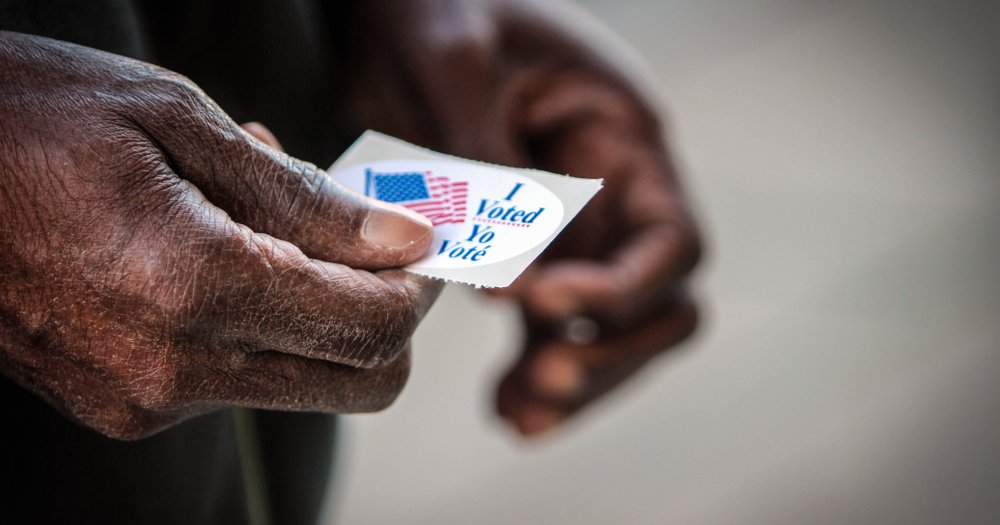
The 2020 election season is in full swing. As of publication, 24 states have held primaries or caucuses; voters in American Samoa and U.S. citizens living abroad have also voted, bringing the total number of ballots cast to . On the surface, that may seem like a lot鈥攂ut turnout calculations show that a whopping three-quarters of the voting age population 补谤别苍鈥檛 participating in the electoral process.
So why, amidst this low turnout, is the United States systemically disenfranchising populations of potential voters?
In , felons lose the right to vote until the completion of their sentence, when they鈥檙e either permanently stripped of that right or required to shoulder some kind of administrative burden to regain it. (This is true of 11 states overall, which represent .) In 21 other states, voting rights are restored 鈥榓utomatically鈥欌�攁lthough relatively few former felons are informed of this, and many subsequently miss opportunities to register.
The impact of felony disenfranchisement is particularly salient in Florida鈥檚 primary, which takes place on Tuesday. In the 2018 midterm election, 64.5 percent of Florida voters cast ballots in support of Amendment 4, a state constitutional amendment aimed at restoring voting rights to former felons who satisfy the terms of their sentences. Six months later, the Florida legislature passed party-line bills requiring any and all financial obligations stemming from felony offenses to be paid off before the franchise can be restored. The legislation, signed as Senate Bill 7066 by Governor Ron DeSantis, was accompanied by to the Secretary of State describing Amendment 4 as 鈥渁 mistake鈥� and stipulating that the governor 鈥渨ould not want to compound that mistake by bestowing blanket benefits on violent offenders.鈥�
Just like that, an effort to extend voting rights to more than one million disenfranchised citizens was rendered null.
SB 7066鈥檚 opponents as a poll tax鈥攁nd given the literal financial barriers that will stand between formerly incarcerated Floridians and the ballot box, it鈥檚 hard to argue with that assessment. The course of action chosen by Governor DeSantis and Florida Republicans revealed their reactionary hand, and it鈥檚 also introduced a broader question: By refusing to accept a popularly supported push for the largest expansion of the franchise in decades, has the Florida GOP shown a proclivity for gazing upon historic injustice鈥攁nd learning absolutely nothing?
Things got better before they got worse
Prior to the Civil War, Black Americans faced a statutory barrier to voting. While those who were 鈥榝ree鈥� could vote in some states at various points in history, Southern states (where the bulk of the mostly-enslaved Black population was located) made it strictly illegal for them to vote.
This type of de jure disenfranchisement was brought to a rather effective end by Reconstruction and the passage of the 13th, 14th, and 15th Amendments. According to Bernard Fraga鈥檚 2018 book The Turnout Gap, more than 80 percent of Black men were 鈥渧oting eligible鈥� by 1867, and two-thirds of eligible Black men voted in presidential and gubernatorial contests at the peak of Reconstruction. In 1880, Black turnout was estimated at 61 percent, while white turnout was close to 67 percent.
Unfortunately, this honeymoon period would quickly sour.
In former Confederate states, Black turnout plunged drastically, dropping from 61 percent in 1880 to just 2 percent in 1912. Gains in congressional representation were also largely undone: No more than three Black Americans would sit in Congress together after 1879 (this would remain true until 1957). This reversion coincided with a dramatic rise in white supremacy and brutally repressive restoration of white power in the South, along with race riots, segregation of trade and labor groups, and lynching in Northern and Midwestern states.
These developments reflected a hard truth: Millions of whites actively rejected the prospect of coexisting with Black Americans and collectively rebuilding an equal, just society from the embers of the Civil War. At the peak of Jim Crow disenfranchisement, poll taxes, literacy tests, arbitrarily enforced record-keeping requirements, and other tools were wielded to preserve the authority of a relatively small white minority.
We live in a markedly different moment in 2020, but parallels remain. In the wake of in 2013, we lost the preclearance requirement (Section 5 of the Voting Rights Act) and the 鈥渃overage formula鈥� (Section 4) that previously required parts of Florida and other Southern states to obtain Department of Justice approval before amending or enacting electoral laws. And while plaintiffs are still able to sue for the removal of or challenge bans on , these suits now necessarily take place on a one-off basis after the implementation of potentially restrictive policies. Shelby has allowed for the introduction of , bringing the national total to seven. An additional three states have strict non-photo voter ID laws, 24 have rules that permit states to ask for identification, and numerous others have onerous voter registration requirements鈥攐ften riding alongside .
Why is felon disenfranchisement so impactful in Florida?
Florida鈥檚 criminal justice system reflects the overall national trend toward incarceration and penalization, but it鈥檚 a reflection from a fun house mirror. According to the Prison Policy Initiative鈥檚 , the state has an incarceration rate of 833 per 100,000 population鈥�119 percent of the national average . As of 2018, Florida鈥檚 prison population stood at 176,000 people.
The situation is exacerbated by glaring race-based discrepancies in incarceration rates. While the size of the total prison population is alarming on its own, the aggregate figure belies the in 2010鈥攚hich, at 2,555 per 100,000 Black Floridians, was four times that of their white counterparts. It also obscures the fact that Black prisoners account for nearly half (46 percent) of Florida鈥檚 total incarcerated population鈥攄espite constituting just 16 percent of the state鈥檚 population.
It鈥檚 unsurprising, then, that of the nearly 15 million former felons in America in 2010, an were Black鈥攁 testament to the racial skew of felon disenfranchisement. This is exacerbated by the median household income of Black Floridians ($41,361), which is just 59 percent of the median for white households鈥攖hus ensuring the monetary requirement outlined in SB 7066 will disproportionately affect people of color.
All told, everything old is new again. SB 7066 reveals the tried-and-true flavors of Jim Crow-era election chicanery: subtle, pernicious policies crafted under the auspices of the public interest, but which fundamentally serve to hamstring U.S. democracy. After all, what is a democracy without elections?
The bountiful returns of electoral gatekeeping
Despite the deterministic effects of congressional polarization and gerrymandering, 102 congressional elections in 2018 were and 50 were decided by 5 percent or less. The 2016 election of Donald Trump was borne through razor-thin victories in Michigan (a 0.23 percent margin of victory), Pennsylvania (0.72 percent), Wisconsin (0.77 percent), and Florida (1.2 percent). Andrew Gillum was just over 30,000 votes away from eking out a victory in Florida鈥檚 gubernatorial contest, where more than 8 million people cast votes. Charlie Crist won his senate seat by 10,000 votes. Simply put, much of the time, elections are still very close.
It鈥檚 also true that elections and their associated paraphernalia鈥攄ebates, conversations, social media diatribes鈥攔emain the most common way for Americans to get involved in shaping political outcomes. Eitan Hersh鈥檚 hinges on precisely this fact: 鈥淭echnological changes have affected all forms of leisure, and it鈥檚 important to see how they affect political leisure, too 鈥� a century of political reforms [was] meant to make politics more open to ordinary people and less dominated by political elites, but they have simultaneously weakened power-seeking organizations and strengthened forms of political engagement that play to our worst instincts.鈥� According to a , while 42 percent of U.S. adults had expressed public support for a campaign on social media in the last five years, just 28 percent had attended a political rally or event, and only 16 percent had worked or volunteered for a campaign. The United States has seen some large demonstrations in recent years, but we remain a country that mostly limits its political participation to the voting booth.
Thus, the impact of removing of an individual鈥檚 right to vote may manifest first in electoral outcomes, but it can burrow considerably deeper. Deploying state power to prevent a former felon from voting has the potential ultimate effect of eliminating that person from the electoral process altogether, adding an implied suggestion that the person鈥檚 social value is also diminished. If you can鈥檛 vote, are you really a citizen? And if you鈥檙e not a citizen, are you really an American?
In the Florida legislature鈥檚 refusal to adopt Amendment 4, we have a particularly craven attempt to lean on inequality in the justice system to justify inequality in our nation鈥檚 electoral functions. This deployment of segregation, disunion, and feigned race blindness is predictable鈥攂ut it shouldn鈥檛 be. As we enter a new decade, let鈥檚 strive for something better鈥攁nd prove that America can place justice and healing above cynical preservation of status-quo power.
More 国产视频 the Authors
Related

鈥淧eace Through Strength鈥� Is Hard to Read

“Getting the Golden Ticket”: Participants’ Perspectives on Lexington’s First Assembly

Civic Assemblies: A Framework for Community Colleges
