
Wesley Whistle
Project Director, Higher Education
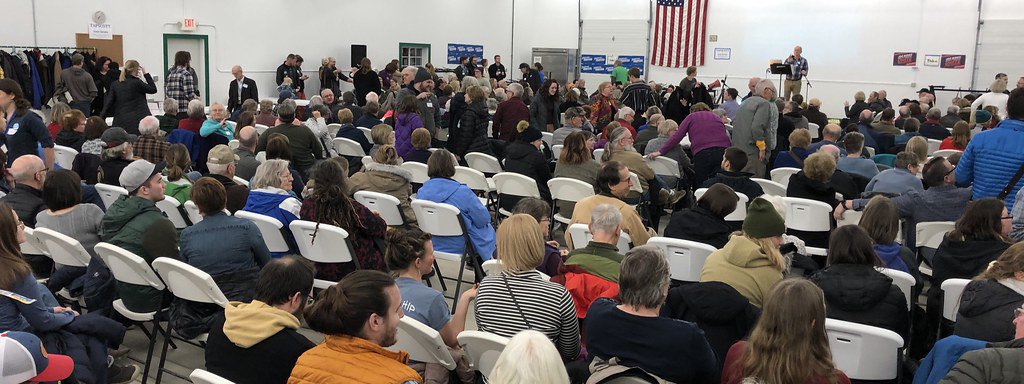
鈥�,鈥� 鈥�,鈥� 鈥�.鈥� In the wake of the Iowa caucus last week, have honed in on the failures of the new reporting app, citing it as proof of the caucuses鈥� obsolescence. But I was there on the ground, observing the entire process firsthand鈥攁nd even before the results were due to come in, I鈥檇 already lost my faith in the caucuses.
Every political junkie dreams of going to the Iowa caucus. As an idealistic political science major, I鈥檝e always wanted to see it in action鈥攚hich is why I was so excited to fly to Iowa this year to volunteer for Sen. Elizabeth Warren.
For the most part, I left feeling fulfilled and proud of the work I did: I knocked on nearly 300 doors over three days and was privileged to meet Iowans of different backgrounds, perspectives, and political affiliations. Most of them took their singular role in the primaries seriously; many engaged with me at their doors and told me about the many campaign events they鈥檇 attended.
But my time in Iowa also served as a stark illustration of the caucuses鈥� flaws. I鈥檝e criticized them before: They鈥檙e disenfranchising, especially for low-income people, and require attendance for hours at a given time. Anytime you increase the cost of participation, you鈥檙e likely to reduce the rate of participation. At dinner Sunday night before the caucus, our server told us this would be her first time caucusing, because she鈥檚 had to work every election since she became eligible to vote.
While knocking, I met a mom of four who owned her own business. She wanted to caucus for Elizabeth Warren, but that would require valuable time on a weeknight. What would she do with her kids? If her husband stayed with them, he wouldn鈥檛 be able to caucus. Finding child care might prevent another person from participating. Considering the Democratic Party consistently emphasizes voting rights as a core tenet, it鈥檚 unclear to me why caucuses are acceptable.
Don鈥檛 get me wrong, I understand their appeal. The personal one-on-one approach is unique, and the ability to voice your support for your second choice is attractive鈥攅specially in such a large field.
Still, I left my precinct convinced that the process was a profoundly flawed way to conduct democracy. And it wasn鈥檛 about the technology鈥擨 didn鈥檛 even know the app existed, let alone that there were problems with it. No, the biggest problem I saw was that of human error鈥攁 risk augmented by the sheer inconsistency with which the caucus rules were communicated.
This was immediately apparent in my precinct. Our chair had communicated different sets of rules to different teams prior to the caucus: We were told that we could only have one sign per campaign and that no speeches could be made, only to arrive and see campaigns put up more than a dozen signs. When it came time to start the caucus, a representative from each campaign was asked to make a speech about their candidate.
Worse, our chair miscommunicated the rules for the 鈥渞ealignment鈥� period of the caucus鈥攔esulting in the loss of a caucus-goer for our campaign and costing us viability.
Then there鈥檚 the infamously knotty delegate math. Iowa, somewhat inconceivably, has different rules for rounding depending on whether caucus-goers cast a vote for their second choice. It鈥檚 confusing even for people who run the caucus鈥攁nd, indeed, while getting results from the precinct chair, I noticed several mathematical errors that were going to cost a delegate from another campaign. Those errors were corrected鈥攂ut with margins so tight at the precinct- and state-levels, innocent mistakes can be deadly.
Even before the results were due to come in, I鈥檇 already lost my faith in the caucuses.
Maybe my precinct was different, but with nearly 2,000 precincts in Iowa, it鈥檚 easy to imagine that many were placed in similar positions. In fact, the exact same rule mix-up was reported in the , at other precincts led to voters shifting outside of the official alignments. And in an echo of our experience, a wrote about his frustration when he was denied the opportunity to make a speech for her.
Finally, the process is made more chaotic by the way delegates are assigned to precincts, along with the viability thresholds. Two voters living on different sides of the same street might be able to caucus in different precincts鈥攁nd, assuming they vote for the same candidate, it鈥檚 easy to imagine a scenario where that candidate is viable in one precinct but not the other (or rendered unviable because their voters aren鈥檛 in the same precinct).
Now that the results are somewhat more finalized, we know that earned 6,000+ more votes than Pete Buttigieg in both the first and second rounds鈥攂ut that Buttigieg earned two more delegates due to the electoral college-like delegate allocation. Democrats鈥攅specially those who rail against the electoral college鈥攕houldn鈥檛 accept a system that prioritizes the votes of some over others.
In short, Iowa needs to make some changes鈥攁nd the most obvious step would be moving to a primary election. Voters, especially those juggling children and work, shouldn鈥檛 be constrained to a small window of time to participate in an election. Instead, the state should establish a range of voting hours to meet the varying needs of voters, allowing nurses, retail workers, and factory workers on the night shift the chance to vote. This would likely lead to more diverse participation鈥攕omething sorely needed in light of Iowa鈥檚 representation woes.
Iowa should also allow early voting鈥攑eople shouldn鈥檛 be punished for having to work on election day, and elderly or disabled voters should be able to avoid lines and hectic polling places. And if Iowa wants to continue allowing voters to express their second choice, it could consider implementing a ranked-choice voting system. Voters whose candidates fail to become viable could have their vote applied to their second-choice candidate鈥攂ut on a statewide basis, not precinct-level. The ability to voice your support for a candidate shouldn鈥檛 be weighted based on the arbitrary, obscure designation of your voting precinct.
Participating in a democracy should be easy. People live busy lives, and they shouldn鈥檛 be forced to learn bafflingly complicated rules just to cast a vote. The caucuses might have their appeal, but it鈥檚 clear there are better ways to structure elections. A regular primary would allow more people鈥攁nd a greater diversity of people鈥攖o take part in elections. And, as we learned in 2016, there鈥檚 far too much at stake to lose a single vote.
Project Director, Higher Education


