
Nicole Hsu
Policy Analyst, Early & Elementary Education
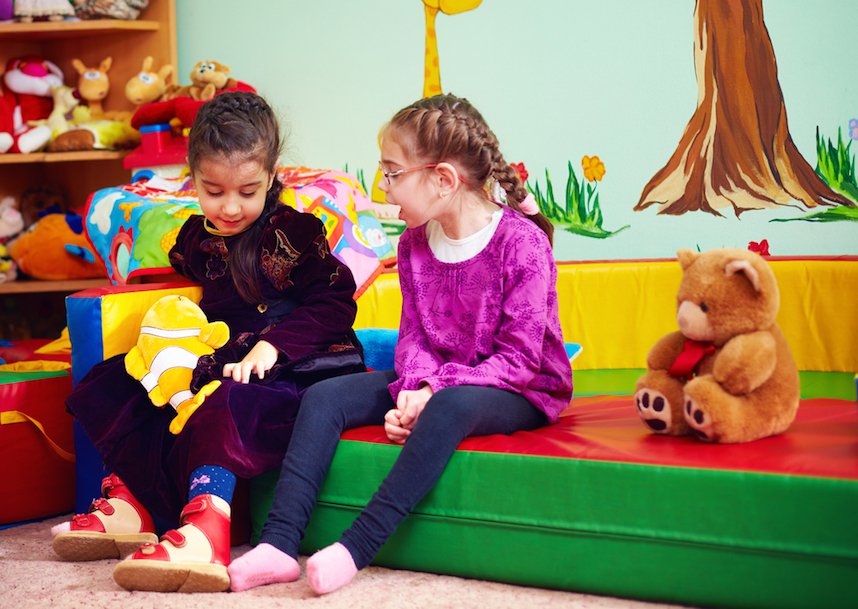
As part of my study abroad program in France last summer, I had the opportunity to work at an organization for children with autism. When I shared with friends what I was doing abroad, two comments always followed: people would ask about my proficiency in French and, because I wasn鈥檛 fluent, how hard it must have been to work with the children at the center. Despite my limited knowledge of the French language, I found it easier to communicate with the children than with my coworkers. Based on where they fell along the autism spectrum and whether they were verbal or nonverbal, we could communicate using basic sign language, the (PECS), or French.
Many of the questions people asked me were based on preconceived notions about disability. Communication takes many forms; it does not have to be verbal. But it鈥檚 difficult to find answers to questions about disability when it remains a taboo topic in society. One way to deconstruct the stigma and stereotypes about the disability community is through inclusive education, starting with our youngest learners.
The (IDEA) guarantees equal educational opportunities for eligible children with disabilities from birth through age 21. of IDEA provides Preschool Grants to states providing free appropriate public education (FAPE) to eligible children with disabilities ages three through five. These services should be provided in the least restrictive environment (LRE) possible, and the law suggests that children with disabilities first be considered for general education settings unless the individualized education program (IEP) states otherwise.
In theory, it sounds promising. It hints at inclusion. But fundamentally, IDEA inclusion. It only mandates that local educational agencies (LEAs) consider all options, leaving the 鈥淟RE鈥� , and questions remain about how far schools should go in deciding classroom placement and providing supplementary aids and services. have been brought forward by families due to disagreement about LREs. More often than not, although school districts are required to integrate students to the maximum extent possible, the is what鈥檚 provided. The reality is inclusive pre-K environments for children with disabilities are often unavailable. 聽
shows that inclusive early learning environments are beneficial for children with and without disabilities. When children with disabilities are included in general education settings, they are more likely to exhibit than children with disabilities who are in separate classroom settings. In inclusive settings, children with disabilities have as their peers and are more likely to practice newly acquired . This is because they have more opportunities to interact with and learn from the behavior of peers with higher-level social skills. There is also research suggesting for children with disabilities when they are placed in inclusive, high-quality early childhood classrooms. Students are held to higher expectations in general classrooms, which can set children with disabilities on a for future learning.
Meaningful inclusion benefits students without disabilities as well. Students become more understanding of children with disabilities and are more likely to them in classroom activities due to their attention to fairness. Evidence shows for students without disabilities when placed in inclusive classrooms, but they do not lose any skills due to these interactions. Compared to , exposed to disability at a young age in a supportive, inclusive pre-K environment are more receptive of people with disabilities and will be more likely to maintain friendships with children who are different from themselves.
While inclusion is important, implementation isn鈥檛 always easy. Customizing lessons, securing funding, or hiring specialists and therapists can be a complicated process to navigate, yet this doesn鈥檛 mean it鈥檚 impossible. Another obstacle can be the controversy of how best to support all student鈥檚 learning in inclusive classrooms, and having to balance the parent鈥檚 and school鈥檚 sometimes competing interests.
The benefits of early sign language exposure and American Sign Language (ASL) for children who are deaf and hard of hearing is an example of such a controversy. A published in Pediatrics suggests that exposure to sign language for young children with cochlear implants may impede verbal development in the early elementary grades. The study鈥檚 findings has garnered from researchers, parents who are deaf, and members of the Deaf community because the study seems to devalue the benefits of ASL and assume that speech acquisition is the end-all goal for children receiving cochlear implants.
of children born deaf or with hearing loss have parents with typical hearing, so it makes sense for parents to want their kids to grow up with the language they use. Teaching young children ASL, however, will give them the opportunity to communicate with other individuals who are deaf or hard of hearing using their native language. Fortunately, there is plenty of opportunity and incentive for children to continue to sign and improve their skills. , such as , now recognize ASL in fulfillment of high school foreign language requirements, and are offering ASL and starting to accept ASL in fulfillment of foreign language entrance and graduation requirements. The negative stigma is , but there is still much work to be done. 聽聽
There are steps LEAs can take to make high-quality pre-K more accessible and inclusive for children with disabilities. In September 2015, the U.S. Departments of Education and Health and Human Services released to promote inclusion in early childhood programs. Promoting collaboration among staff and enhancing workforce capacity and knowledge of inclusion and disability is critical for a high-quality, inclusive early learning program. Including disability literature and topics such as universal design in professional development for staff will ensure shared understanding and smooth implementation of the program. Pre-K programs can hire more teachers who are , , or certified. Hiring certified teachers and encouraging staff to earn the certification will increase a program鈥檚 capacity to enroll students with disabilities.
Pre-K programs should be more intentional about including students with disabilities, and understand that classroom diversity will benefit students, staff, and families. Interacting with the disability community from an early age can help to reconstruct society鈥檚 attitudes so that next time, I鈥檒l receive more than looks of sympathy or inspirational comments when I talk about the students I worked with in France.
Policy Analyst, Early & Elementary Education


