
Four Corrections to Senator Blumenthal鈥檚 BuzzFeed Post

BuzzFeed鈥檚 lead story today is a post by Senator Richard Blumenthal (D-CT) on . But the post, despite its extensive use of graphics and charts, gets some very basic facts about the student loan issue wrong. Perhaps the most glaring of these is his claim that 鈥�10 million students nationwide will lose $1,000 per year from the higher [loan] rates鈥�. Some students do stand to lose about $1,000 鈥� but over 10 years, not annually. That鈥檚 a big difference 鈥� a monthly increase of about $9 instead of $90.
Blumenthal鈥檚 post contains a few other major discrepancies. Like the fact that 7.4 million students receive Stafford Loans, rather than 10 million that he mentions. Here are the four big problems that we spotted:
1. On July 1, only SOME student loan interest rates doubled for SOME students.
According to the BuzzFeed post, 鈥測our student loan rates doubled鈥� on July 1. True, rates did increase 鈥� but only on a small subset of loans. The rate change only affected Subsidized Stafford loans, which made up of Stafford loan volume issued last year. And though Blumenthal cites 10 million as the number of students affected, the White House about 7.4 million students will receive Subsidized Stafford loans next year.
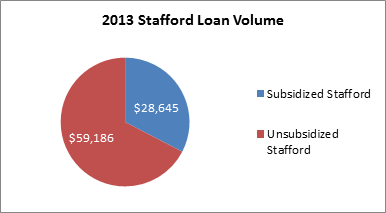
Source: 国产视频 Foundation,
2. No, it’s $1,000 over 10 years, not $1,000 annually.
Blumenthal wrote that students will lose $1,000 annually because rates on some loans doubled on July 1. But that isn鈥檛 accurate. The $1,000 figure refers to the additional cost to students over the life of a typical ten year loan. In other words, Blumenthal overstates the impact of the higher interest rate by a factor of ten.
Here鈥檚 how the math works. But first, a GIF to keep your attention:

Source:
The rate change, , only affects Subsidized Stafford loans. The limit on those loans is a maximum of $5,500 per year from a student鈥檚 third year of college on (in the first year it鈥檚 $3,500, and in the second, $4,500). And Subsidized Stafford loans don鈥檛 accrue interest while the student is in school.
That means the most a student could pay on his Subsidized Stafford loan under the new rate is about $2,000 in interest, compared to about $1,000 with the 3.4 percent rate. In other words, a student will pay about $1,000 more over the 10-year life of the loan. That鈥檚 about $9 more per month 鈥� to borrow an from Allyson Klein at Education Week, less than the monthly cost of a subscription.
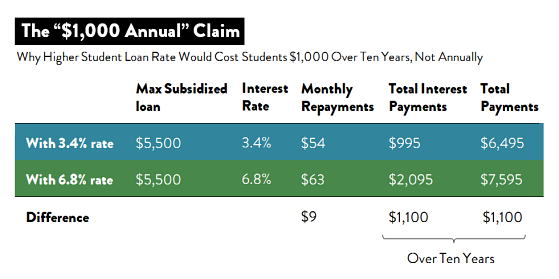
Source: 国产视频 Foundation
Blumenthal isn鈥檛 the only one confused by this $1,000 number. We found countless other examples 鈥� from , , , and (D-LA), among others 鈥� of confusion about the whether the $1,000 refers to a one-year or a 10-year number.
So to clarify one more time, we鈥檙e talking a maximum of about $1,000 per loan over the standard, 10-year repayment period for that loan. Not annually.
This confusion all probably stems from an AP report of comments made by President Obama. Obama : 鈥淚f Congress doesn鈥檛 act by July 1st, federal student loan rates are set to double. And that means that the average student with those loans will rack up an additional $1,000 in debt. That鈥檚 like a $1,000 tax hike. I assume most of you cannot afford that. Anybody here can afford that? No.鈥� AP this to mean a $1,000 annual hike.
3. The government doesn鈥檛 profit off student loans.
Blumenthal says: 鈥淭he government profits off these student loans, while you suffer.鈥�
It鈥檚 a nice piece of rabblerousing, but it鈥檚 wrong. In fact, the on Subsidized Stafford loans 鈥� about a $12 loss for every $100 lent.
Looking at the cost estimates produced by the Congressional Budget Office, you might think otherwise. That鈥檚 because Congress requires CBO to use inaccurate accounting plans that even the CBO says are out of whack with the true costs of the program.
The accounting practices CBO uses, which are dictated by the Federal Credit Reform Act, calculate the costs of the program using the risk factor on Treasury bonds. They don鈥檛 account for the 鈥� namely, the fact that borrowers are much than the entire U.S. government is to default on its debt. The Department of Education is a 23% default rate on Subsidized Stafford loans for the 2014 cohort.
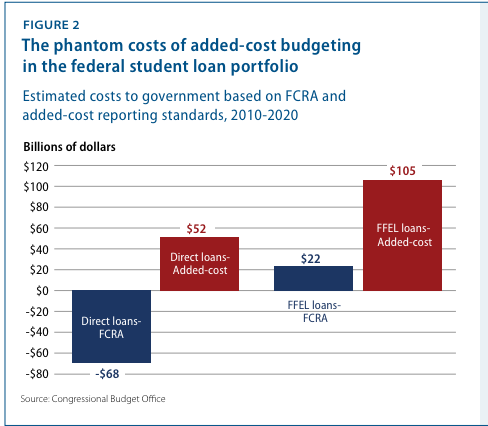
Source:
CBO (and , and , and the ) recommends using instead, and even issues fair value estimates for the loan program. Under fair value accounting, the U.S. loses money on Subsidized Stafford loans most years.
4. The solution has nothing to do with banks
Blumenthal ends with a proposal he with Sen. Elizabeth Warren (D-MA) 鈥� the Bank on Student Loans Fairness Act. It would set rates on Subsidized Stafford loans at 0.75% for one year鈥檚 worth of loans, the rate the Federal Reserve sets on emergency lending to banks and one that costs banks, which usually have access to much lower rates. But the plan is based on a fundamental of how student loans work. And it鈥檚 for students if it only lowers rates for one year.
Source:
A better solution is being on Capitol Hill this week. A bipartisan group of senators, led by Sens. Joe Manchin (D-WV) and Angus King (I-ME), issued a proposal last week that is now being to gain support in the Senate. The plan will tie interest rates to the 10-year Treasury note (1.81 percent for the 2013-14 school year), plus 1.8 percent for undergraduates, 3.4 percent on graduate Stafford loans, or 4.5 percent on PLUS loans. The rates will be capped at 8.25 percent for undergraduates and 9.25 percent for graduate students and PLUS loans. It鈥檚 a long-term solution that will end the annual bickering that has afflicted Congress each year, provide lower rates to all students next year (not just Subsidized Stafford borrowers), and cost taxpayers nothing.
Blumenthal鈥檚 not the only one getting some of the facts wrong 鈥� we have a of misreported details in the student loan interest rate debate that has dominated Congress over the last two months.
Turns out just because something is published on BuzzFeed doesn鈥檛 mean it’s true.
More 国产视频 the Authors
Issues
Related

Cosmetology Students Deserve Better Than Debt and Broken Promises

Quality Principles for Workforce Pell Programs

