Lisa Guernsey
Senior Director, Birth to 12th Grade Policy; Co-Founder and Director, Learning Sciences Exchange

Place-based learning ecosystems are gaining traction as models for improving public education and helping children, youth, and families thrive. This piece and its companion article on early insights from studies of ecosystems听highlight the research undergirding the , a two-year initiative announced in February 2026 that focuses on making stronger connections between U.S. public schools and out-of-school programs. We welcome input and questions and are developing additional ways for organizations to get involved; if interested, please reach out via this .
More than 25 years ago, a 500+-page report called landed with a boom, sparking new efforts to improve the early education field. It analyzed hundreds of scientific studies about the developing human brain and how children鈥檚 interactions with adults and peers shape the way they learn and grow. The volume includes bold recommendations for how to support parents, caregivers, and educators in helping young children thrive.听
At around the same time, other researchers began working to bring coherence to the growing number of studies on the adolescent brain. These efforts resulted in landmark works of the last decade such as (2019), 听 (2021) and (2024). These volumes summarize everything from the growth of the prefrontal cortex where advanced thinking happens to how positive relationships help teens persist and gain the confidence to keep learning.听
Now that scientists have built a solid knowledge base for both early childhood and adolescence, the challenge is to ensure these findings don鈥檛 just marinate in their own jargon and collect dust on academic book shelves. Educators and community leaders want to figure out how to apply this science in homes, classrooms, and any other place where children and teenagers learn and grow.听
Applying the science first requires tackling what seems like a very basic question: What does it mean to learn? Is it about being able to button your coat by yourself before going out for recess? Does it mean decoding the letters and words on a page to say them out loud? Does it mean remembering the significance of a historic event long enough to write about it when tested months later?听
Maybe it鈥檚 about being able to recognize when a digital image has been doctored or knowing how to use tech tools to detect when a car鈥檚 emissions are at a dangerous level. Could it have anything to do with recognizing when a friend is struggling with substance use disorder and having the emotional maturity to seek out an adult to help?听听
Learning is every permutation of the above and an infinite amount more. It is dazzling to consider the knowledge and skills that humans are capable of learning, and the cognitive, social, physical, and executive functioning skills they need. Kids today need to hone their skills for regulating emotions, become discerning and critical thinkers, communicate, evaluate, apply reason and use logic, create and invent, and support each other.
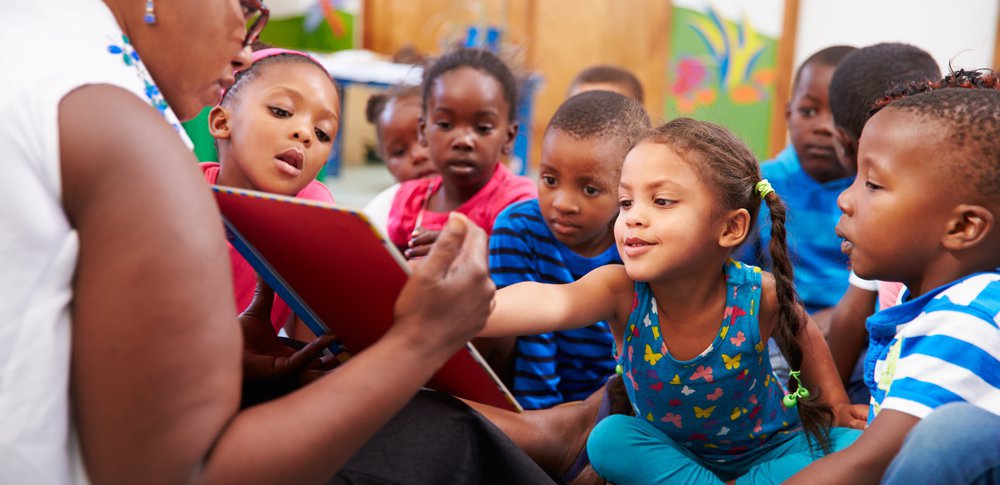
One of the biggest insights from the science of learning and development is that all of the above starts with relationships. The science of early childhood shows that social interaction is essential for the human brain, starting with infants鈥� coos and babbles and the importance of caregivers responding to those sweet sounds, a process known as 鈥渟erve and return.鈥� Warm, responsive interactions build trust and a sense of security, giving children the desire to learn and explore. In early learning classrooms, hallmarks of quality now include teachers engaging in dialogue with children during story time (which also helps build language and literacy skills) and showing respect for children鈥檚 questions by seeking answers alongside them (building skills for scientific thinking, observation, and exploration).听
The importance of positive human relationships permeates the lessons from and the Brazelton Touchpoints, the messages of Jack Shonkoff and the science communicators at the , the research behind the , and the work of a growing cadre of researchers studying early literacy, math, and social-emotional development up through age 8.听听
The science of adolescence also emphasizes relationships. Positive relationships with adults give pre-teens and teens the fuel to get through tough situations, learn from mistakes, and take on new challenges. The at the University of California at Los Angeles distills the science into , one of which is support from parents and other caring adults. Scientists have found that youth develop a stronger sense of self and can cope with rejection and mistakes much more readily when they have positive relationships with their parents or other adult caregivers.
The flip side is also true: research continues to show that when children and adolescents do not have positive relationships鈥攚hen they are experiencing toxic stress, abuse, neglect, or rejection鈥攖heir brains are not able to fully develop executive functioning skills. They struggle in regulating emotions and controlling impulses. It is harder to persevere when content gets challenging and to focus in the face of distractions.听
Other insights emerge from studies on how to motivate students to do hard things, such as facing academic and intellectual challenges. Again, the latest science shows alignment from the earliest years on up. In their newly revised edition of , developmental scientists Kathy Hirsh-Pasek and Roberta Golinkoff write about how much young children need active, social experiences. They synthesize research showing that playful activities have a more lasting impact on children鈥檚 literacy and language abilities than memorization exercises forced on kids out of context. In adolescence, as well, science shows that active and experiential learning helps imbue learning with purpose. Collecting and testing water samples from a local stream feels much more relevant than reading a passage in a biology textbook.听
The field of cognitive science continues to show new ways to engage students. Daniel Willingham鈥檚 classic 2009 book, Why Don鈥檛 Students Like School?, and his in American Educator offers teaching methods rooted in how the human brain works. When content is communicated in boring ways, students check out. When they hear the story behind academic content such as the mystery unlocked by a famous scientist, leading to the discovery of something new, they tune in.听
These are just a few of the insights from the science of learning and development that apply to learning ecosystems. What they have in common is overturning the harmful and outdated ideas that good students are simply those with 鈥済ood genes.鈥� To the contrary, human growth and development depends on a continuous interplay between genes and the environment, including interactions with other humans.听
It is taking decades to meaningfully bring these insights to students and their families. While many school and community leaders welcome the new ideas, some seek more evidence that new approaches will help their students meet or exceed expectations on standardized tests. And many teachers and parents continue to push for studies that pay adequate attention to all subgroups of kids with different needs and from differing demographics and cultures.听
But momentum is growing to communicate these ideas and apply them at scale. Coalitions of researchers and education experts are developing new frameworks for school districts, cities, and towns. One example is the set of and , published in 2021, that focus on five must-haves based on the science of learning and development. They were published by a group of national education organizations, including the Learning Policy Institute, Turnaround for Children, and the Forum on Youth Investment, informed by the . Another push is coming from the recently released , by Lisa Lawson of the Annie E. Casey Foundation. It explains connections between brain growth in the teen years and the promise of community ecosystems that provide opportunities for youth to engage with supportive adults, in school and out of school.
The research demands the integration of the science into classrooms and schools as well as other sites where children and youth spend their time. This realization is propelling a focus on place-based learning ecosystems, which include all sites of learning inside and outside school walls. Ecosystems include the broader span of relationships that students can form within their communities鈥攊ncluding with their parents, caregivers, and teachers, of course, but also with librarians, rec center leaders, 4-H and scout leaders, museum guides, career mentors, coaches, band and theater directors, educators at local media stations, workers in an array of trade training apprentices, and more. Learning opportunities shouldn鈥檛 be based only on zip codes or parent income; all students need them, especially those facing economic hardship and other disadvantages.听
The aims to build on the momentum, amplifying the work of many innovative education organizations, synthesizing research on implementation in communities and schools, and working to develop policy recommendations. We have gained a lot from scientists examining neurons and explaining the human brain. Now there is an urgency to bring these insights to neighborhoods鈥攁nd to figure out how all children and students can benefit.
Senior Director, Birth to 12th Grade Policy; Co-Founder and Director, Learning Sciences Exchange