
How Far Has Germany Actually Moved to the Right?
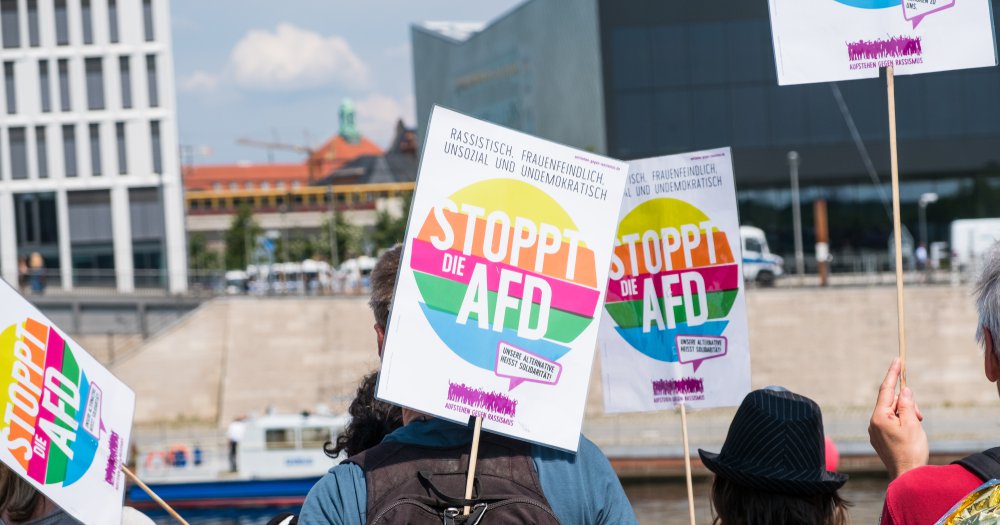
Perhaps the most popular story of German politics today is the meteoric rise of the right-wing Alternative for Germany (AfD), which after its performance in has done what once seemed impossible: gained representation in all of the country鈥檚 16 regional parliaments.
Indeed, despite the AfD鈥檚 minority appeal鈥攖he party鈥檚 blatant ethnic nationalism has appalled most Germans, though it鈥檚 delighted many others鈥攊t鈥檚 captured extensive media attention, voters, and power since its formation in 2013. In the process, it鈥檚 also weakened Chancellor Angela Merkel鈥檚 influence on politics, with Merkel recently delivering the surprise announcement that she鈥檚 stepping down as the chief of her party, the Christian Democratic Union (CDU), and that she won鈥檛 seek re-election in 2021.
But is the AfD really a cancer that spells the end of German democracy, as some might fear? There鈥檚 no doubt that the AfD has already had a lasting effect on German politics: Its success in the federal election in 2017 made it the first far-right party to enter the Bundestag since the end of World War II, it鈥檚 currently the official opposition party in Parliament, and it played a key role in handing the Bavarian Christian Social Union . And yet, on closer examination of voting trends in German politics, the AfD鈥檚 sudden and widespread success doesn鈥檛 actually mark a surging nationalist tide in the way many people seem to think.
The AfD has, in crucial ways, disrupted Germany鈥檚 political landscape, but it鈥檚 neither a harbinger of doom nor a signal that Germans are becoming more xenophobic. Instead, the AfD looks more threatening than it really is because it鈥檚 a media-friendly umbrella party for right-wingers. It serves as a focal point for journalists and racists alike, allowing it to secure attention and draw an undue share of both printer鈥檚 ink and sincere concern.
Think of it like the man behind the curtain in The Wizard of Oz: As with the film鈥檚 titular character, once the veil is pulled away from the AfD, it becomes apparent that though the AfD matters and is going to continue to shape German politics, it鈥檚 not worth the extent of the fear and coverage it鈥檚 gotten so far. This is largely because its success rests not on a rightward shift in German societal attitudes, but rather on political support from former non-voters and other individuals who were previously reluctant to express their racist preferences publicly.
Ironically, the rise of the AfD, a party usually seen as a threat to German democracy, is thanks partly to its knack for accomplishing something that鈥檚 generally seen as a positive for democracy: boosting turnout among habitual non-voters.
Put simply, the AfD is successful in large part because of its ability to mobilize habitual non-voters. Though free and fair elections are a cornerstone of democracy, voting is usually not mandatory in most countries, meaning that in every election, a large segment of the population decides to stay home instead of vote. Non-voters are in the minority in Germany, but since reunification, they鈥檝e still constituted , indicating that there are millions of German citizens who could vote but choose not to. Ironically, the rise of the AfD, a party usually seen as a threat to German democracy, is thanks partly to its knack for accomplishing something that鈥檚 generally seen as a positive for democracy: boosting turnout among habitual non-voters.
Let鈥檚 take a closer look. In the 2013 federal election, which took place seven and a half months after the AfD was founded, the 鈥�430,000 of its 鈥攆rom citizens who鈥檇 previously voted for the economically conservative and socially liberal Free Democratic Party, with additional support from former CDU and Left Party voters as well as from 210,000 former non-voters. In the next federal election, in 2017, not only did it retain most of those 2013 voters, but, more importantly, was nearly equal to the number of votes it acquired overall in 2013. Indeed, the AfD drew 24 percent of its 2017 support鈥斺�攆rom former non-voters. The 2018 Bavarian election displayed a similar dynamic: came from individuals who didn鈥檛 vote in 2013. (The AfD didn鈥檛 run in the 2013 Bavarian election.)
This makes the AfD a clear outlier in Germany鈥攊n contrast to the AfD, every other noteworthy political party in both and drew the vast majority of its electoral support from habitual voters, and generally from the same voters who supported them in the 2013 elections. In that, the AfD is an oddity of sorts: Increased voter turnout is generally thought to be 鈥済ood鈥� for democracy鈥攁fter all, we usually believe that democracy is supposed to include as many citizens as possible鈥攂ut the AfD has managed to increase voter turnout and cause many Germans to worry about the future of their democracy.
One popular misconception about the AfD is that it鈥檚 done well because it timed its formation to coincide with an increase in anti-Semitism and xenophobia. This isn鈥檛 the case. Polls indicate that, if anything, , and though the number of violent anti-Semitic incidents in Germany has increased slightly since 2015, it鈥檚 still . Likewise, German attitudes toward xenophobia don鈥檛 explain the AfD鈥檚 widespread success: The has increased in recent years, but that, since 2002, the level of xenophobia among the general population has remained between 26.9 percent (in 2002) and 20.4 percent (in 2016).
In that sense, the AfD鈥檚 emergence and growth shouldn鈥檛 be seen as the result of a concomitant growth in anti-Semitism and xenophobia. Neither should it be seen as an alarm that Germany, as a whole, is sliding back into the genocidal racism of the 1930s and 鈥�40s. Rather, the AfD鈥檚 popularity is an expression of latent racism that was always present within German society. The difference isn鈥檛 the extent to which Germans support ethnic nationalist views鈥攁nd, to be clear, most Germans are staunchly against anti-Semitism, Islamophobia, xenophobia, and other forms of racism鈥攖he difference is that, now, with the AfD, Germans who hold these views have a semi-respectable political party to vote for.
Prior to the emergence of the AfD, the National Democratic Party of Germany (NPD) was the main representative of extreme right viewpoints. Publicly expressing support for this party was tantamount to admitting support for neo-Nazi views, making it an unappealing political option for most Germans. Voting for the NPD was socially taboo, and its meagre vote totals reflect that. (These days, the NPD occasionally wins seats in regional parliaments, but this happens sporadically and generally only in the former East Germany, which is well known to be .) Voting for the AfD, on the other hand, is socially permissible鈥攁nd German citizens with pre-existing racist views are taking advantage of that opportunity.
The AfD is certainly a disruptive, distasteful, and potentially dangerous party, but it鈥檚 not going to bring about the end of German democracy. Essentially, the AfD is like a precancerous mole: It鈥檚 worrying, unwanted, and unseemly, but it isn鈥檛 worth the attention it鈥檚 already gotten, and it probably won鈥檛 kill the Federal Republic.
Still, it鈥檚 best to keep an eye on it. It might grow.
More 国产视频 the Authors
Related

Disability in the United States at 250

From 鈥楻isky Business鈥� to 鈥楳ission: Possible鈥�: Why ECE Learning Cohorts Work

State Education Budgets in Turbulent Times
