Guest Post: Lessons from the UK for Ending Poverty Wages in the US
Editor鈥檚 note: This guest post was written by Calum Montell-Boyd, a student at the University of Oxford and editor at , a student think tank at Oxford. He was an intern with the Asset Building Program in the Summer of 2013.
听
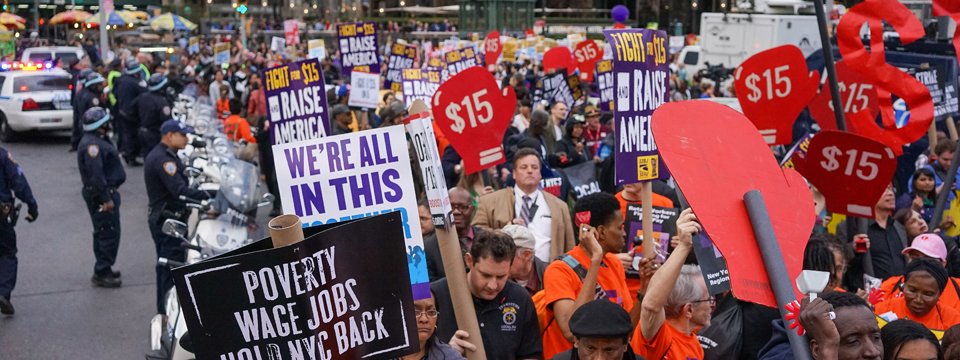
As the United States marks the 50th anniversary of the War on Poverty, low wages remain a problem not just throughout the nation but across the developed world. America鈥檚 are counted at over 10 million, while across the Atlantic, in London, workers isn鈥檛 making enough to meet basic living expenses. From this perspective, it comes as good news that the UK Treasury has in the minimum wage, from 拢6.31 ($10.37 USD) to 拢7.00 ($11.50 USD). This announcement from the United Kingdom comes at the same time as US policymakers are considering similar legislation that would raise the federal minimum wage to $10.10.
听
In Britain, more people than ever rely on payday loans to meet even basic, like paying the mortgage, and there are worries over on both sides of the Atlantic The consistently low minimum wage has been making it harder for those on low incomes to build assets and climb out of poverty. Perhaps that鈥檚 why the UK public s a real rise in the national minimum wage, just . These nations wouldn鈥檛 be the first among developed nations to move down this path of improving wages among their neediest citizens. In November, Germany for the first time.
听
But what about the structural effects of an increase? The most powerful criticism of raising the minimum wage is that while an increase works just fine for those being paid the minimum wage now, it makes developed economies less competitive overall, and may stop businesses (big or small) from hiring new workers. But at least in terms of the public finances, the UK Treasury estimates the cost of a big rise would be . Furthermore, the , conducted in the US, suggests that modest minimum wage increases actually have 鈥渘o discernable effect鈥� on employment. In practice, employers who hire at the minimum wage can adjust to the minimum wage. Employers can benefit from increased efficiency and reduced labor turnover as a result of an increase and can adjust for costs with modest price increases and 鈥渨age compression,鈥� whereby the highest earners take a small income cut to offset rises at the bottom.
听
What about competitiveness? Could a higher minimum wage hurt developed economies competing in a 鈥済lobal race鈥� with emerging nations like China? Well this isn鈥檛 even really the right way to think about this issue. If developed nations really wanted to be competitive, they would need to set the minimum wage at around , or 73 pence an hour. That鈥檚 the average across China鈥檚 different regional minimums. When we speak about bringing jobs back to the US, we don鈥檛 mean jobs in manufacturing that pay $1.20 an hour.
听
At a time when low-wage workers in both the US and the UK and build assets with tightening budgets that often barely cover today鈥檚 basic necessities, an increase in the minimum wage offers a way to alleviate not only current financial woes, but also begin to build long-term financial stability. The evidence just doesn鈥檛 support the position that minimum wage increases are bad for the economy, and even if there are some effects, the benefits of doing so far outweigh the negligible costs. The time is right for an increased minimum wage in both the UK and the US.
Related
Asset Building News Week – September 23, 2016

Asset Building News Week – September 16, 2016
