As They Happened: House and Senate Hearings on Early Education Research and Policy
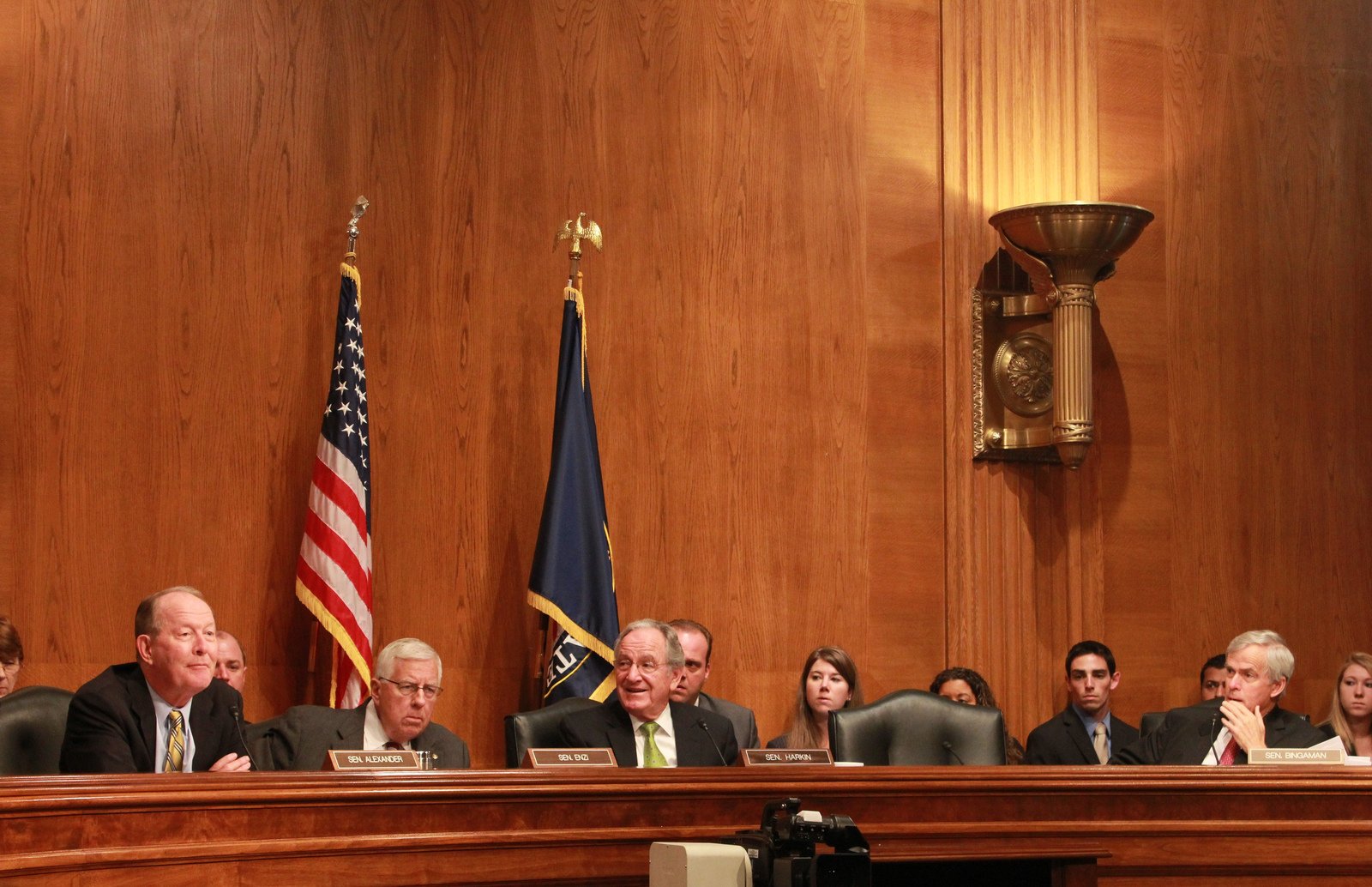
This was an exciting week for early education policy watchers in Washington, D.C. Committees in the House and Senate each held hearings on the state of early education research and policy.
- In the House, the Education and Workforce Committee’s hearing was titled, The Foundation for Success: Discussing Early Childhood Education and Care in America,” and you can .
- In the Senate, the Health, Education, Labor, and Pensions Committee’s hearing was titled, “Supporting Children and Families through Investments in High-Quality Early Education,” and you can .
But why watch the hearings when you can read a livetweeted record of both hearings from my colleagues and I (along with others from D.C.’s education policy community)?
Here’s Wednesday’s hearing in the House:
The theme from the House Republicans was relatively clear:
. The idea is to leverage what states are already doing… NOT create a new federal program.
鈥� Laura Bornfreund (@LBornfreund)
As evidence, they provided a jumbled graphic (dis)organizer鈥攚hich you can . They also touted testimony from the Government Accountability Office’s Kay E. Brown, who noted that different federal programs sometimes offer similar services and pushed for more/better coordination. However…
Even with overlap, there are likely gaps in service, says Ms Brown
鈥� FirstFiveYearsFund (@firstfiveyears)
Rep. George Miller (D-CA) defended the approach of spreading federal early education dollars throughout other social programs:
The idea here, ‘s saying, is that it can actually be MORE efficient to include targeted services in specific programs.
鈥� Conor P. Williams (@ConorPWilliams)
Delaware Office of Early Learning Executive Director Harriet Dichter (who聽)听补驳谤别别诲:
Dichter: Duplication is not problem. Resources are. Partnerships & support from federal govt is what states need.
鈥� FirstFiveYearsFund (@firstfiveyears)
国产视频 alum Maggie Severns:
Paradox emerging at pre-K hearing: people want fewer federal programs, but lots of choice and options for parents. How to make both?
鈥� Maggie Severns (@MaggieSeverns)
In addition to streamlining and targeting existing programs, the Brookings Institution’s Russ Whitehurst suggested that states could improve parents’ early education options by collecting and disseminating better evidence on existing providers:
Whitehurst: I think about $7K/$8K would be enough for most families to purchase high-quality child care. 鈥� Conor P. Williams (@ConorPWilliams)
Whitehurst acknowledges that states can play critical role in collecting information for parents. Hard to choose programs w/o data. 鈥� Conor P. Williams (@ConorPWilliams)
Whitehurst also challenged the research basis for early education investments:
Whitehurst says research supporting investments is outdated and irrelevant. Says doesn’t work. 鈥� Lillian Mongeau (@lrmongeau)
The Upjohn Institute’s聽 was having none of it:
. Which is minority position among researchers because of wide variety of old & new studies: 鈥� Tim Bartik (@TimBartik)
The House Democrats agreed with Bartik:
: the evidence for investments’ effectiveness is far beyond the standard we usually require for govt programs. 鈥� Conor P. Williams (@ConorPWilliams)
High-quality early education is outstanding for kids, but it’s also great for parents:
Great that mentions the ways that $ can ease pressures on parents. (I agree: ) 鈥� Conor P. Williams (@ConorPWilliams)
顿颈肠丑迟别谤听补驳谤别别诲:
Dichter: The first years of life set the stage for all later development. Quality is essential to outcomes. 鈥� FirstFiveYearsFund (@firstfiveyears)
Dichter: “From where I sit, we have lots of evidence of the imp role that does play in reducing the achievement gap.” 鈥� Conor P. Williams (@ConorPWilliams)
What else? A glimmer of a wisp of a shadow of a hope that Head Start could be reauthorized soon:
. says the committee is going to move towards reauthorizing the Head Start Act. 鈥� Politics K-12 (@PoliticsK12)
And there was bipartisan agreement on one thing: Dichter’s snow-plagued commute from Delaware was heroic.
. bestows “double extra gold stars” on Harriet Dichter for her efforts in fighting through bad weather to testify. 鈥� Conor P. Williams (@ConorPWilliams)
Here’s Thursday’s hearing in the Senate:
Testifying before today: Dr. Hirokazu Yoshikawa, Mr. John White (LA), Ms. Danielle Ewen (DCPS), and Ms. Charlotte M. Brantley 鈥� Conor P. Williams (@ConorPWilliams)
No question on Thursday’s theme:
One theme of today’s Senate HELP hearing: “Quality costs money.” 鈥� Caitlin Emma (@caitlinzemma)
Senate Republicans offered less skepticism than their House colleagues regarding the early education research base.
. “I think that I’m the only US Senator who went to Kindergarten for five years” (his mom ran an center) 鈥� Conor P. Williams (@ConorPWilliams)
But they offered a similar critique of the proliferation of federal early education dollars.
. “Washington can help, but a nat’l effort to expand will be mostly local and state $” 鈥� Conor P. Williams (@ConorPWilliams)
. sees the Harkin preschool bill as “another grand promise” from the feds. Kinda like Medicaid. 鈥� Politics K-12 (@PoliticsK12)
Louisiana State Superintendent John White agreed:
White: At present, the biggest obstacle to improving is the fragmentation of existing federal programs. 鈥� Conor P. Williams (@ConorPWilliams)
White: “I don’t think add’l funding is needed…[need to] make the most and make sense of existing funding streams.” 鈥� Conor P. Williams (@ConorPWilliams)
So did Sen. Barbara Mikulski (D-MD):
.: “I鈥檓 not so sure we need new programs. I know I might surprise everyone because I鈥檓 a good Democrat.”
鈥� Caitlin Emma (@caitlinzemma)
Though…
White: “the subsidies in our state and most others are not yet adequate” to make high-quality choices available to parents. 鈥� Conor P. Williams (@ConorPWilliams)
NYU Professor Hirokazu Yoshikawa (whose recent work was part of ) offered the research perspective:
Yoshikawa: Quality pre-K can be scaled, benefits extend to near-poor and moderate-income children as well as the poor. 鈥� Conor P. Williams (@ConorPWilliams)
“Test scores r not the only indicator of children鈥檚 development” Dr. Hirokazu Yoshikawa, on early ed results. Reduced crime, teen pregnancy 鈥� Motoko Rich (@motokorich)
Prof. Yoshikawa says he appreciates the emphasis on quality in the act to . Quality is crucial. 鈥� ChildrensDefenseFund (@ChildDefender)
Sen. Casey: “If kids learn more now, they鈥檒l earn more later” 鈥� Motoko Rich (@motokorich)
Yoshikawa traces link between low teacher salaries, high turnover, and complications of inc teacher requirements. 鈥� Megan Carolan (@MeganCarolan)
Danielle Ewen, the Director of the Office of Early Childhood Education for聽Washington, D.C.’s public schools,聽offered examples from the District’s near-universal pre-K program:
Danielle Ewen, who heads up DC’s office of , is talking about how great DC’s universal preschool for 3&4 year olds has been for outcomes
鈥� Politics K-12 (@PoliticsK12)
Ewen quotes a mother: “My son is excelling socially, emotionally, & cognitively” in DCPS’s quality program. 鈥� FirstFiveYearsFund (@firstfiveyears)
Check it: DC spends more on than all but 10 states. (CA, FL, GA, IL, MI, NJ, NY, OK, TX, WI) 鈥� Conor P. Williams (@ConorPWilliams)
Which is :
Personal note: my son turns 3 yrs old in summer. Will enroll in DC in fall. Dramatically changes our work-life calculus. 鈥� Conor P. Williams (@ConorPWilliams)
My favorite moment from both hearings:
. “You guys taken a look at my bill, the Strong Start for America’s Children Act? Yeah? Ok? What’s wrong w/it?” 鈥� Conor P. Williams (@ConorPWilliams)
By the end, the hearing drifted into metaphysics:
. “You’re only 3once. That’s probably true.” Franken: “Depends on your whole theory of cosmology.”
鈥� Conor P. Williams (@ConorPWilliams)
Both committees promised more early education hearings鈥攑resumably within this cosmos鈥攕o stay tuned for more in the months to come.”
More 国产视频 the Authors
Issues
Programs/Projects/Initiatives
Topics
Related

Prioritizing Students with Disabilities in AI Policy

In 2026, States and Congress Will Need to Mitigate the Damage to PreK-12 Education
Inside 2025: A Year of Urgency and the Wins That Mattered Most