
Ari Ratner
National Fellow, 2015
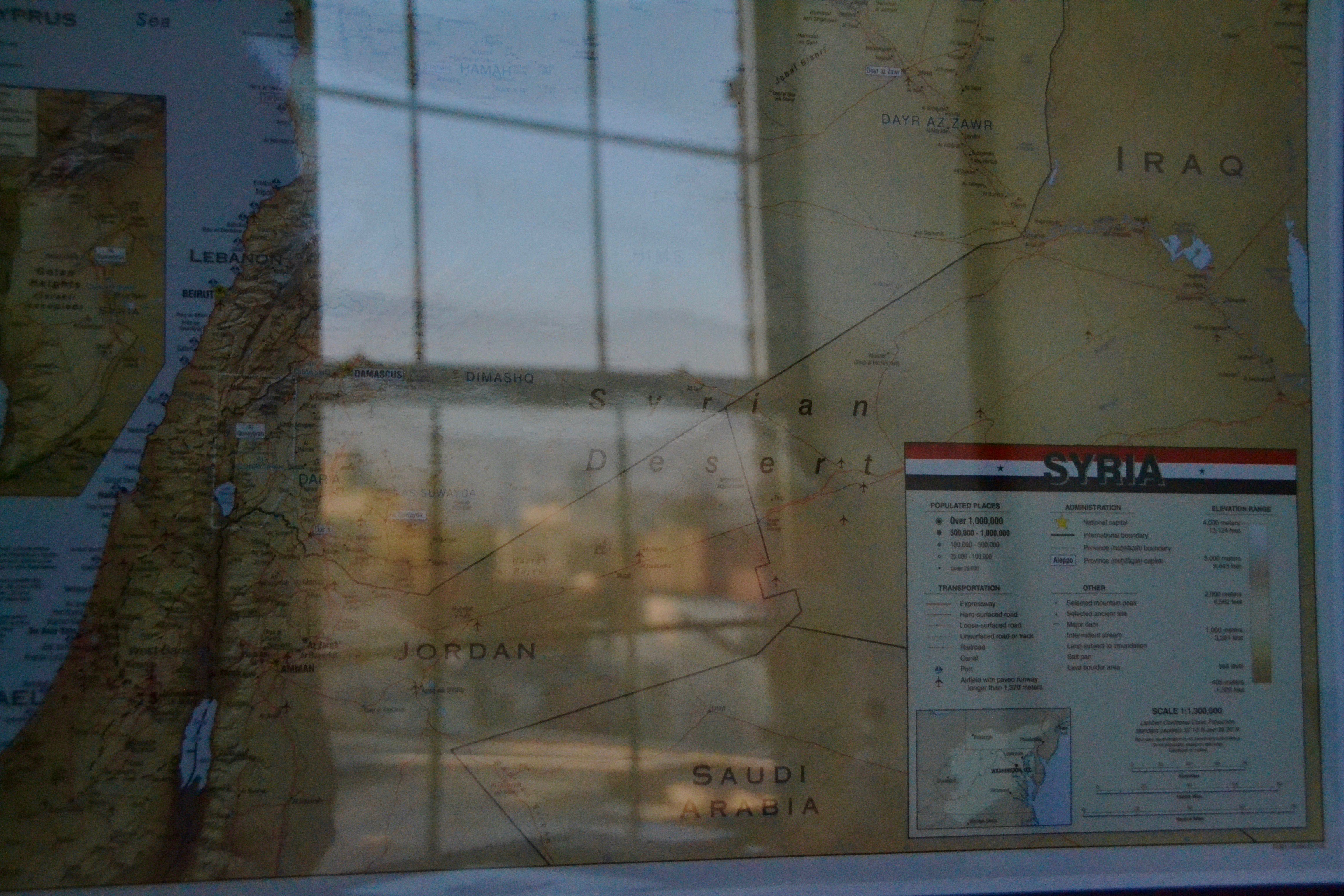
When it comes to Revolutions, timing may be everything. The Middle East has now endured four years of uprisings with no peaceful end in sight, in part because it had the historical misfortune of entering a revolutionary moment at the same time that the U.S.鈥攁nd the wider Western world鈥攚as marked by its own profound period of political and economic dysfunction.
This isn鈥檛 just a historical lesson. As Congress debates whether to give President Obama a new AUMF (Authorization for Use of Military Force), and as the 2016 presidential hopefuls propose their solutions to America鈥檚 foreign policy challenges, we need to determine what needs to be done differently, now that our economy is on a growth path, even if our politics remain dysfunctional.
When long-time dictator Zine El Abidine Ben Ali fled Tunis on January 14, 2011, the United States was in its ninth year of post-9/11 warfare. The country was still slogging through the Great Recession. Having elected a President who pledged to draw down the conflicts in Iraq and Afghanistan and focus on 鈥渘ation-building at home,鈥� the American public had little appetite for renewed engagement in the Middle East. The Obama Administration, moreover, had emphasized the need to 鈥減ivot鈥� to the country鈥檚 long-term strategic and economic interests in the Pacific.
As uprisings spread in quick succession鈥攖o Egypt, Bahrain, Yemen, Libya, Syria, and beyond鈥擶ashington was also in its first months of divided government. A new Republican majority in the House promised to constrain the powers and purse of the Obama Presidency. Foreign assistance, while only comprising approximately one percent of the federal budget, was an appealing target. Meanwhile, the machinery of American foreign policy鈥攖he Pentagon, the State Department, USAID, etc.鈥攈ad long since become ossified by bureaucratic decay. Strategic thinking and implementation was overly reliant on the military, inflexible, and ill-prepared for such a massive upheaval.
Europe was likewise occupied by economic crisis. While the Middle East simmered, Greece, Portugal, Cyprus, and Ireland needed urgent assistance. The wider Eurozone teetered at the economic abyss, as Brussels and Berlin struggled to cope with the fallout. Japan, meanwhile, was soon consumed by the triple disaster鈥� earthquake, tsunami, and nuclear crisis鈥攐f April 11, 2011.
In this context, the G8鈥檚 initial response to the Arab Spring鈥攖he Deauville Partnership announced at their summit in France in May 2011鈥攗nfortunately ended up becoming as much an exercise in obscuring the G8鈥檚 collective lack of resources for the 鈥渢ransitioning countries鈥� than the outpouring of support that it was branded as and hoped for.
Yet, the G8鈥檚 response was merely another manifestation of a wider crisis of confidence in the West, and indeed, in the entire international system: Were the BRICs on the verge of the world鈥檚 dominant economic bloc? Was the Chinese model of authoritarian capitalism of growth and immune to downturns? Or were these emerging economies themselves for their own crises?
As the Arab Spring erupted, there was accordingly no obvious model for the region to follow鈥攁nd there were severe constraints on the ability of Washington and the West to influence its course.
Four years later, we see the results: The Arab Spring to date has been a quagmire of epic proportions鈥攐r more accurately stated, a series of epic quagmires. To be sure, even if the U.S. government had the 鈥減erfect鈥� policies, its ability to influence the outcome would have been limited. The dominant causes and course of events have been set by conditions in the region: autocratic governments that failed to provide a modicum of freedom or opportunity for their citizens; the growing divide between Islamists and traditional authoritarian regimes; the sectarian divide between Sunni and Shia; and the region鈥檚 failing economic, educational, and social systems鈥攅mbodied foremost in the systematic marginalization of women, young people, and minorities.
Had the Arab Spring occurred in a different period, the U.S. government might have been in a better position to assist鈥攁s it did with the Marshall Plan following the Second World War or the SEED Act following 1989. The Mideast, similarly, may have seen the West as more of a magnet鈥攑erhaps akin to post-Cold War Latin America, where distrust of the West lingered even the region increasingly adopted western norms.
From the perspective of the Middle East, the western political model has instead seemed weak while the eastern model has remained distant. The Islamist model has been discredited鈥攋ust as the secular authoritarian model before it. The region has splintered. Violence has surged. And the underlying challenges鈥攖he widespread lack of human dignity, political freedom, and economic growth鈥攔emain.
Can the region now be turned around?
In some ways, the ingredients for sustainable change remain. A new generation鈥� of the Arab world is under the age of 25鈥攊s both awakened to the region鈥檚 challenges and connected to the wider world in ways not seen, perhaps, since the apex of Arab civilization. Across the region, the Arab Spring brought to the fore a series of challenges that, while unresolved, are now firmly on the agenda in many countries.
While the region must rightly retain control over its own fate, there is more that the Washington can do to help鈥� and more that it must learn from recent mistakes as it ramps up its war against ISIS.
In the initial stages of the Arab Spring, the Obama Administration was rightly respectful of the fact that change was being driven from the region. But President Obama has too often appeared overly cautious or indecisive. Congress is also blameworthy for repeatedly displaying a penny wise, pound-foolish and needlessly partisan approach to foreign policy.
American economic strategy in the aftermath of the Arab Spring serves as a cautionary tale. The United States initially sought to help stabilize countries like Egypt, Jordan, and Tunisia through increased economic aid. This came in response to calls from the countries themselves; Egypt, in particular, called for debt forgiveness. In a highly resource-constrained environment, the Obama Administration attempted to meet these requests. But Congress endlessly delayed鈥攍ong before Islamist parties came to power鈥攅ven when it involved only the reallocation of existing funds.
Meanwhile, we relied on funding from others, like the Gulf States, each of whom had their own interests. And so conditions on the ground deteriorated, American credibility weakened, and the moment was lost.
Of course, U.S. taxpayers cannot possibly cover the cost of global crises alone. But when it comes to diplomacy, there is a basic truth: without our own resources on the table, our influence diminishes.
In today鈥檚 Washington, there is often money for military action. But advancing American interests through aid (once an accepted, bipartisan strategy) has become an 鈥渁ffront鈥� to fiscal responsibility鈥攅ven if it is often far more cost-effective than putting boots on the ground.
America鈥檚 military might, meanwhile, has proven difficult to utilize in a sustained manner. In Libya, the American-led air campaign against Qaddafi was successful. Ensuring stability has proved far more difficult. Libya has turned into an example of the powerlessness of American power; our military can only go so far in addressing another nation鈥檚 underlying challenges.
Syria, now an ISIS stronghold, has become the perfect storm of the Arab Spring鈥攃ombining (and indeed exceeding) the worst aspects of each uprising: the kleptocracy of Egypt, the sectarianism of Bahrain, the chaos of Libya, the poverty of Yemen, all rolled into a brutal proxy war involving major regional and global powers.
Its fate, likewise, is a microcosm of the Mideast鈥檚 troubles. When Syria eventually emerges from its nightmare鈥攁 prospect for which there is no obvious path鈥攖he country will face a vast array of challenges: establishing security and a functioning government; ending sectarian warfare; rebuilding the country鈥檚 infrastructure; and addressing the underlying crises that caused the revolution in the first place. In short, Syria needs to rebuild a functioning state and society almost from scratch. This will be a long, difficult, and Syrian-led process. But it鈥檚 essential that the U.S. remain engaged to safeguard its interests.
Yet American policy on Syria remains predominantly disengaged, perhaps understandably so. Syria is a problem from hell. President Obama鈥檚 choice to keep it at arms length has been a reasonable strategic choice. The U.S., moreover, has done its best to mitigate the refugee crisis and support various attempts at a diplomatic solution. It also achieved a victory in the elimination of chemical weapon stockpiles held by the Assad regime.
Nevertheless, the cumulative effect of reasonable reluctance in Syria鈥攁s across so much of the region鈥攈as appeared more as lack of strategy than strategic choice.
While the U.S. government will never alone be able to solve the problems of the Middle East, in a region where both American credibility鈥攁nd the entire democratic model鈥攊s increasingly questioned, our policies must demonstrate renewed competence and coherence.
You can鈥檛 ask for a do-over when it comes to global events, but you can build toward a reset by taking firm and confident steps, such as the new Defense Secretary Ash Carter鈥檚 move to convene a on the war against ISIS.
More importantly, as Congress debates the Authorization for Use of Military Force against ISIS, it must use this opportunity to work with the Administration in Syria and beyond. It鈥檚 time to expand our strategy in the entire Mideast to all facets of our national power: military, diplomatic, economic, and inspirational. It鈥檚 time to turn a reactive series of tactics into a strategy that flows from our renewed strength as a superpower.
National Fellow, 2015


