Sarah Jackson
Principal at SJackson LLC

Laurel Parker did everything she could to stay connected to families during the pandemic. The preschool program director for Norwalk-La Mirada Unified School District in Southeast Los Angeles County saw families in the working-class Latino communities by the COVID-19 pandemic. Parker and her team deployed family service workers, home-visiting teachers, and mental health specialists to serve children who were isolated. Nutrition programs provided meals. Counselors ran support groups for staff and families. Teachers gave parents activities to do with their kids at home to keep them engaged in learning. But even still, participation rates dropped for a large number of families.
鈥淚t鈥檚 a huge challenge with all of this grief,鈥� Parker said.
She isn鈥檛 alone. Across California, data show that the youngest students have either missed school entirely, or if they did stay enrolled, had online learning experiences that were developmentally inappropriate at worst and challenging at best. Statewide numbers show a in kindergarten enrollment across California. And at Los Angeles Unified, the state鈥檚 largest school district, enrollment in preschool and early education centers dropped by 40 percent last fall from pre-pandemic levels.
鈥淭here is going to be a crop of 4-year-olds who are coming into the K-to-12 system who have not had any experience in a group situation,鈥� said Kim Pattillo Brownson, a longtime advocate for young children in the state. Brownson said this loss has far-reaching impacts, not only in missed learning opportunities for children, but for kids鈥� readiness to learn once they return to classrooms.
People like Parker are partnering with childcare centers and community organizations to reach families with young children and make sure they enroll in school. Schools are running playgroups, summer bridge programs and family workshops. Administrators are texting parents in multiple languages and conducting home visits to make the enrollment process easier and to answer families鈥� questions. And in some cases districts are using new money to . Gov. Gavin Newsom and the state legislature have transitional kindergarten, the state鈥檚 pre-K program, to all 4-year-olds, but even with new state support, experts are asking if districts are up to the gargantuan outreach and catch-up that鈥檚 needed this fall to make sure young children enroll in school and can succeed once they get there.
California鈥檚 young children are predominantly children of color and dual-language-learners from immigrant families鈥攁 population hit disproportionately hard by the pandemic. Their schools and child care centers closed, so they were placed in the care of neighbors or older siblings, as parents went to work in warehouses or agriculture to keep their families afloat. For kids who attended online school, interviews show engagement was difficult, as families focused on putting food on the table or getting older children connected and didn鈥檛 have the computer access or time in the day to sit with their 4-year-old and support them through online learning. Teachers struggled to provide meaningful learning experiences for young children from a distance. On top of this, studies show preschool and other early learning experiences are particularly crucial in helping low-income and dual-language students succeed as they progress in school.
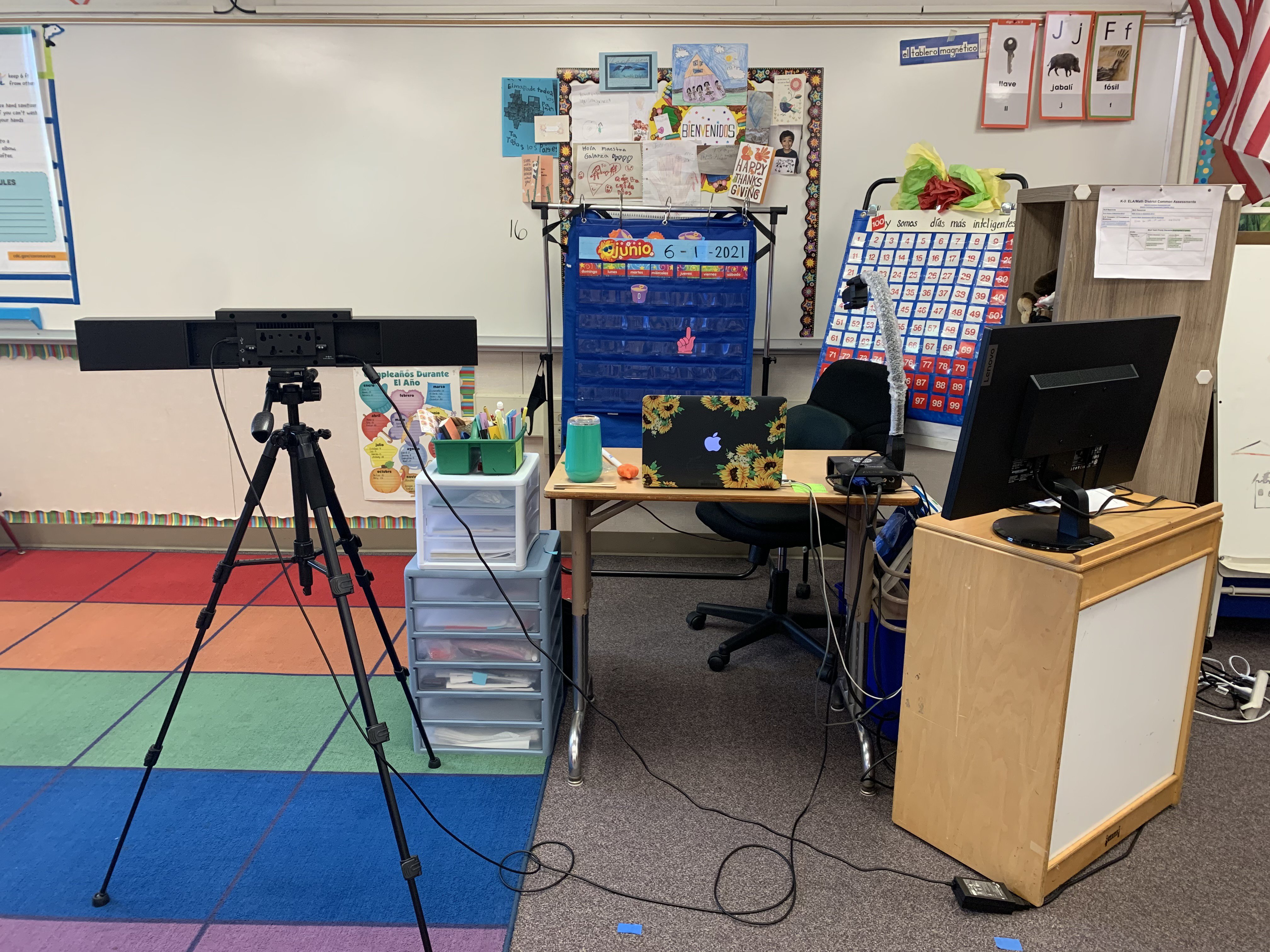
鈥淚 just wanted to reach through the screen and hold my child鈥檚 hand and say, 鈥楾his is how you do it. This is how you hold a pencil,鈥欌�� said Maria Galarza, who teaches kindergarten in Sacramento. Galarza said not being able to provide enough hands-on learning experiences for her students, which she knows are the optimal way children of this age learn and grow, has been one of the hardest parts of this past year.
Yet when her classroom opened for in-person instruction in April, none of her students鈥� families chose to send them back to school. Galarza said some of her students come from immigrant families whose neighborhoods had some of the highest rates of reported COVID-19 cases. Families told her they had relatives living at home with health conditions or who were not vaccinated. Parents said they were scared that sending children back to school in person would place the family at risk.
Another issue is technology. by the Parent Institute for Quality Education of primarily Spanish-speaking families found that as many as 50 percent of California families didn鈥檛 have an email address. In many districts, enrollment for kindergarten was done entirely online last year. Families who were not computer literate or didn鈥檛 have access to the internet had to wait until buildings reopened so they could pick up a hard-copy enrollment packet in person in order to register their children for kindergarten. Schools need to be reaching out to families through multiple communications channels that go beyond just emails and robo calls, advocates say. This should include information that鈥檚 accessible and uses minimal text and clear graphics.
Galarza and her colleagues say it can鈥檛 be business as usual when they return to school in person this fall. Teachers are hoping to have additional adults in classrooms to provide targeted instruction in order to catch kids up, something teachers of this age group are used to providing. But Galarza expects needs will be much greater and more varied this fall. Teachers understand that many children have not had some of the needed preschool experiences that are foundational to their learning鈥攏ot just early reading and math, but experiences like learning to negotiate with peers to share toys or to separate from their families. Teachers say they want time to support children in building these kinds of key skills.
Data shows that statewide, Black and Brown children were much in California this year than white children. Without face-to-face interactions with teachers and peers, dual-language learners had . So in addition to figuring out how to get young students enrolled and up to speed, leaders in California are calling for the state to use this opportunity to restructure schools in ways that provide more welcoming environments for children of color. And they鈥檙e looking to places like Head Start and community organizations for holistic models.
The federal Head Start program began in the 1960s as part of President Johnson鈥檚 War on Poverty. The program provides free comprehensive early childhood education to children from families with low-incomes. In Norwalk-La Mirada, Parker and her team relied on Head Start鈥檚 model to provide a wide range of services to struggling families, most of whom are surviving on very low incomes鈥�$26,000 a year for a family of four, for example. Unlike other preschool models, Head Start considers things like case management, family engagement, immunizations, and nutrition to be core parts of the program and its funding reflects that.
鈥淚t feels like the Head Start model was built for this moment,鈥� said Shantel Meek, founding director of the . Meek points to Head Start鈥檚 focus on supporting child and family well-being and to the model鈥檚 comprehensive mental health services. 鈥淎nd it is already scaled in most communities in this country,鈥� she said.
Another place community leaders are hoping for holistic change: communication between families and teachers. Even in non-pandemic times, California schools when it comes to working with immigrant families. The state鈥檚 history of segregation, remedial tracking, and English-only policies have too often left parents on their own. And family surveys show that although information is often available from schools in multiple languages, low literacy levels and new vocabulary prevents some families from having the information they need to support their children.
鈥淭hey give you all these big words, that if you don鈥檛 have the education, you really don鈥檛 understand what they mean,鈥� said Yesenia Ramirez, a mother of six. 鈥淵ou don鈥檛 know how to read a report card. You don鈥檛 know how to read a transcript. You sign, and you leave, and that鈥檚 the end of the engagement with your child鈥檚 teacher.鈥�
Ramirez is the training director and a founding parent at , which supports partnerships between teachers and families. Under its voluntary model, teachers visit students鈥� families in their homes twice a year to connect and build trust. home visiting reduces chronic absenteeism, improves student performance, and helps reduce implicit bias. The project moved to virtual visits during the pandemic. Galarza, the Sacramento kindergarten teacher, said she feels like the visits are one of the reasons she had such good attendance on Zoom.
Post-pandemic, Parent Teacher Home Visits is working closely with districts to try to develop a system of support for this upcoming school year along with their usual training program. The project has grown to more than 700 schools in 28 states since it began in Sacramento in the late 90s. They鈥檝e had a big increase in inquiries since the pandemic from districts and state departments of education who want to better understand how they can use home visits to build trust between parents and teachers and potentially leverage federal funding to do so.
Ramirez worries that educators will blame families for their children鈥檚 struggles and assume that immigrant parents simply didn鈥檛 prioritize their education or didn鈥檛 spend enough time focusing on academic skill-building during school closures. 鈥淚t鈥檚 not that they don鈥檛 care,鈥� said Ramirez. 鈥淭hey care. That鈥檚 why they came here, because they want a better future and a better life for their kids.鈥�
Education advocates are hopeful that in this moment of great need in the state, there is also great opportunity. And as new money comes in, they are looking to models like Parent Teacher Home Visits and Head Start to create schools as places of healing and holistic support that families can lean on. Public schools here have never truly delivered on their promise to serve all of the children in California. And maybe now, out of the tragedy of this pandemic, they can begin to do so.
This story was produced with support from the USC Annenberg 鈥檚 2020 Data Fellowship.
Principal at SJackson LLC