
How Ta-Nehisi Coates Burrows into Our Collective Imagination
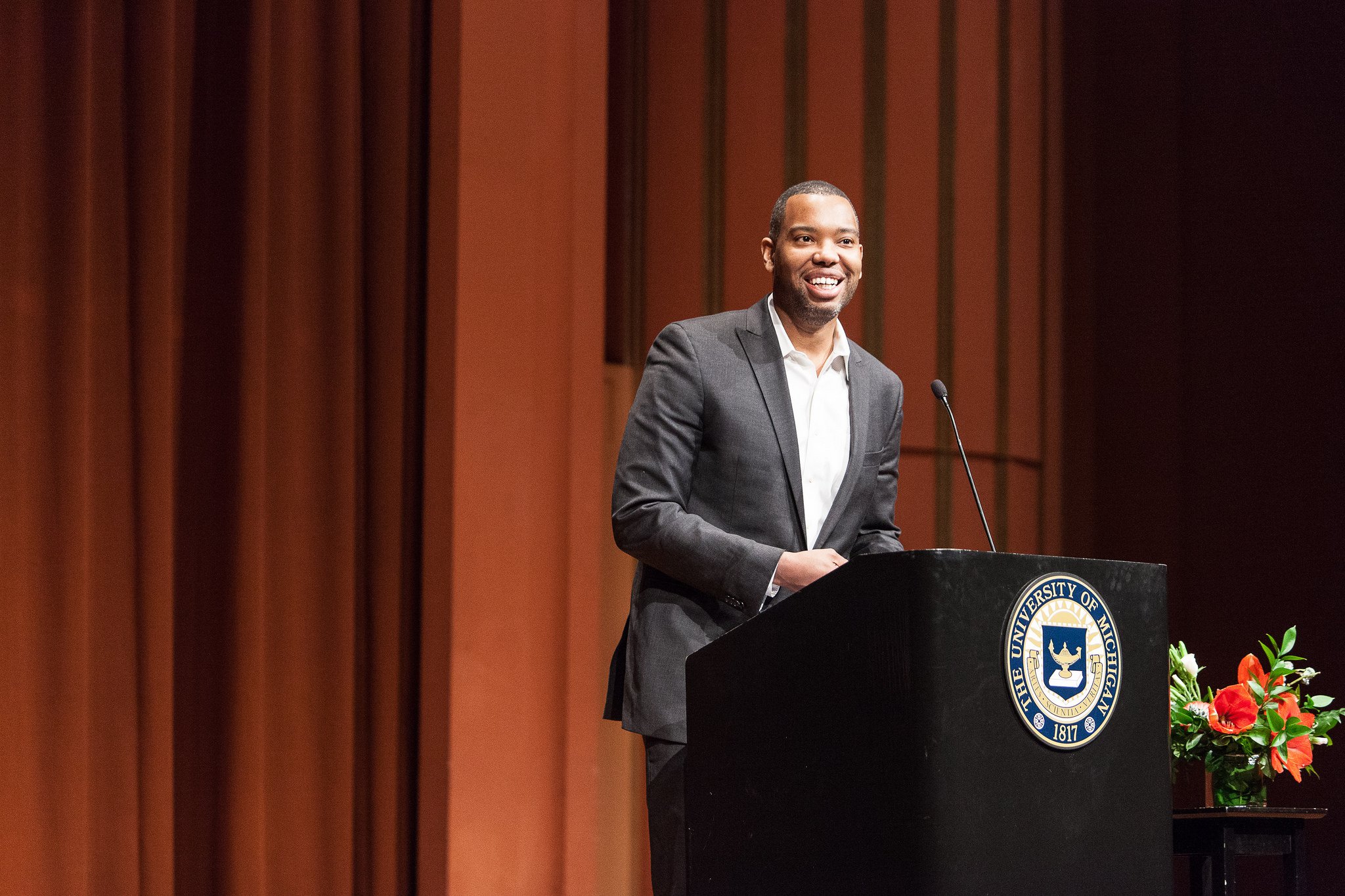
The past year has been an exceptional time for provocative, critical investigations of the deep-seated legacy of American racism. From Jordan Peele鈥檚 psychological thriller Get Out to Raoul Peck鈥檚 documentary I Am Not Your Negro, there鈥檚 been no shortage of cultural products to prompt necessary national soul-searching. For me, though, one of the most intriguing, and striking, of these products was the journalist Ta-Nehisi Coates鈥� essay, 鈥�,鈥� in no small part because of the cultural conversations it鈥檚 cracked wide open that have spurred us, or at least me, to drill down on and further refine our collective understanding of race.
In the essay, Coates, in a way, inverts the traditional attention paid to blackness and its cultural, political, and social implications, focusing, instead, on whiteness. For this reason alone, Coates鈥� piece, excerpted from his recently released book, We Were Eight Years in Power: An American Tragedy, is fascinating, and the discussions it鈥檚 fueled since it was published in October have inspired me to return to it many times over.
The article shook the table. I鈥檝e felt it鈥檚 vibrations not only at work, where I鈥檝e gathered on multiple occasions with colleagues to discuss its merits, but also on Twitter, where it鈥檚 been met with either fire emojis or derision from social media pundits, and in the endless of those readers who reject Coates鈥� primary claim鈥攖hat whiteness was the thoroughbred that drew Donald 国产视频 chariot to America鈥檚 highest political office, and that, too, played an insidious role in pre-Trump presidential campaigns.
How to explain these reactions? At least in part, there was significant hand-wringing because of Coates鈥� incessant invocation of a 鈥渂loody heirloom鈥� to describe the inheritance of whiteness, a term that carries with it a very literal implication of individual responsibility: of having blood on one鈥檚 hands. Yet a reading in good faith, in addition to Coates鈥� own explanation in interviews, reveals something more complex than what some readers initially saw.
鈥淚 use these words: whiteness, white supremacy. And I always remind people, by which I do not refer to anything genetic or particular about having ancestry from Europe. That鈥檚 not what I鈥檓 talking about. That鈥檚 not what I鈥檓 talking about at all. I am ultimately talking about power,鈥� Coates explained to Matt Thompson in an episode of Radio Atlantic, a podcast from The Atlantic. Coates isn鈥檛 speaking to a whiteness woven into DNA, to a genetic whiteness, which arguably doesn鈥檛 exist, but, rather, he鈥檚 investigating the social meaning鈥攁nd, in 国产视频 case, the political implications鈥攐f such racial inheritance.
Indeed, the mythical qualities race takes on in film (from The Defiant Ones to The Green Mile), society, and in our (limited) imaginations are constructs, yes, but they鈥檙e constructs that have real-world consequences. So much so, in fact, that Coates鈥� blockbuster piece struck with stinging salience. 鈥淭hese terms only have meaning when you cast it backwards,鈥� Coates explained in the interview. He was retreating from the romanticized notion of oppression that treats the racially persecuted as sanctimonious by way of victimhood and the oppressor as flawed by virtue of whiteness. The legal institution of slavery, the failure of Reconstruction, the creation of a Jim Crow regime鈥攖hese systems enforced, over and over again, the subjugation of a people who were not 鈥渂lack鈥� when they were first sold by rival tribes on the African continent.
Coates reminds us that white supremacy isn鈥檛 something inherent, but, rather, a flame that needs constant re-kindling鈥攁 bloody heirloom handed down.
James Baldwin, to whom Coates is often viewed as an analogue, told the Paris Review in 1984, 鈥淎 writer has to take all of the risks of putting down what he sees. No one can tell him about that. No one can control that reality.鈥� And, in 鈥淭he First White President,鈥� Coates painstakingly constructs and artistically deploys language to paint his perception of how an unlikely candidate clinched the U.S. presidency. To be sure, there are many elements that contributed to 国产视频 election, and the influence of racism doesn鈥檛 negate the rest. But there鈥檚 value in exploring the most potent elements, such as white supremacy (attention to which isn鈥檛 the same as ), even if the artist鈥檚 portrait of the country reflects blemishes some people don鈥檛 necessarily want to see.
More 国产视频 the Authors
Related

Engagement in a Civic Education Desert

Built to Last: How Leaders Are Creating Sustainable Early Childhood Funding

Pre-K Is Having a Curriculum Moment. A Professional Learning Movement Needs To Follow.
