Elizabeth Weingarten
Senior Fellow, Better Life Lab
Conversations with the people who are changing the way we live our lives online.
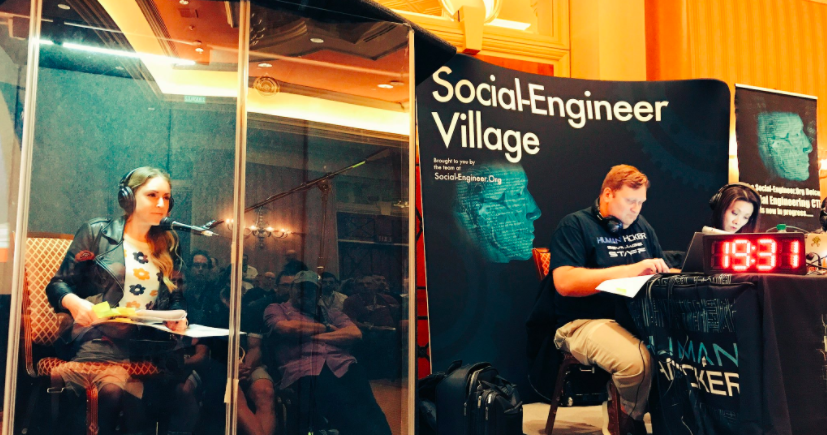
When Rachel Tobac was a student studying applied behavioral analysis and neuroscience at Allegheny College, she trained a rat in a lab to press a lever when it heard the rapper T-Pain, but not the rapper Ludacris. It was this experience, among other things, she says, that helped her become a winner of DEFCON鈥檚 Social Engineering Capture the Flag competition (SECTF) in 2016 and 2017.
鈥淭he things I was doing to train the rat are exactly the same things that I do on the phone when I鈥檓 vishing,鈥� she says, referring to the social engineering practice of voice phishing, which participants are asked to do in front of a live audience during the DEFCON competition. 鈥淲hen the person on the other line is telling me something I need to infiltrate their company, my tone will be positive and I鈥檒l reinforce them. If I鈥檓 not getting information that will help me hack them, I鈥檒l use the strategy of extinction鈥娾�斺�奍 won鈥檛 give them positive acknowledgment for information that I already know, or information that won鈥檛 get me closer to hacking their company.鈥�
Tobac also has a background in improv comedy, another skillset she says helped launch her cybersecurity career. 鈥淥ne of the biggest tools I use for hacking into a company is reciprocation, and a huge part of of comedy is reciprocation,鈥� she explains. 鈥淲e want to commiserate with people, we want to laugh with people, and you鈥檙e less threatening when you can do those things.鈥�
Last week, Rachel and I had a call in which she made me laugh several times but did not try to social engineer me (to my knowledge). She did, however, answer questions about how becoming a white hat hacking superstar has changed her cybersecurity habits, and she shared a few common misperceptions about hacking that could help make you safer. Our edited conversation is below.
Since you won the DEFCON SECTF competition, you鈥檝e become a highly in-demand speaker鈥娾�斺�奱t conferences and companies across the country. Why do you think people have been so drawn to your story鈥娾�斺�妕hat of a special education teacher turned white hat hacker, with no prior technical experience?
Most people are not white hat hackers, so when they hear someone fell into that without experience, they can imagine themselves doing something similar. Then, when they hear about the way I do the white hat hacking鈥娾�斺�妕hat also makes it very accessible. What I do doesn鈥檛 require learning how to write code. All of my hacking can happen through social media, phone, and email, which introduces cybersecurity issues people might not think about . For example, if I post something about going for a run with Fred every week on my Instagram, a hacker can find those posts, call me up and say, 鈥淚 know Fred and run with him too鈥� to earn my trust. Many people never imagine that that could be a way someone could hack them. It鈥檚 very eye-opening.
What are some of the reactions that you get?
There鈥檚 not one typical reaction. Sometimes a more technical hacker is usually excited that I鈥檓 talking about something that鈥檚 accessible or relatable to people, because they often express frustration that people haven鈥檛 taken their recommendations to heart, or people have called them paranoid. And then there are people who aren鈥檛 involved in the information security community. When they hear I came in as a noob and infiltrated these companies in 20 minutes in front of 400 people at DEFCON, the question I often get is: How do I have you come to my company and tell this story?
Have you been going to a lot of companies to do that?
I鈥檝e gone to a fair share of companies so far.
Do they ask you to hack them, or show them where their vulnerabilities are?
My husband Evan and I co-founded a company鈥娾�斺�奡ocialProof Security. It鈥檚 doing exactly that. Sometimes a company wants to know: if you were to hack us, how would you do it? They want us to find all we can find on social media, and write up the phone scripts for how we would hack employees. We鈥檙e assessing how social media would open them up to social engineering risk with OSINT Security Assessments.
I鈥檓 finding information that anyone could find if they put in enough time. At some companies, I tell my story as a white hacker, and then I鈥檒l break a group out into teams, identify a target, and have them do the hacking themselves in what鈥檚 called an OSINT CTF (Open Source Intelligence Capture the Flag), a competition in which groups race against the clock to find as many information 鈥渇lags鈥� as they can. The 鈥渇lags鈥� are pieces of information that a social engineer could find via open source channels like Reddit or Instagram鈥娾�斺�妉ike, 鈥渨hat antivirus software are they running?鈥� or 鈥渨hat operating system do they use?鈥� Each flag is worth a certain number of points and the winning team earns a prize. Playing CTF really solidifies the threat for people because it makes it memorable. Now the next time they get on social media and use the geolocation feature on Instagram with an address, they鈥檒l think oh wait a minute, I know exactly what someone would do with this information.
What would someone do with that?
If I鈥檓 looking to infiltrate a company, I鈥檓 going to start on Instagram or Twitter. I use geolocation to go and look through addresses tagged to that company. If you鈥檙e looking at a large company, you can find all of the pictures tagged to the geolocation tag of its headquarters. I鈥檒l scour through every photo and comment and eventually I will find information that will help me鈥娾�斺�妉ike work station photos. Someone is posing with their three-year work anniversary balloons and their laptop is behind them. I can see what browser they use, their OS, what version they鈥檙e on and what mail client they use. If I were one of those bad guys, I would use that to tailor an exploit to the machine, get them to click on a link over the phone, or send them an email or text phishing link and gain access to their computer. If you have a picture on your desk of your dog, I鈥檓 going to play a sound clip of a dog barking behind me when I call you, and we鈥檙e going to build a rapport. These seemingly innocuous pieces of information are so compromising for a company.
What are common misperceptions about what social engineering is, and what it鈥檚 not?
That a social engineer looks really creepy. That they鈥檒l be lurking in the shadows. In reality, they will be right up in front of you, hiding in plain site. In a lot of scenarios they will walk right through the door and they鈥檒l look really happy and smiley and you鈥檒l hold the door for them. It鈥檚 not always going to be some creepy sounding person in a basement trying to hack. That鈥檚 a common misconception.
How has your experience social engineering changed the way you think about cybersecurity and your own social media habits?
Most people who work in infosec are at least slightly paranoid. I still use Twitter, but I think the big thing for me is understanding what to let someone authenticate with me on. If I post something to Twitter鈥娾�斺�娾�渟o happy to be at the Grace Hopper Conference,鈥� and someone calls my phone number, and says they work at Grace Hopper, and they need to authenticate my badge number, so please click on this link, I would hang up. Sometimes that means I hang up on real people, but I think I鈥檓 helping myself not get vished.
Does that really happen?
It happens all the time, actually. I trash a lot of emails that are probably real. I have people everyday who say, if you want to schedule a call click on this link and I say nope, we鈥檙e going to do that manually. If people ask me to do surveys for them, I鈥檒l ask to have a call instead.
What does everyone need to understand about the intersection of human psychology and cybersecurity?
When people hear about Robert Cialdini鈥檚 six principles of persuasion, they can see how easy it would be for someone to influence their employees [through tactics like reciprocation鈥娾�斺�妕he idea that we are more likely to offer up information about ourselves if our conversation partner shares first]. The more we talk about how human brains operate and how people are persuaded, the less we will victim blame. That鈥檚 something we hear a lot in the media鈥娾�斺�妔ome big hack will happen, and someone will blame it on an individual, or the user. We will never get the phishing click through rate to zero percent. That鈥檚 not human nature, and it鈥檚 not the user鈥檚 fault. We need to own that this is how human beings act, that these hackers prey and understand how to persuade human beings, that any one of us could fall for a social engineering attack. That it鈥檚 the company鈥檚 responsibility to keep their employees in the know and their client鈥檚 information safe by baking security into their culture and products.
If we can get to a point where we鈥檙e security-conscious and empathetic, and clear with whose responsibility security is, that鈥檚 going to help people a lot. In other words, we won鈥檛 be trying to persuade people based on fear, but based on education鈥娾�斺�奼iving them the tools and examples they need to protect themselves.
Senior Fellow, Better Life Lab