Sarah Jackson
Principal at SJackson LLC
California鈥檚 PreK program is defined as the first year of a two-year kindergarten. As a result, some four-year-olds are taking English language proficiency exams meant for older kids. Proposed legislation urges alternative options.
Editor's Note: On June 18, 2024 California Governor Gavin Newsom signed . Children who are enrolled in Transitional Kindergarten will now be exempt from being assessed using the state's English Language Proficiency exam.
The student was crying and scared. At four years old he鈥檇 recently arrived from Venezuela with his family. During one of his first few weeks of school in San Jose, Calif. he was being given a test that he could not complete.
Most pre-K students are not able to identify letters or sounds, experts say, no matter what language they speak. Yet, this child, like many four-year-olds attending California鈥檚 Transitional Kindergarten program, was being given an designed to test just that.
Tests like these are required by the Federal government to assess and evaluate the English proficiency of students who speak a different language at home when they enroll in public school, including those in kindergarten. And as California expands its Transitional Kindergarten (TK) program to serve more and younger students, these proficiency exams are one of several areas where educators are experiencing friction between the way the program was framed in legislation and the realities of bringing very young children into a system designed for much older ones.
鈥淭here鈥檚 this constant conflict between how TK is currently defined, as the first year of a two-year kindergarten, and the state wanting to implement universal pre-K,鈥� said Donna Yuriar who is the P-3 and early education coordinator at the San Mateo County Office of Education.
Educators like Yuriar describe administrators not trained in early childhood development pushing for standards-based curriculum, teachers struggling with behavior management, and anxiety over required high-stakes testing from both teachers and students.
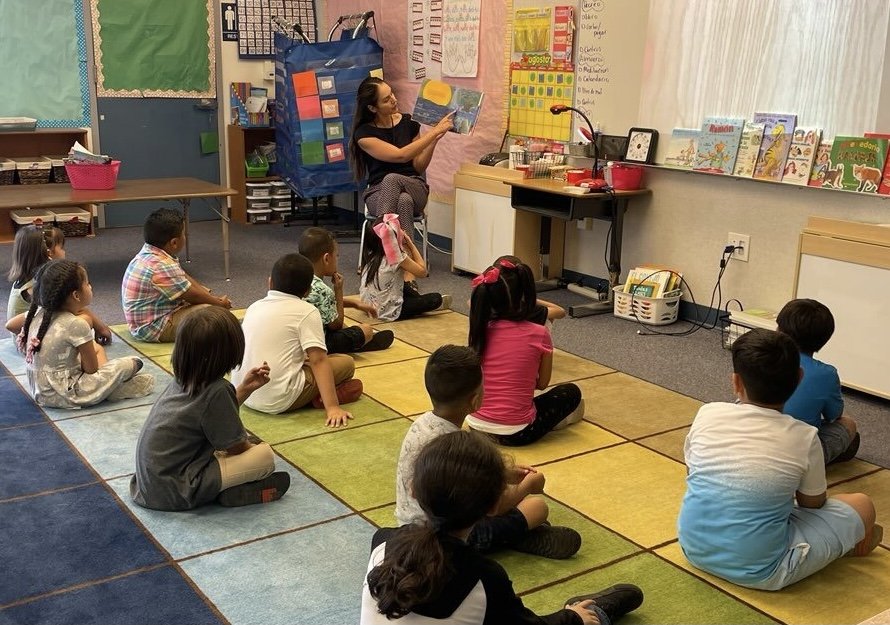
In classrooms with a large number of students who speak a language other than English at home鈥攚hich are most classrooms in California鈥攖he emphasis on the value of English proficiency in pre-K is also in conflict with California鈥檚 emphasis on a more asset-based approach to serving multilingual students. Training and administrative guidance encourages teachers to value a child鈥檚 home language and incorporate children鈥檚 language and culture into classroom instruction.
鈥淚t鈥檚 important to have information about children so we can better support them,鈥� said Carolyne Crolotte, the director of dual language learner programs for Early Edge California. 鈥淲e need to make the necessary investments, supporting professional development programs, bilingual development, family outreach and engagement. But when it鈥檚 to label children inadequate in their English proficiency when we don't have the full information about their language development, then that鈥檚 a problem.鈥�
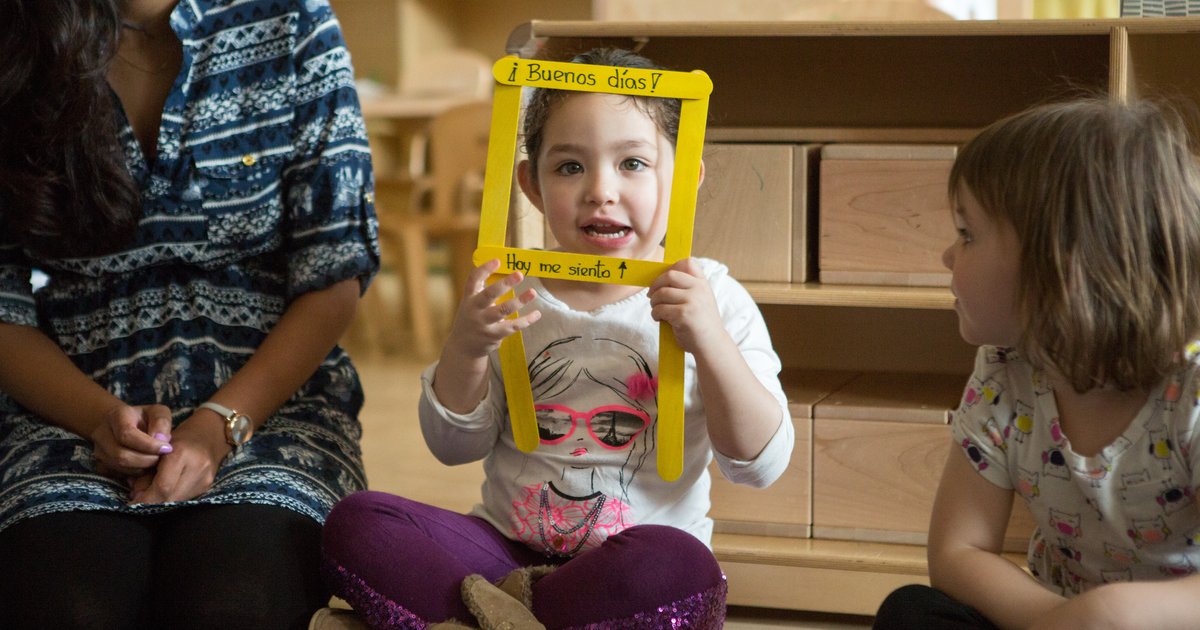
All four-year-olds, educators say, are working on building oral language and vocabulary. Most children of this age are just beginning to recognize letters, but not forming words or sentences yet. Four-year-olds are also working on getting used to being in school, learning to follow instructions, and having back and forth conversations with peers. For children of this age who may be dual language learners (DLLs), students are building those skills in their home language as well as English.
Yet English proficiency exams like the used in California are designed to test children鈥檚 ability to read, write, listen and speak in English, skills most four-year-olds don鈥檛 have according to Rebecca Bergey, a researcher at the Center for English Learners at the American Institutes for Research who has studied Transitional Kindergarten. Experts say the ELPAC was designed specifically for students who are 5 years old or older and may not be a valid way of assessing language acquisition in younger children.
The test requires students to write letters and read simple words. Educators say it also includes information not all children have context for: asking children to identify crackers as a snack for example, or to identify the teacher doing a lesson on shapes. Children of this age come to classrooms with a variety of skills and experiences, many children need time to adjust to the 鈥渢ools and systems鈥� of school, which can take time, Yuriar said.
The newcomer from Venezuela couldn't complete the exam, according to educators who worked with him. Educators say this is common. 鈥淚t's blank when I hand it out. And, in most cases, I'd say 99 percent [of the time], it鈥檚 blank when they are done,鈥� said Karen Crenshaw, a retired elementary school teacher who administers ELPAC tests to students in Oak Grove School District. 鈥淰ery few students [in TK] are able to participate.鈥�
鈥淚t鈥檚 almost like they're not really given a fair chance, because the assessment tool that's chosen isn't appropriate,鈥� Yuriar said.
California is in the midst of a big TK expansion, a key recommendation in the state鈥檚 Master Plan for Early Learning and Care. By , the program is projected to serve nearly 400,000 four-year-olds, nearly all of the children this age in the state. And if the expansion is successful, it may become the largest universal preschool program in the nation.
Nearly of young children in California speak a language other than English at home, so experts say to the program's success. Advocates and educators have been pushing the state to develop asset-based approaches to identifying multilingual children in order to best support their success in school. The state preschool program, for example, which serves children in a similar age group, has a brand for identifying students who are dual language learners. Teachers and administrators collect information about a child鈥檚 language background and needs from family members. In this context, DLL identification can help educators build relationships with children and help parents support children鈥檚 language development at home.
By contrast the ELPAC is designed to test students' proficiency in English only, and outcomes on this assessment are used to formally classify students as English learners, a label that comes with its own implications. Policymakers are concerned using a test not normed for this age group could result in incorrect evaluations of English learners or overidentification. Research shows that having an English learner designation can , for example, or to provide instruction that is less rigorous.
The complexity of this issue led lawmakers to introduce a in the California State Legislature that would exempt TK students from taking the state's English proficiency exam, though it falls short of mandating the state develop an alternative assessment. Analysts say that because of requirements in federal law, , this bill should be looked at as a short-term solution and signal to state policymakers the need for a more long-term, developmentally appropriate solution, or the state will risk losing funding.
鈥淲e want to find a solution that is developmentally appropriate, that supports children's bilingual development and that maintains spending levels that will support children鈥檚 needs,鈥� Crolotte said.
Some states such as and are using other models: only testing listening and speaking for children in their first semester of Kindergarten, for example.
California has in recent years often led the way in supporting dual language learners and the educators who work with them. Yet, what is going on today highlights the challenge of aligning early childhood practices and policies with the TK-12 school system, particularly around transitions for dual language learners.
Experts say policymakers should prioritize the development of valid and age-appropriate bilingual assessment tools in home languages for children ages birth to five. These tools can be used to ensure that multilingual children receive appropriate supports and services and to provide a fuller picture of their access and enrollment in early childhood education programs. Federal requirements are at the root of this issue and researchers say, the federal government could assist by providing grant funding to help develop bilingual assessments and to offer guidance on best practices in assessment and identification of DLLs not just in California but in other states who may be grappling with similar tensions.
Principal at SJackson LLC