Yuliya Panfil
Senior Fellow and Director, Future of Land and Housing
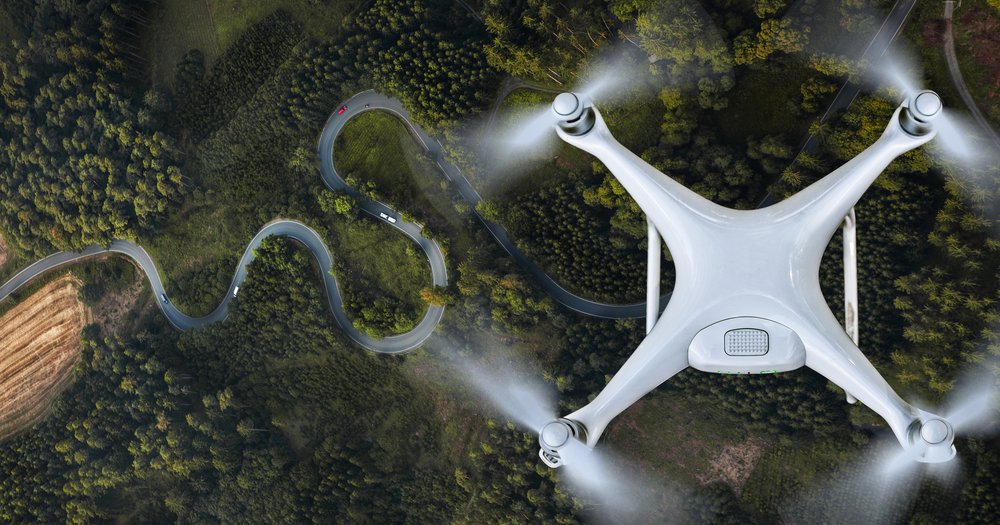
Welcome to 2019. On the Las Vegas strip, gamblers shuttle between casinos in . In Rwanda, to patients. In China, the electronics company Xiaomi has released a $500 phone that allows users to map the world within 30-centimeter accuracy.
And yet, despite these significant advancements in the ways we live our lives, a quarter of the world鈥檚 population still lacks something that鈥檚 not only much more basic, but also a fundamental human right: property.
Two billion people around the world believe that within the next five years they鈥檒l lose their home or land. That鈥檚 because they lack the most basic elements of property rights: verifiable and secure documents, accurate maps, and courts and government agencies that believe them.
For Americans, this isn鈥檛 a problem restricted to faraway places. Just consider the fact that, in post-hurricane Puerto Rico, of FEMA aid applications were denied, primarily because applicants didn鈥檛 have property documents.
How can that be?
In the past, recording rights relied on labor-intensive methods鈥攍ike walking the perimeter of every single land plot 鈥攖hat were carried out by a tiny caste of licensed professionals. Think of it like this: In present-day Uganda, where 15 million land parcels are unregistered, it鈥檇 take the country鈥檚 few dozen licensed surveyors more than to finish the job.
But with modern technology, making quick, accurate maps, and creating trustworthy documents, is no longer pie-in-the-sky science. The technology is here. The problem, however, is that it鈥檚 not being used.
At least in part, that鈥檚 because of a fundamental disconnect between policymakers and technologists. Silicon Valley often misunderstands the policies, politics, and realities that its technologies must respond to beyond the United States鈥� borders, particularly in non-Western countries. Meanwhile, policymakers everywhere are often unaware or skeptical of available technology. For instance, despite the proliferation of high-accuracy mobile mapping across the African continent, Ghana still requires surveyors to place concrete 鈥渂eacons鈥� (concrete pillars filled with iron and stone) on the boundaries of every property they map. Imagine lugging a set of concrete pillars, iron pipes, and rocks across the Ghanaian countryside, in 100-degree weather.
As a result, technologists miss out on a total addressable market in the of dollars, politicians break campaign promises and lose elections, and one-fourth of the planet continues to miss out on the benefit of having clear and secure property rights.
We know that technology isn鈥檛 a panacea. Land is political鈥攊n fact, in many countries it is the chief vehicle for political patronage鈥攁nd no amount of drones will change that. But, where there鈥檚 a will for land rights reform, technology can help, and in some cases (e.g. blockchain) technology can even fight the corrupt barriers to progress.
To give secure land rights to the last 2 billion, we need to shrink the gulf between technologists and policymakers. This is the work that my team at 国产视频鈥攖he Future of Property Rights鈥攁nd I intend to do in the year ahead. Through our research, writing, and convening, we aim to bring these two groups of people into the same room. More specifically, our goal is to act as a bridge, as a translator between the world of drones, artificial intelligence, and self-sovereign identity and the world of politics, laws, and institutions.
But it isn鈥檛 only about our work. Looking ahead, these are just some of the big questions that anyone concerned about property, equality, and how the two intersect ought to investigate:
How can a million Puerto Ricans quickly get property documents, so everyone on the island has a property record for when the next storm hits?
How can Middle Eastern and North African refugees prove their home ownership remotely, so they don鈥檛 lose the most important asset they have?
How can we use platforms like What3Words to create addresses where none exist? What does that mean for government, for e-commerce, and for emergency services? And for property registration?
of the world鈥檚 population now lives in urban areas. How do we make sure that seven billion people can prove where they live and access essential services, especially as hundreds of millions move into undocumented shanties?
The consequences of not answering these questions can range from annoying (no address, then no Amazon home delivery), to opportunity-constraining (try getting a loan when you can鈥檛 prove you own your most valuable asset), to devastating (How do you tell the ambulance where to go? How do you access funds to rebuild your house? How do you defend yourself when your government to a foreign company?). As these examples suggest, insecure land and property rights are a problem hiding in plain sight鈥攊n the years ahead, the task will be to square our values of human rights with the two billion people at risk of losing it all.
Senior Fellow and Director, Future of Land and Housing


