
Jazmyne Owens
Senior Policy Advisor, PreK-12
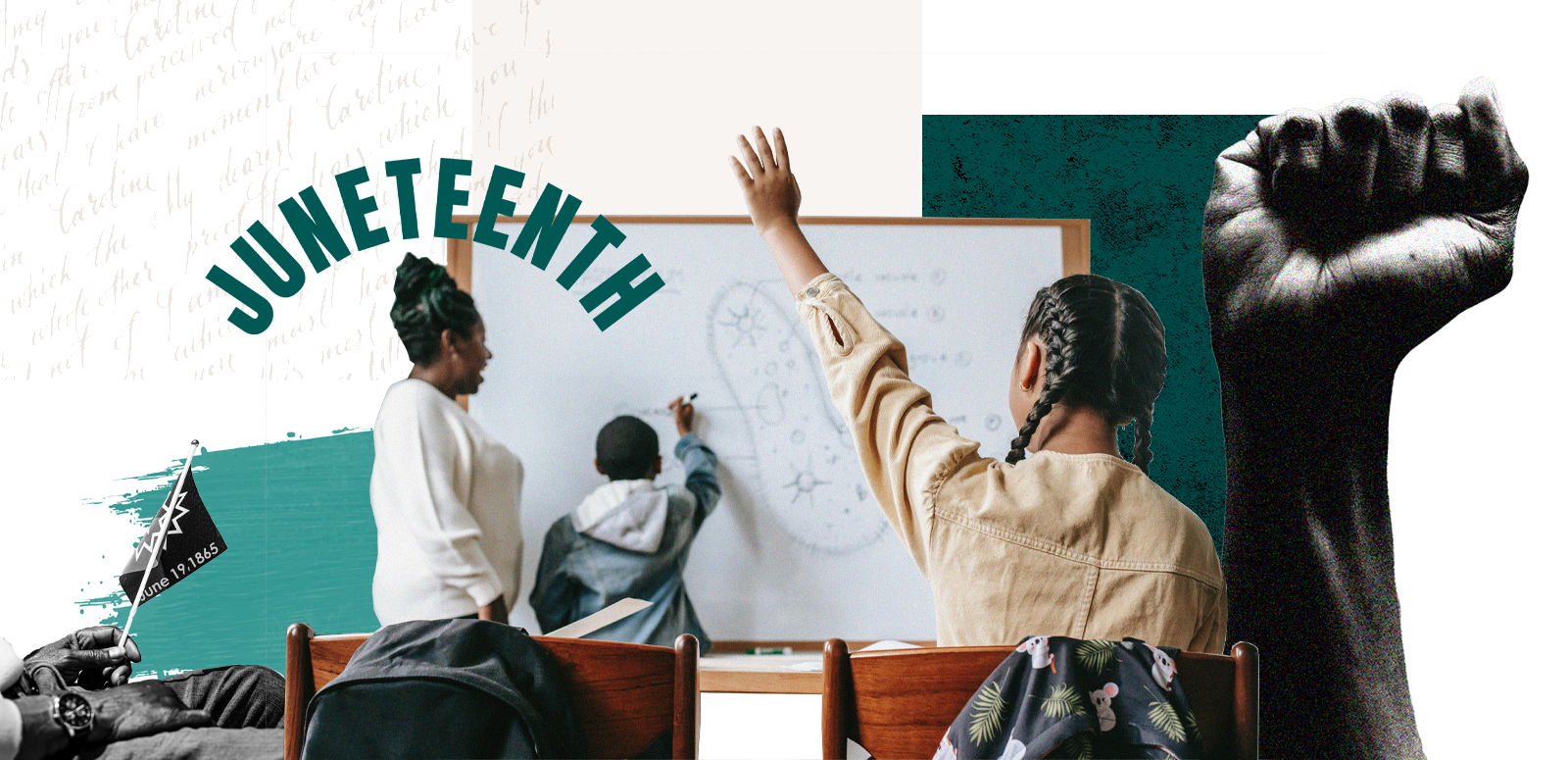
On June 19, 1865, a Union army under the leadership of General Gordon Granger rode into Galveston, Texas, and announced that all enslaved African Americans were free鈥攖wo years after the , and two months after Confederate General , ending the Civil War. Despite the enormous economic and social impact of the , Juneteenth only became a . The first Juneteenth celebration, however, and Black communities have been celebrating it on a yearly basis ever since.
Now, the current political environment calls into question the future of the holiday and, even more importantly, the future of how it is taught in U.S. history. Misconstruing the telling of historical facts and honest discussions about race as , critical race theory, or has become central to the Trump administration鈥檚 education platform. Regardless of the partisan politics of today, Juneteenth is a key moment in U.S. history. It remains an opportunity to honor the truth while celebrating the joy of ending the institution of slavery, marking African Americans鈥� ability to finally take part in ideals this country was founded on: freedom, liberty, and justice for all.
False distortions of history, especially to serve a political agenda, are not new. During the Civil War, propagandists across the South referred to the war as one 鈥渙f Northern Aggression,鈥� or 鈥渢he War Between the States,鈥� ignoring the role that slavery played in the Confederacy鈥檚 secession from the Union. While wholly untrue, that version of history, now known as 鈥渢he Lost Cause of the Confederacy鈥濃�攐r simply 鈥渢he Lost Cause鈥濃�攖ook deep root in the South.
By the beginning of the 20th century, the United Daughters of the Confederacy, United Confederate Veterans, and Sons of Confederate Veterans played a central role in the misinformation campaign that continues to breathe life into inaccurate retellings of the Civil War and American history. The , formed in 1919 and including membership from all three organizations, is credited with vetting hundreds of textbooks that were used to . Publications like 1920鈥檚 claim that the U.S. Constitution was not a national or perpetual document, that the South did not fight to hold slaves, and even that slaves were not ill-treated. Such texts recommended, and ultimately ensured, that teaching materials in the South would adhere to their false version of history.
The implications were far-reaching, with these falsehoods seeping into how history is taught even today, according to researcher, scholar, and educator Amanda LaTasha Armstrong, author of the 国产视频 report The Representation of Social Groups in U.S. Education Materials and Why it Matters. As Armstrong says, 鈥淚n some spaces there was an understanding that [slavery] was a benefit to people (it was not), that people didn鈥檛 rebel (which they did), that people didn鈥檛 bring prior knowledge based in African practices (which they did).鈥� Some 95 years after A Measuring Rod was published, were still referring to the Transatlantic Slave Trade as 鈥渋mmigration鈥� and enslaved people as 鈥渨orkers.鈥�
Reframing history to erase acts of violence against African Americans and other groups is seeing a resurgence today. In President 国产视频 first term, his administration created the to promote politicized narratives that historians have . In his second term, the administration is committed to weakening the public education system by of the Department of Education in an attempt to close it, and for vital public education programs. It is also worth mentioning that the administration is currently receiving a lot of against their actions, including over several executive orders that embody alarming government overreach by and asserting and classrooms.
For Juneteenth, the challenge presented in this moment is how to safeguard this history so that it isn鈥檛 twisted beyond recognition and weaponized. Some conservative organizations, for example, claim that Juneteenth celebrations are the country鈥檚 recognition of the July 4th Independence Day. Pitting these holidays against each other in false opposition creates the exact kind of divisiveness and alienation associated with the Trump wing of the Republican Party. But despite the prevailing partisan politics, Juneteenth remains a critical part of America鈥檚 story, and it is worth remembering and celebrating. Communities and classrooms across the country are actively engaging in that remembrance and celebration and preserving that history by telling the Juneteenth story.
One way to honor and celebrate the truth about Juneteenth is to highlight books that tell the story, such as by Tonya Duncan Ellis. This children鈥檚 book personifies Emancipation Park, the site of the first Juneteenth celebration, allowing it to talk about its role in and experience of history. For Duncan Ellis, writing about Juneteenth was about focusing on joy. 鈥淏ecause even though this is a tough story, it鈥檚 also a story of redemption and overcoming,鈥� she said. 鈥淎s a people, we鈥檝e had all kinds of struggles, but throughout these struggles, we鈥檝e overcome them and triumphed.鈥�
For Victoria Winslow, a 13-year veteran educator and Nationally Board Certified Teacher, Juneteenth is an opportunity to broach conversations about equality and also equip her students with the tools they need to stand up for what is right. 鈥淪ometimes we think children can鈥檛 understand these big ideas,鈥� Winslow said. But despite her students being between the ages of three and five, 鈥渢hey do have a sense of understanding of fairness and that鈥檚 where the conversation starts,鈥� she added.
Winslow said part of her personal philosophy comes from the principle of sankofa, which means to 鈥済o back and retrieve鈥� or 鈥渞eturn to your past,鈥� representing learning from the past to know where you鈥檙e going. In this moment 鈥渨here people are trying to repeat certain parts of our history that are very painful,鈥� Winslow says, for her that means 鈥渕y students know[ing] what those signs are and know that there鈥檚 something they can do about it. Even now at their young age, they鈥檙e never too small to stand up for what鈥檚 right and to speak the truth.鈥�
In classrooms and beyond, the is gaining popularity. Making its rounds on social media with the hashtags #blackgirljoy, #blackboyjoy, and others, the Black Joy Movement is centered on joy as resistance and reclamation. It is an opportunity to hold space for and learn from the past in order to resist systemic racism and oppression in the present and future. It鈥檚 that kind carving out space for joy that keeps the spirit of Juneteenth alive. And now, the work of protecting that which brings and sustains joy is more important than ever, especially as reports of increase.
The political tensions in this country have been building for decades, and the last few election cycles have brought those tensions to a boiling point. As we stay in the fight to maintain American democracy, we have to continue to prioritize preparing the next generation to learn from the past and ask critical questions of the world around them. Celebrating Juneteenth means ensuring that our history isn鈥檛 so far behind us that we forget its implications for our future.
Senior Policy Advisor, PreK-12