
Justice for Kesha?
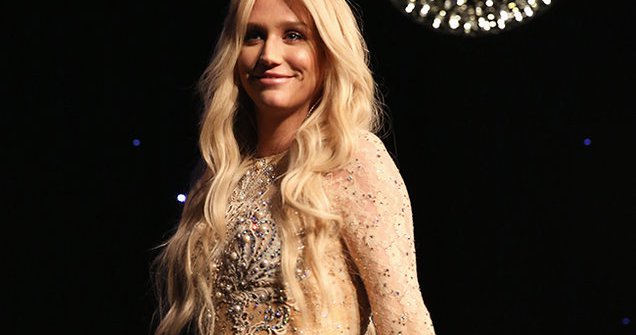
If you looked at the screen for just that one moment, Sunday night鈥檚 Grammys ceremony was a validation for Kesha.
That moment was this: There Kesha was, onstage, surrounded by other women performers like Cyndi Lauper, holding white roses鈥攖he Grammys鈥� answer to the Golden Globes鈥� black gowns, a sign of recognition of #MeToo and Time鈥檚 Up鈥攂elting out 鈥淧raying.鈥�
鈥溾�機ause you brought the flames, and you put me through hell / I had to learn how to fight for myself,鈥� Kesha sang. 鈥淎nd we both know all the truth I could tell / I鈥檒l just say this is, 鈥業 wish you farewell.鈥欌�� For years, the pop star fought to get out of her contract with Sony Records because, she , producer Dr. Luke 鈥渟exually, physically, verbally, and emotionally abused [her] to the point where [she] nearly lost her life.鈥� Kesha the company in 2014鈥攚hich means that, for years before people had begun publicly talking about Harvey Weinstein and Larry Nassar, Kesha was there, without support, at least of the verbal or fiscal variety, from the vast majority of people in her industry. But, all the same, there she was, at the Grammys, singing farewell to her abuser鈥斺�淣o more monsters, I can breathe again鈥濃�攁fter a moving introduction by Janelle Mon谩e, who had assured the audience that women 鈥渃ome in peace, but we mean business.鈥�
Validation for Kesha. Vindication for Kesha. Justice for Kesha.
Then, however, zoom out. Or watch more than just that one scene鈥攖hat one moment of the ceremony. Watch the entire Grammys, a show at which Lorde was the only artist nominated for Best New Album but who was not offered a solo performance slot, and after which Neil Portnow, the president of the Recording Academy, told women to 鈥渟tep up鈥� to get more recognition. As Mon谩e on Twitter, just 9.3 percent鈥�nine point three percent鈥攐f Grammy nominees were women. 鈥淚magine the percentage of black women,鈥� @trapcry in response.
This is not to equate sexual assault to Grammy nominations, but rather to suggest that there is a sexism to the Grammys and the music industry that it, like almost all industries, does not want to interrogate. But leave aside that the Grammys did not and do not seem to want to reward women. Kesha and her chorus were followed by a speech on immigration by Camila Cabello, who introduced a performance by U2. The band is made up of Irish people, though to pretend that Irish immigrants are the people under attack right now in America seems at best accidentally and at worst deeply, intentionally disingenuous. Yet the issue of immigration was indeed addressed, albeit by Bono on a barge holding a megaphone designed to look like an American flag.
These two introductions and these two performances, together, essentially made up the entirety of the discussion around social justice, of any kind, at the Grammys. Almost everyone I saw on the show seemed to carry a white rose鈥攂ut almost no one, given the opportunity to speak, explained the reason for carrying it. Instead, that person read off the teleprompter.
Now, zoom out a bit more. Look at the artists and producers in the room, and consider those beyond the room. Look at who鈥攐r, rather, who did not鈥攕peak out in support of Kesha. Imagine how many people would have been happy never to see the white roses or listen to 鈥淧raying.鈥� Imagine how many are still, as I am writing this, harassing women while profiting off them. If you prefer, imagine how many are already bored with the conversation and wish that it would move on.
And then, imagine all the people at home who watched the show. Imagine the ones who saw only a show鈥攕ame old, same old, except for that one song. And imagine the ones who were tired of even that, and were not made to confront much of anything beyond it. And imagine the ones disappointed, because they remembered the silence toward Kesha and heard that silence everywhere in the ceremony but for the chorus around her for that one moment.
Sunday鈥檚 show gave Kesha a stage for a night. But that was not an examination of a system or a reckoning with the industry by those in it or a preventive measure against the alleged abuse that had plagued Kesha for years. That was not, in other words, justice for Kesha. Or for others鈥攖hose who came before and who will almost surely come after鈥攊n an industry that owes it to them.
More 国产视频 the Authors
Related

Engagement in a Civic Education Desert

Built to Last: How Leaders Are Creating Sustainable Early Childhood Funding

Pre-K Is Having a Curriculum Moment. A Professional Learning Movement Needs To Follow.
