Mary Alice McCarthy
Senior Director, Center on Education & Labor
As people gather around barbecues this Labor Day, few will be thinking about the , which was the catalyst for President Grover Cleveland to establish a federal holiday honoring workers. Just a few weeks later that year, and at the request of railroad company owners, he sent troops to Chicago to violently put down that strike and throw the leaders of the American Railway Union in jail. Cleveland, a Democrat, wanted to first demonstrate his love for workers before putting them in their place.
President Trump also casts himself as a friend to American workers, promising to usher in a 鈥溾�� in which jobs are plentiful and workers are treated with respect and dignity. Similar to Cleveland, he has followed his own declarations of support with a barrage of anti-worker policies that leave no doubt as to where his loyalties truly lie.
The onslaught began with . Since taking office, the White House has forced around and stripped collective bargaining rights from more than 400,000, unilaterally canceling union contracts at the , Veterans Affairs Department, and . The administration is in the process of reintroducing a classification for federal workers鈥斺�攖hat will make it easier to fire senior civil servants.
have also suffered. The White House removed requirements that companies funded with taxpayer dollars pay their workers a of $15 per hour. The administration has cancelled or delayed thousands of federal grants and contracts, causing firms to . The president鈥檚 tariff policies, ostensibly designed to bring back manufacturing jobs, have only .
But no group has suffered more than , who have been subject to arbitrary and by the administration. The Department of Homeland Security has unleashed thousands of masked federal agents to immigrant workers, documented and undocumented alike. While the administration claims deportations are helping workers born in the U.S., there is . What they are doing is worsening in childcare, construction, and hospitality, and driving up prices for all three.
It鈥檚 hard to imagine how the Trump administration could be less of a friend to workers than it has over its first seven months.
The administration is also targeting laws that protect workers from abuse and guarantee their right to form a union. The Labor Department is rolling back , and . The president has hobbled the and the , two independent agencies critical for enforcing labor laws and preventing discrimination. And the Attorney General recently announced with workplace diversity, equity, and inclusion initiatives aimed at correcting discriminatory hiring practices.
Meanwhile, and have stalled since the start of 2025, while the cost of groceries, housing, and healthcare have . It鈥檚 hard to imagine how the Trump administration could be less of a friend to workers than it has been over its first seven months.
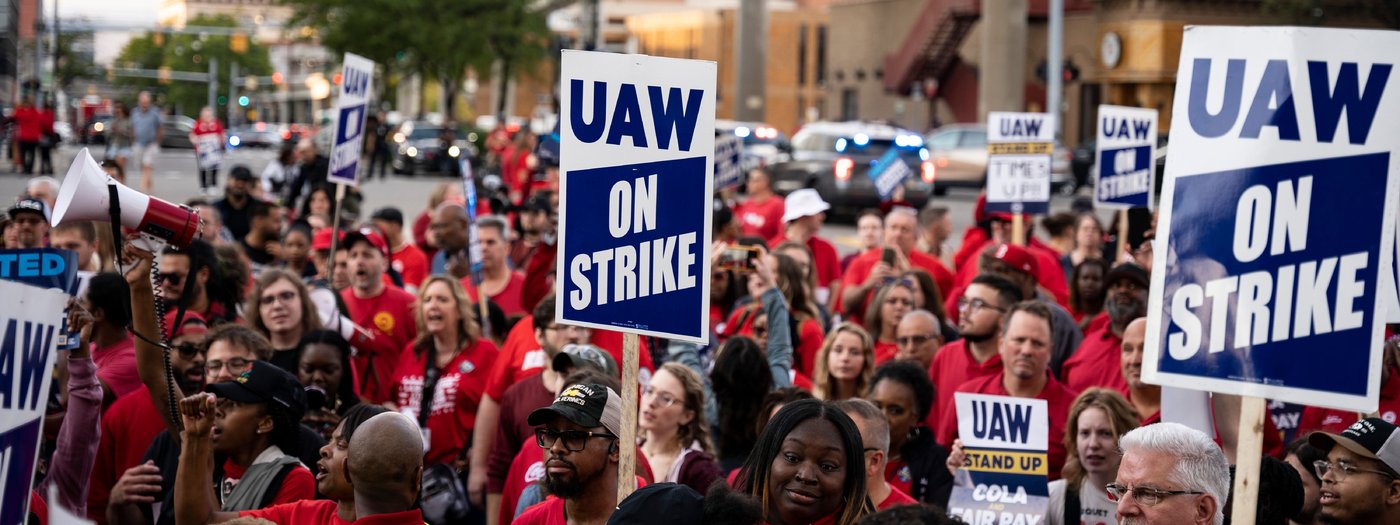
But beneath the wreckage, there are trends that should give worker advocates hope and the fuel they need to keep organizing and fighting. Because even as President Trump wages war on workers, public opinion has been moving steadily for over a decade鈥攁nd the shift is strongest among . According to , the approval rating of labor unions reached 70 percent in 2024鈥攁 60-year high. Other survey data indicate that would join a union if they could. Petitions for union recognition between 2021 and 2024.
The support for workers crosses party lines. reports that in 2024, 40 percent of Republicans believed that decline in union membership has been bad for the country. Voters in deep red states have passed pro-worker legislation, from increases in the minimum wage in and to paid leave laws in .
Americans consistently approve of labor more than business by a wide margin.
The growing support for pro-worker policies comes at the same time that in corporations has declined sharply since the early 2000s. An analysis of shows a marked divergence in views of labor and business beginning in 2012. For the first time since 1948, Americans consistently approve of labor more than business by a wide margin.
President Trump and the agenda his administration has pursued also by the day. The president鈥檚 is -15, an historically rapid decline in support compared to other presidents. Just 43 percent of U.S. adults , and roughly half agree that his policies have 鈥渄one more to hurt鈥� than help them since began seven months ago.
There is an enormous gap between the economic security that working people want and the economic precarity our political system鈥攁nd both political parties鈥攈ave been delivering for decades. Donald Trump has exploited that disconnect masterfully to launch himself into power, twice. But the gap keeps growing under his watch as he , paid for by cutting Medicaid and other essential social safety net programs.
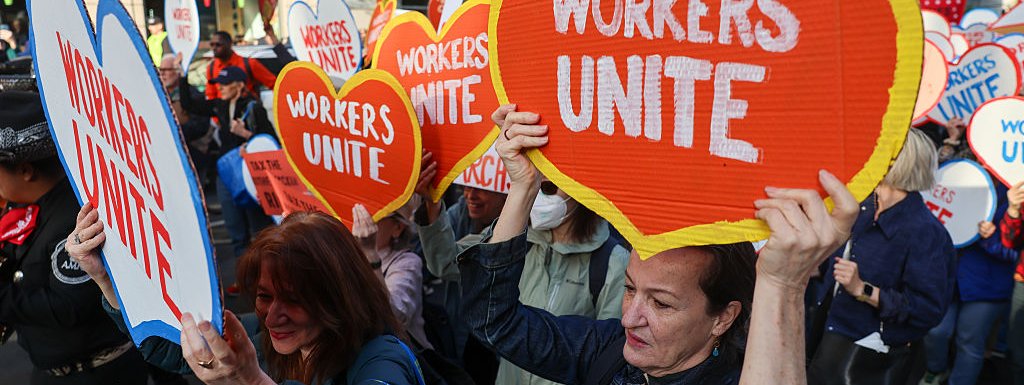
Despite their promises, politicians have failed to save us. It will take workers coming together in powerful organizations to push our political system to meet the needs of working people. A united front has worked in the past to achieve real progress, and it can work again. Indeed, it is the only thing that ever has.
Senior Director, Center on Education & Labor