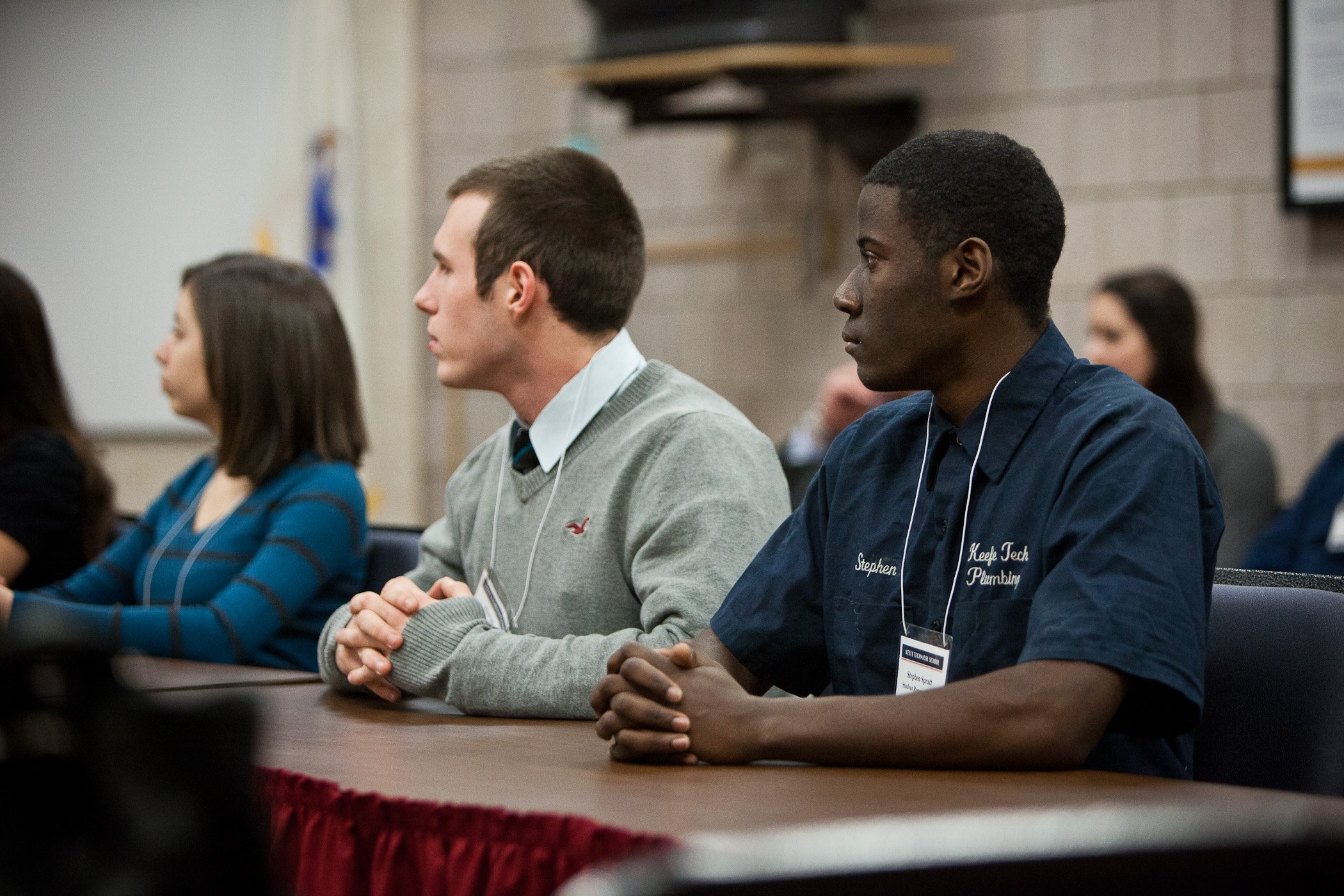
As we mark the last few hours of , it is worth taking a moment to acknowledge the impressive progress the sector has made over the last decade. In fact, CTE programs are on the cutting edge of a variety of education reform efforts, from accelerating student progress to equipping them with academic and practical knowledge. Long-considered inferior to traditional college preparatory tracks, CTE is increasingly showing how to achieve both components of the 鈥渃ollege and career-ready鈥� equation.
Long-considered inferior to traditional college preparatory tracks, CTE is increasingly showing how to achieve both components of the 鈥渃ollege and career-ready鈥� equation.
Experts on innovation have long argued聽that聽disruptive change often emerges from the margins, in areas not considered聽worthy of too much attention. CTE programs may provide a new case study. Let鈥檚 take a quick look at two areas of education reform where CTE has been out front:聽
- Finding the Right Mix of Knowledge and Skills: 聽An important emphasis of the 2006 reauthorization of the Carl D Perkins Act was improving the academic rigor of CTE programs, an effort to correct the overly narrow and technical focus of many traditional vocational programs that left students unprepared to enter college or pursue careers that required broader skills and knowledge. Since that time, initiatives like have demonstrated that effectively integrating strong academics with demanding technical education and work-based learning opportunities generate better outcomes for CTE students, even compared to their counterparts on traditional academic paths.聽 The program is showing such promising in terms of college and career transitions that it raises the question of whether an integrated approach isn鈥檛 appropriate for all students, not just those in CTE programs. As survey after survey shows employers frustrated with the skills of new graduates, and under-employment rates for recent college graduates reaching historic highs, it might be time for traditional academic programs to think about how to better integrate applied and practical skills into their curricula.
- Building Strong Pathways to College, Careers, and Credentials: Another important element of the 2006 reauthorization was its emphasis on strengthening connections between secondary and postsecondary CTE programs through structured 鈥淧rograms of Study鈥� (POS). High school students enrolled in POS begin a sequence of CTE coursework that continues into college, providing a more structured pathway into postsecondary education and a career.聽 In many cases, students can begin the postsecondary portion of their program while still in high school, accumulating college credit and saving valuable time and money on their way to an associate鈥檚 degree.聽 In schools like , students earn a high school diploma, an associate鈥檚 degree, and practical work experience, all as part of a five-year, high school-based program. Similarly, at the 聽(P-Tech) in New York, students graduate with a high school diploma, a college degree, work experience, and a fistful of IT certifications. Transition points 鈥� from high school to college, and college to work 鈥� are where we lose too many students. The structured pathways of many new CTE programs hold real promise for stemming those losses.
The Carl D Perkins Act is back up for reauthorization and the various proposals and recommendations on the street, whether from the , professional associations or groups, double down on the reforms from 2006 and include even stronger emphases on strategic partnerships with employers and on aligning programs of study with local and regional labor markets. To be sure, there are still too many CTE programs teaching outdated skills and failing to adequately prepare students for the 21st Century economy. 聽But there is a lot of exciting innovation in CTE these days that hold lessons for the broader education community, not the least of which is that change is possible.